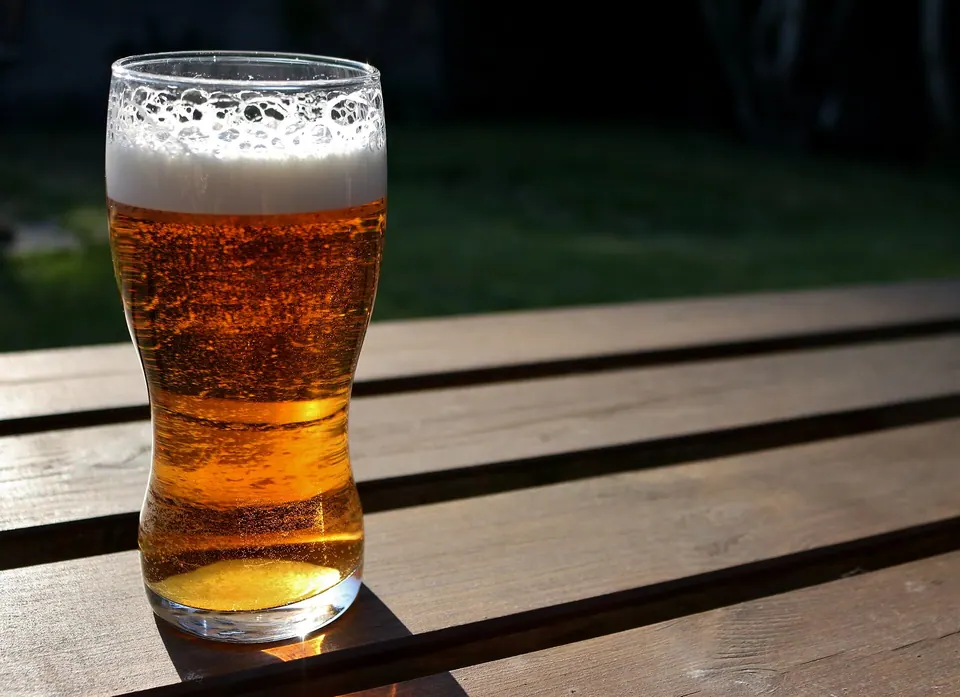
- Lager brewing at home is ale brewing with two changes: more yeast and a colder, steadier fermentation.
- Fermentis lists SafLager W-34/70 at 80–120 g/hL, ideally 53.6–64.4°F (12–18°C): about two 11.5 g sachets for 5 gal (19 L).
- Pitch rates for lagers run about twice the ale rate (1.5 million cells per mL per °Plato in White & Zainasheff).
- A fridge or chest freezer plus a dual-stage controller turns a cold garage into a lager cellar in any season.
- Lagering (cold conditioning near freezing for weeks) is what gives the clean, crisp finish.
Lager brewing at home has a reputation for being hard, but the brew day is the same as for an ale. What changes is the yeast and the calendar: lager strains want cooler temperatures, a bigger pitch and a few weeks of cold conditioning before the beer tastes the way a Helles or a Pilsner should.
This guide walks through each stage with the maker’s numbers for dry lager yeast, published pitch rates and BJCP style statistics, then shows the gear that keeps a fermenter at 50°F (10°C) whether your garage is freezing in January or baking in July. We compare maker data sheets and published sources; we did not brew these batches ourselves.
What makes a lager different from an ale?
Lager yeast (Saccharomyces pastorianus) ferments well at temperatures where most ale yeast slows to a crawl. Cooler fermentation means fewer fruity esters and a cleaner malt and hop character, but it also means the yeast works more slowly, so you pitch more of it and give it more time.
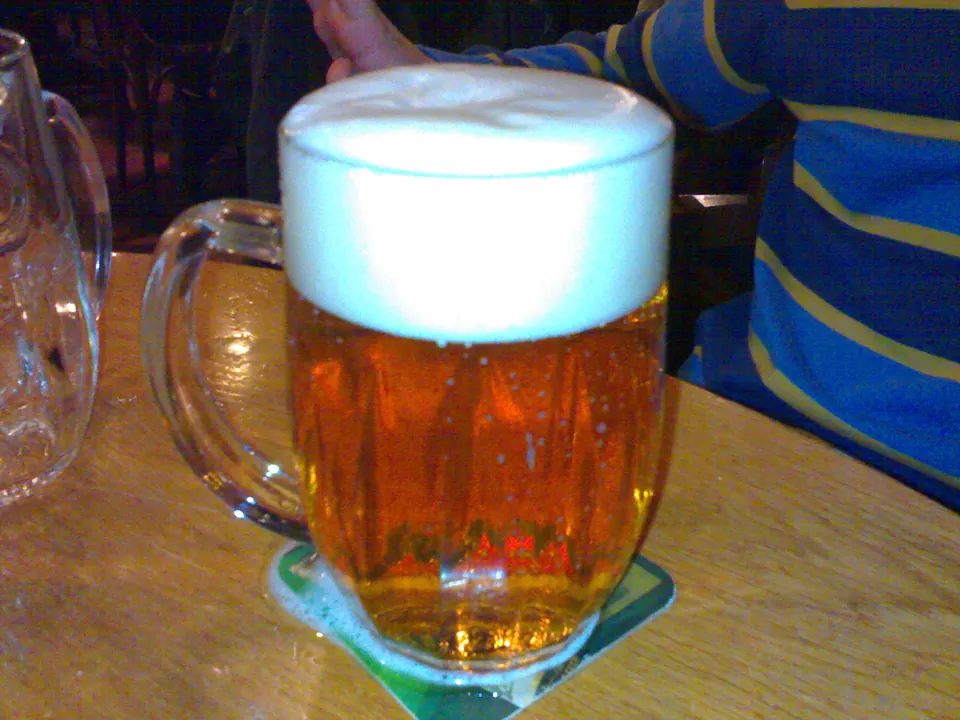
Brewers usually describe three phases: primary fermentation in the low to mid 50s °F (10–13°C), a short warm-up near the end (the diacetyl rest), and lagering, a cold rest close to freezing that lets yeast and haze drop and rounds off sulfur and green-apple notes. Each phase is covered below, with the step order in the brew-day list.
Beer styles by the numbers (BJCP 2021 vital statistics)
| Style | OG | FG | IBU | Color (SRM) | ABV |
|---|---|---|---|---|---|
| 1B American Lager | 1.040–1.050 | 1.004–1.010 | 8–18 | 2–3.5 | 4.2–5.3% |
| 4A Munich Helles | 1.044–1.048 | 1.006–1.012 | 16–22 | 3–5 | 4.7–5.4% |
| 5D German Pils | 1.044–1.050 | 1.008–1.013 | 22–40 | 2–4 | 4.4–5.2% |
| 6A Märzen | 1.054–1.060 | 1.010–1.014 | 18–24 | 8–17 | 5.6–6.3% |
Source: BJCP 2021 Beer Style Guidelines. Ranges are for judging; your recipe can sit anywhere inside them. Color swatches are an on-screen approximation.
The numbers above come from the BJCP 2021 guidelines. Munich Helles and German Pils are the classic first lagers: pale, moderate gravity and unforgiving of off-flavors, so they reward good temperature control. Märzen (6A) is the traditional spring brew that gets lagered over the summer for autumn.
Lager yeast: dose and temperature from the maker sheet
Dry lager yeast is the easiest route for most home brewers because it ships without ice packs and the dose is printed on the sachet. Fermentis lists SafLager W-34/70 at 80–120 g/hL, ideally at 12–18°C (53.6–64.4°F), with 80–84% apparent attenuation. That is a higher dose than the 50–80 g/hL Fermentis gives for its US-05 ale yeast, which is why one sachet is rarely enough for a full batch of lager.
Maker dose for a 5 gal (19 L) batch
Grams of dry yeast, calculated from the g/hL figure on each Fermentis product page (1 hL = 26.4 gal)
Fermentis says rehydration is optional: sprinkle the yeast into at least 10 times its weight of sterile water or boiled, hopped wort at 15–25°C (59–77°F), rest 15–30 minutes, stir and pitch. Direct pitching onto the wort surface at or above fermentation temperature is the other option the maker lists. Note that the listing for the 11.5 g sachet shows a wider 48–68°F (9–20°C) range than the maker page; follow the maker page and your sachet.
Dry yeast by the maker’s numbers
| Yeast | Use | Fermentation temp | Dose | Attenuation / tolerance | Rehydration |
|---|---|---|---|---|---|
| SafAle US-05 Fermentis | Ale (American) | 18–26°C (64.4–78.8°F) | 50–80 g/hL | 78–82%; not listed on the product page | Optional: ≥10× its weight of sterile water or boiled, hopped wort at 25–29°C (77–84°F), 15–30 min; or direct pitch at or above fermentation temperature |
| SafAle S-04 Fermentis | Ale (English) | 18–26°C (64.4–78.8°F) | 50–80 g/hL | 74–82%; 9–11% ABV | Optional: ≥10× its weight of sterile water or boiled, hopped wort at 25–29°C (77–84°F), 15–30 min; or direct pitch at or above fermentation temperature |
| SafLager W-34/70 Fermentis | Lager | 12–18°C (53.6–64.4°F) | 80–120 g/hL | 80–84%; 9–11% ABV | Optional: ≥10× its weight of sterile water or boiled, hopped wort at 15–25°C (59–77°F), 15–30 min; or direct pitch at or above fermentation temperature |
| LalBrew Nottingham Lallemand | Ale (English) | 10–25°C (50–77°F) | 50–100 g/hL | 78–84%; 14% ABV | Dry pitching is the maker's preferred method (no significant difference vs rehydration, per Lallemand) |
| LalBrew Voss (kveik) Lallemand | Ale (kveik) | 25–40°C (77–104°F) Optimum 35–40°C (95–104°F) per Lallemand | 50–100 g/hL | 76–82%; 12% ABV | Per the sachet |
| Lalvin EC-1118 Lallemand | Wine, cider, mead | 10–30°C (50–86°F) | 25 g/hL | Ferments dry; 18% v/v (subject to conditions) | 35–40°C (95–104°F) water for 20 min with Go-Ferm Protect Evolution (30 g/hL), then temper to within 5–10°C of the must |
Sources: Fermentis: SafAle US-05 product page; Fermentis: SafAle S-04 product page; Fermentis: SafLager W-34/70 product page; Lallemand: LalBrew Nottingham technical data sheet; Lallemand Brewing: LalBrew Voss Kveik Ale Yeast product page; Lallemand: Lalvin EC-1118 technical data sheet. 1 hL = 26.4 US gal, so 50 g/hL ≈ 1.9 g per gallon. Follow the sachet you buy; makers update their sheets.
Other dry lager strains in the catalogue include SafLager S-23, LalBrew Diamond, Mangrove Jack’s M84 and the hybrid LalBrew NovaLager. Check each sachet for the dose and range, because they differ by maker.
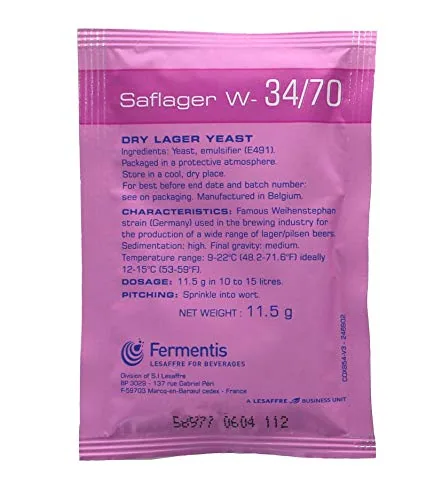
Fermentis SafLager W-34/70 Dry Lager Yeast, 11.5 g
- Type
- Dry lager yeast
- Temp
- 48–68°F (9–20°C)
Best for Lagers in a cool basement or fridge
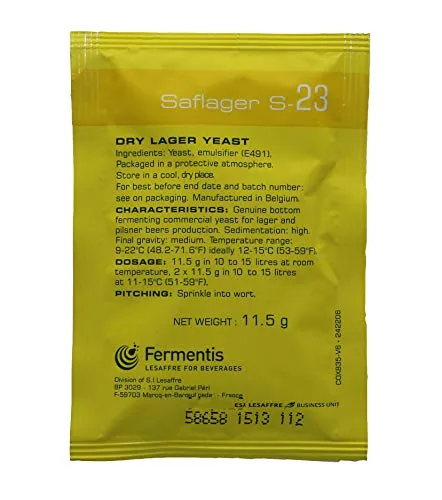
Fermentis SafLager S-23 Dry Lager Yeast, 11.5 g
- Type
- Dry lager yeast
- Dose
- 2 packets or a starter at lager temps (listing)
- Temp
- 51–59°F (11–15°C)
Best for Fruity, crisp lagers
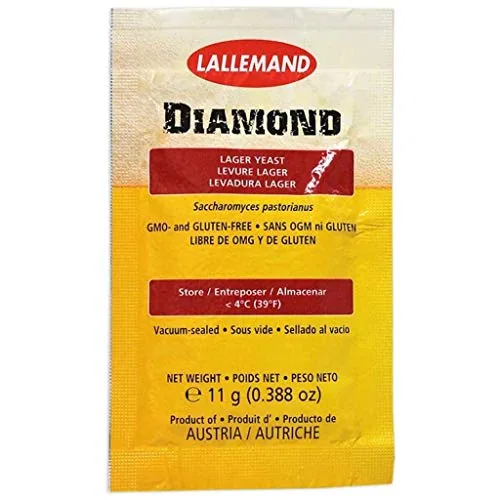
Lallemand LalBrew Diamond Lager Yeast, 11 g
- Type
- Dry lager yeast
Best for Clean lagers
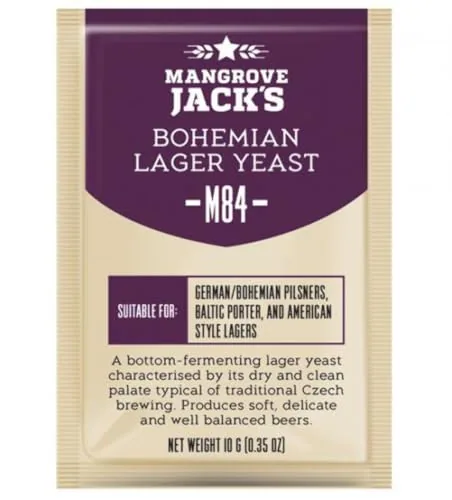
Mangrove Jack's M84 Bohemian Lager Yeast, 10 g
- Type
- Dry lager yeast
- Dose
- 10 g treats 23 L (5 gal)
- Temp
- 50–59°F (10–15°C)
Best for Bohemian pilsners
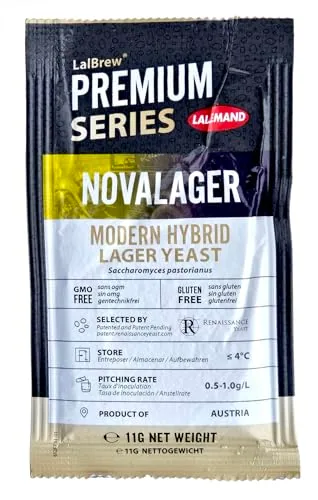
Lallemand LalBrew NovaLager Hybrid Yeast, 11 g
- Type
- Dry hybrid lager yeast
Best for Lagers without a dedicated lager fridge
How much yeast does a lager need?
Pitch rate is the number of yeast cells per milliliter of wort per degree Plato. White and Zainasheff’s Yeast uses about 0.75 million cells/mL/°P for ales and 1.5 million for lagers; the AHA article on pitch rates gives 1.0 for ales and 1.5–2 times that for lagers. Either way, a lager needs roughly double the yeast of an ale at the same gravity.
For liquid yeast that usually means a starter or several packs. For dry yeast, makers dose by weight instead of cell counts, so the simplest approach is the g/hL figure above. The yeast pitch rate calculator shows both methods side by side.
Yeast pitch rate calculatorCells for liquid yeast, grams for dry yeast by the maker’s g/hL dose.Under-pitching a lager is one of the most common reasons for sulfur, diacetyl (butter) and a sluggish start. More on starters in the yeast starter guide, and on dry yeast handling in rehydrate or direct pitch.
Lager brewing step by step
- Brew a clean, pale recipe
Start with a Helles or Pils from a kit or an all-grain recipe. Use soft water or RO with modest salts; the water chemistry guide covers the basics. Boil and chill as usual.
- Chill the wort colder than for an ale
Get the wort to around your fermentation temperature before pitching, or within the range the sachet lists for direct pitching. An immersion chiller often stalls in the 60s °F on warm tap water; finish the job in the fermentation chamber before pitching.
- Pitch plenty of healthy yeast
Use the maker dose (about two sachets of W-34/70 for 5 gal) or a properly sized starter. Oxygenate or aerate the wort; see wort aeration.
- Ferment cool and steady
Hold the beer in the maker’s range, many brewers aim for the lower half (around 50–55°F, 10–13°C). Tape the controller probe to the fermenter wall under insulation so it reads the beer, not the air.
- Warm it for a diacetyl rest
When fermentation slows and the gravity is most of the way to your target, many brewers let the beer rise to the low or mid 60s °F (16–18°C) for a few days so the yeast can clean up diacetyl. Taste a warm sample: no butter or butterscotch means it is done.
- Confirm final gravity
Take readings on two or three days. Stable readings mean fermentation is finished. Work out strength with the ABV calculator.
- Lager cold
Drop the temperature gradually toward 32–38°F (0–3°C) and hold it for several weeks. A keg in a kegerator is an easy lagering vessel because you can carbonate and condition at the same time.
- Carbonate
European lagers sit around 2.4–2.6 volumes of CO2 (BYO). Use the keg carbonation chart for kegs or the priming sugar calculator for bottles, entering the warmest temperature the beer reached.
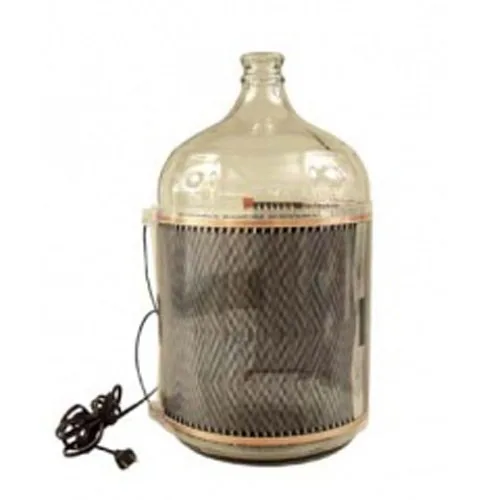
A typical home lager schedule (adjust to your yeast sheet)
| Phase | Temperature | Typical length | What you are looking for |
|---|---|---|---|
| Primary | 50–55°F (10–13°C), within the maker range | 1–2 weeks | Steady activity, gravity falling |
| Diacetyl rest | Low to mid 60s °F (16–18°C) | 2–4 days | No butter aroma in a warmed sample |
| Cool-down | Step down a few degrees a day | 3–5 days | Yeast settling, no shock to the beer |
| Lagering | 32–38°F (0–3°C) | 3–6 weeks or more | Clear beer, sulfur and green apple faded |
| Carbonation | Serving temperature | 1–2 weeks at serving pressure | About 2.4–2.6 vol for European lagers |
Source: Fermentis W-34/70 page (temperatures); BYO carbonation chart (volumes); lengths are common practice
CO2 volumes by style family (bottle or keg)
| Style family | Volumes of CO2 | Bottle-safe? |
|---|---|---|
| British ales | 1.5–2.2 | ✓ standard bottles |
| American ales | 2.2–3 | ✓ standard bottles |
| European lagers | 2.4–2.6 | ✓ standard bottles |
| American lagers | 2.5–2.8 | ✓ standard bottles |
| Belgian ales | 2–4.5 | ~ standard bottles only to about 3 vol |
| German weizen | 2.8–5.1 | ~ standard bottles only to about 3 vol |
Style ranges: BYO: Carbonation priming chart. Standard 12 oz pry-off bottles are not meant for more than about 3.0 volumes. Bottle only after the gravity reads the same 2–3 days in a row.
Holding 50°F in a garage, basement or apartment
Temperature control is the real equipment cost of lager brewing. In a cold-winter garage the air may already sit in the 40s and 50s °F from December to February, which is why the seasonal calendar puts lager season in January. Garage air swings with the weather, though, so a controller with a heater is still worth it: fermentation that drops into the low 40s can stall.
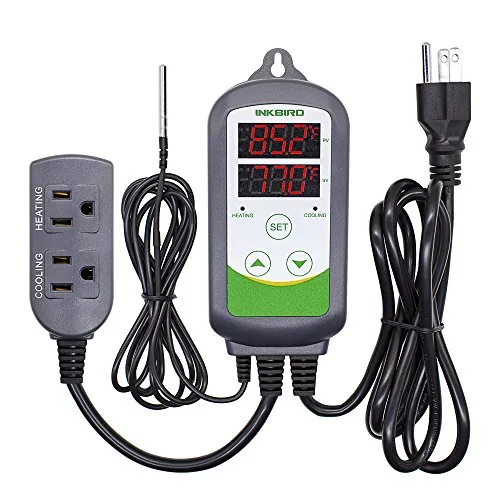
For the rest of the year, the common setup is a fridge or chest freezer with a dual-stage controller such as the Inkbird ITC-308, which switches one outlet for cooling and another for heating. A homebrew kegerator can double as a chamber: Kegco lists its HBK309S-2 with digital control for dispense or fermentation. In a hot-summer garage, see the fermentation temperature guide and the temperature control hub.
Inkbird ITC-308 Dual-Stage Temperature Controller, 110V
- Outputs
- 2 outlets: heating and cooling
- Range
- °C/°F display, high/low alarms
- Power
- 110V, 10A, 1100 W max (listing)
Best for Fridge or heat-wrap fermentation control
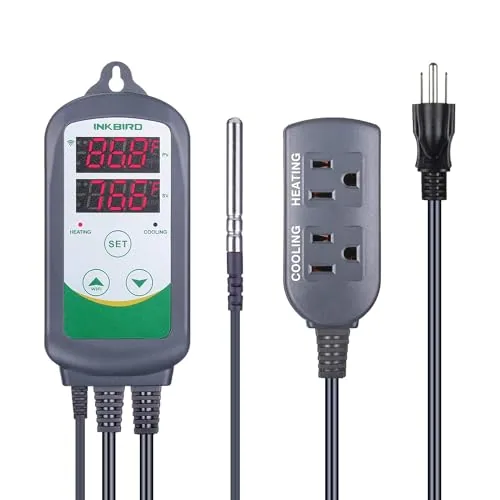
Inkbird ITC-308 Wi-Fi Dual-Stage Temperature Controller, 110V
- Outputs
- 2 outlets: heating and cooling
- Range
- °C/°F, calibration, high/low alarms
- Power
- 110V, 1100 W max (listing)
Best for Remote fermentation monitoring
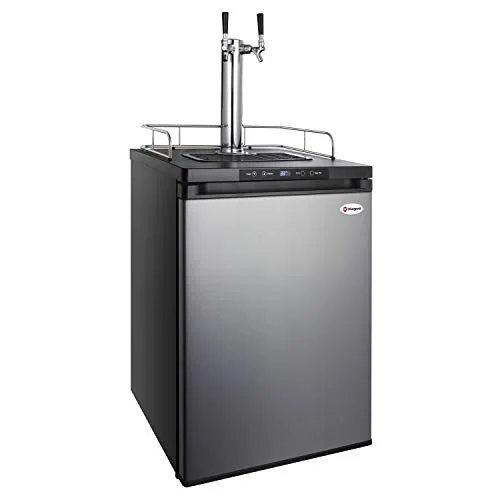
Kegco HBK309S-2 Homebrew Kegerator, 2 Tap, Stainless
- Taps
- 2
- Kegs
- Homebrew (ball lock) kegs
- Temp range
- Digital, 1° steps; dispense or ferment
Best for A dedicated homebrew kegerator
Eagle Brewing FE650 FermWrap Heater, 40W
- Material
- Flexible wrap, tape-on
- Outputs
- Flexible heating wrap, 40 W
- Type
- Fermentation heater
Best for Warming ales in a cold garage
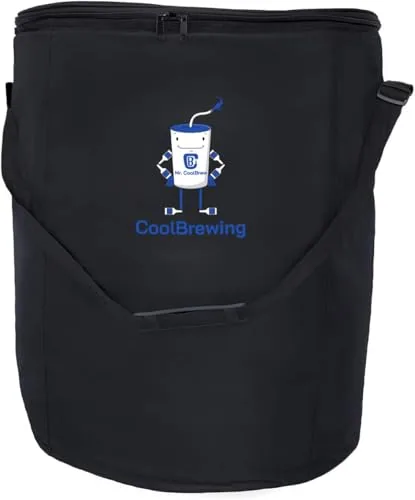
Cool Brewing Fermentation Cooler Bag
- Volume
- Fits a 5 gal fermenter
- Outputs
- Insulated bag for ice bottles or packs
- Type
- Insulated fermentation bag
Best for Summer ales without a fridge
Some brewers ferment lager yeast at the upper end of its range or under pressure to shorten the schedule. That is a legitimate technique, but results depend on the strain; read the maker sheet first and see the pressure fermenting guide for vessel ratings and spunding valves.
Common lager mistakes
- One sachet for 5 gallons. Fermentis’s 80–120 g/hL dose works out to roughly 15–23 g for 5 gal (19 L), more than a single 11.5 g packet.
- Pitching warm and chilling later. Fermentation that starts warm makes esters you cannot remove later.
- Measuring air, not beer. Fermentation adds heat; tape and insulate the probe on the fermenter.
- Skipping the diacetyl rest. Butter and butterscotch are easier to prevent than to fix.
- Crash-cooling too fast with an airlock. Rapid cooling pulls airlock liquid or air back into the fermenter; cool gradually or use a closed, pressure-rated setup.
- Bottling before gravity is stable. Lager yeast works slowly, so confirm two or three equal readings before priming.
Who should brew a lager, and when?
If you already have a fridge or freezer with a controller, lager is open to you year-round. If you have a cold garage and no chamber, brew in mid-winter and keep a heater on a controller. If you have neither and live somewhere hot, start with an ale or a kveik beer (kveik guide) and save lagers until you add a chamber. Gear for that lives in the fermenters and temperature control category.
Gear picks for this guide: best fermentation temperature controllers and best fermentation chamber setups.
Priming sugar calculatorHow much corn sugar, table sugar or DME to prime homebrew: CO2 volumes by style, residual CO2 from the…Keg carbonation chart and PSI calculatorKeg carbonation chart and calculator: regulator PSI by beer temperature and CO2 volumes, with an altitude…Yeast pitch rate calculatorYeast pitch rate calculator: cells needed for ales and lagers by volume and gravity, dry yeast grams from…