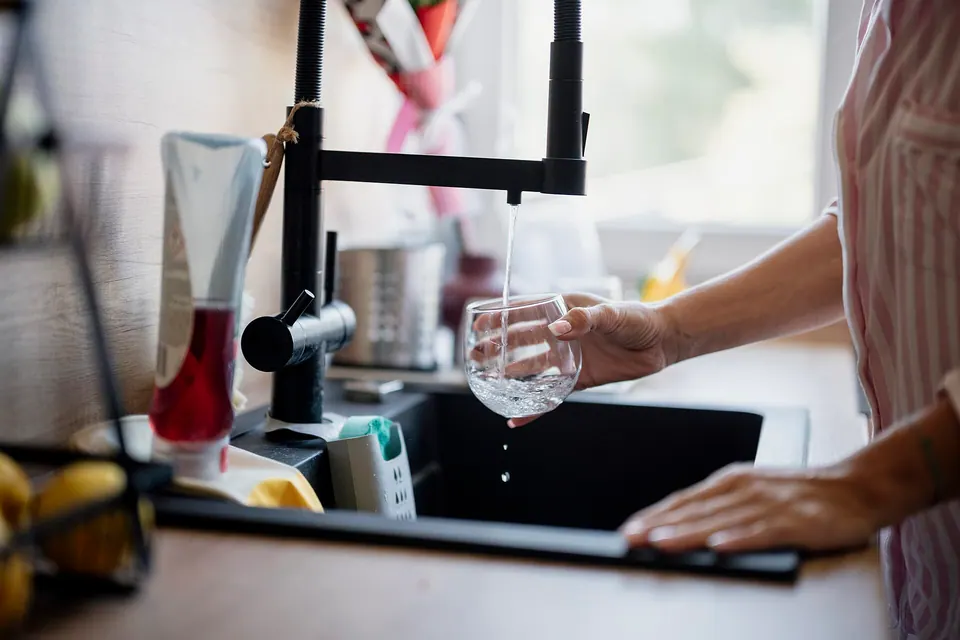
- Step one for every brewer: remove chlorine and chloramine. One Campden tablet treats about 20 gal of water.
- Extract brewers need little else; the extract already carries the minerals of the water it was made with.
- All-grain brewers adjust calcium, sulfate and chloride with gypsum and calcium chloride, and watch alkalinity because it pushes mash pH up.
- The sulfate-to-chloride ratio steers balance: more sulfate for crisp, hoppy beers, more chloride for round, malty ones.
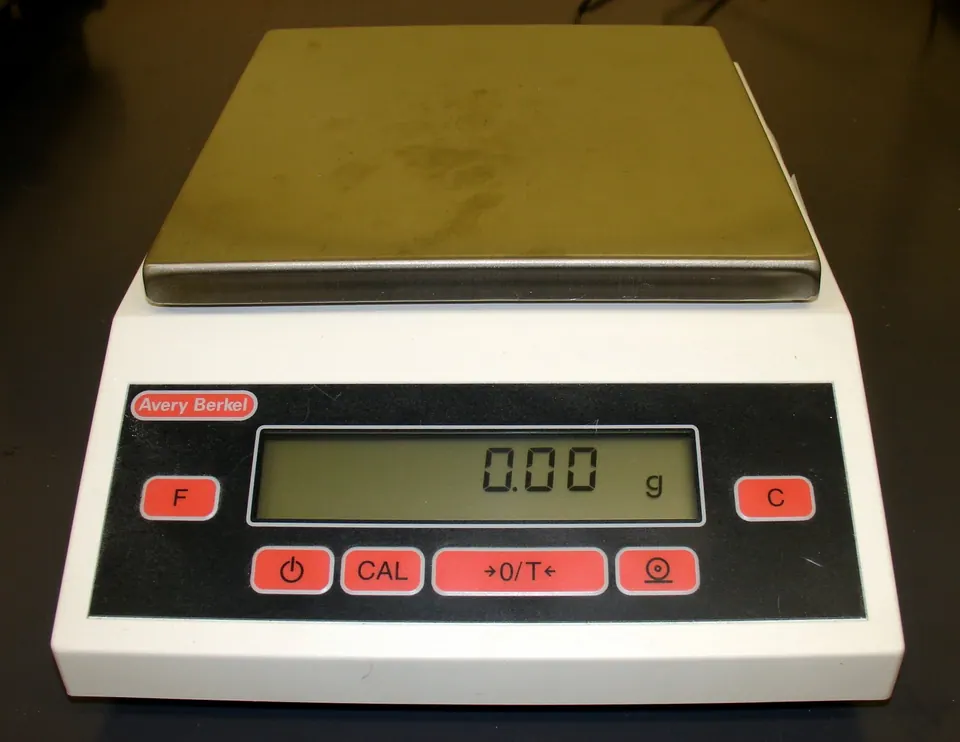
- Weigh salts on a 0.01 g scale, use the calculator, and change one thing per batch.
Brewing water chemistry sounds like a chemistry degree, but for beginners it comes down to a short list: get rid of chlorine compounds, know roughly what is in your water, and add small amounts of a few brewing salts to suit the beer. Beer is more than 90% water, so it matters, but it is the last thing to tune after sanitation, yeast and temperature.
This guide uses the ion values printed on our water chemistry calculator (ppm per gram per US gallon), BYO’s water treatment guidance and Palmer and Kaminski’s Water. The calculator gives ion totals, the sulfate-to-chloride ratio and residual alkalinity; it does not predict mash pH, which needs a grain-acidity model (see mash pH).
Step one: remove chlorine and chloramine
US water utilities disinfect with chlorine or with chloramine (chlorine bound to ammonia). Both react with compounds from malt and yeast to form chlorophenols, which taste like band-aids or mouthwash even at tiny levels. BYO notes that boiling water uncovered for at least 15 minutes drives off free chlorine but not chloramine.
Campden tablets (potassium or sodium metabisulfite) neutralize both almost instantly. BYO’s guidance: crush one tablet into about 20 gal of brewing water. For a 5 gal batch, a quarter to half a tablet in the strike and sparge water is common; a little extra is harmless at these levels but adds sulfite, so don’t overdo it. A carbon filter run slowly also removes chlorine, and slowly enough also chloramine.
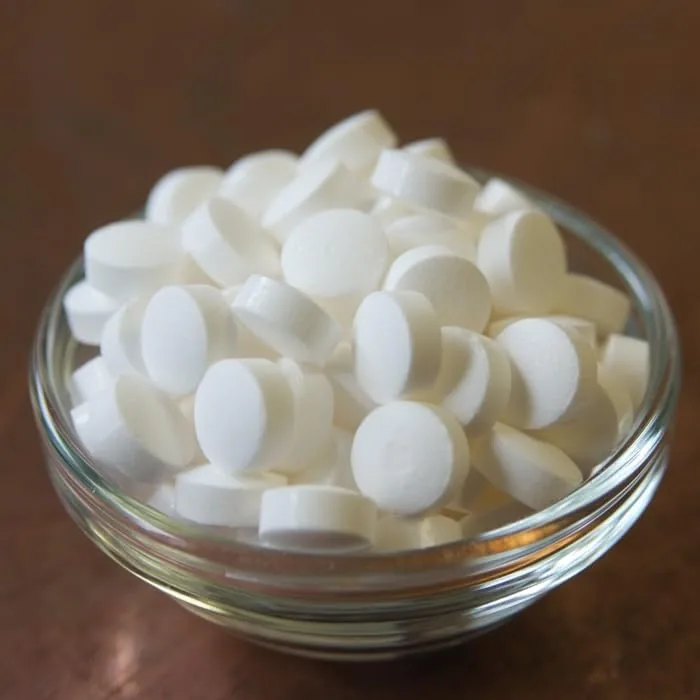
LD Carlson Potassium Campden Tablets, 1 lb
- Use
- Sulfite addition for wine and cider
- Type
- Potassium metabisulfite tablets
- Size
- 1 lb
Best for Winemakers and chloramine treatment
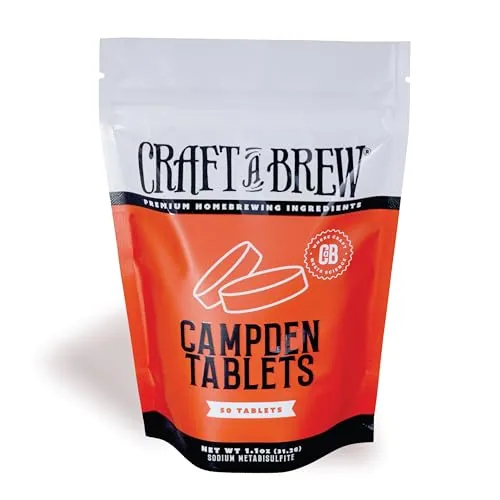
Craft A Brew Campden Tablets (Sodium Metabisulfite), 50 ct
- Use
- Sulfite addition for wine, fruit wine and cider
- Type
- Sodium metabisulfite tablets
- Size
- 50 tablets
Best for 1-gallon wine and cider batches
How to read your water report
Your utility publishes a yearly Consumer Confidence Report (the EPA explains how to find yours), and many post more detailed mineral data on request. Private wells need a lab test. The numbers brewers care about are a handful of ions, in ppm (mg/L).
The six ions that matter for brewing
| Ion | What it does | Commonly cited range | Raised by |
|---|---|---|---|
| Calcium (Ca) | Helps enzymes and yeast, lowers mash pH, aids clarity | About 50–150 ppm | Gypsum, calcium chloride |
| Magnesium (Mg) | Yeast nutrient; bitter and sour above about 30 ppm | About 10–30 ppm | Epsom salt |
| Sodium (Na) | Rounds malt at low levels; salty above about 150 ppm | 0–150 ppm | Table salt, baking soda |
| Sulfate (SO4) | Accentuates dry, crisp hop bitterness | 50–350 ppm, style-dependent | Gypsum, Epsom salt |
| Chloride (Cl) | Rounds and fills out malt | 0–150 ppm | Calcium chloride, table salt |
| Bicarbonate (HCO3) / alkalinity | Buffers the mash and raises pH | Low for pale beers; higher tolerated in dark beers | Baking soda, chalk |
Source: Commonly cited guidance in Palmer, How to Brew; BYO water treatments
If the report gives alkalinity “as CaCO3,” that is already the number the calculator wants. If it gives bicarbonate, alkalinity as CaCO3 is about bicarbonate × 50/61.
Treat these ranges as guardrails rather than targets. Plenty of good beer is brewed outside them, and the right numbers depend on the style. What they do tell you is when a water source is unusual: very high alkalinity, sulfate or sodium is worth diluting with RO or distilled water before you add anything. Water also changes with the seasons and the utility’s source, so a report a few years old is only a starting point.
Brewing salts and what one gram adds
The data block below lists how many ppm of each ion one gram of salt adds to one US gallon. Divide by your total water volume to get the real addition. Gypsum and calcium chloride values are checked against two published calculators; the others are standard stoichiometric values.
What 1 gram of each salt adds to 1 US gallon (ppm)
| Salt | Ca | Mg | Na | SO4 | Cl | HCO3 |
|---|---|---|---|---|---|---|
| Gypsum CaSO4·2H2O | 61.5 | — | — | 147.4 | — | — |
| Calcium chloride CaCl2·2H2O | 72 | — | — | — | 127.4 | — |
| Epsom salt MgSO4·7H2O | — | 26.1 | — | 103 | — | — |
| Baking soda NaHCO3 | — | — | 72.3 | — | — | 191.9 |
| Table salt (non-iodized) NaCl | — | — | 103.9 | — | 160.3 | — |
| Chalk CaCO3 Poorly soluble in plain water; real additions dissolve only partly | 105.8 | — | — | — | — | CO3 158.4 |
RA = Alkalinity − (Ca / 3.5 + Mg / 7) (all ppm; alkalinity as CaCO3 = HCO3 × 50/61). One Campden tablet treats about 20 gal (75 L) of chloraminated water (AHA/BYO guidance; check your tablet's label). Sources: Palmer & Kaminski, Water: A Comprehensive Guide for Brewers (Brewers Publications); BYO: Charts & calculators (brew-water spreadsheet); Craft Beer & Brewing: Brewing tools (water chemistry). Gypsum and calcium chloride are checked against published calculators; the rest are stoichiometric values.
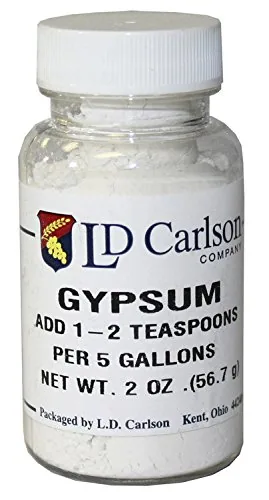
LD Carlson Gypsum (Calcium Sulfate), 2 oz
- Use
- Brewing water adjustment
- Type
- Calcium sulfate
- Size
- 2 oz
Best for Hoppy pale ales and IPAs
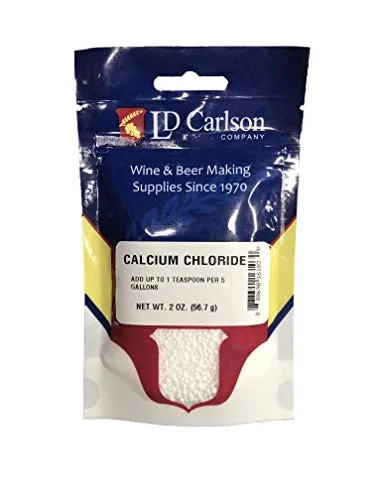
LD Carlson Calcium Chloride, 2 oz
- Use
- Brewing water adjustment
- Type
- Calcium chloride
- Size
- 2 oz
Best for Malty beers and NEIPAs
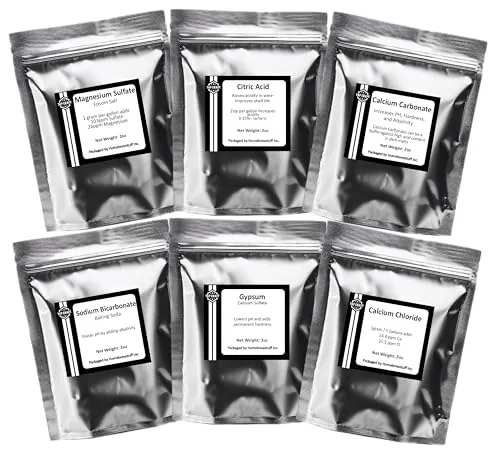
TAPCRAFT Brewing Salts Kit for Water Profiles
- Use
- Building regional water profiles
- Type
- Brewing salt set
Best for Starting water chemistry
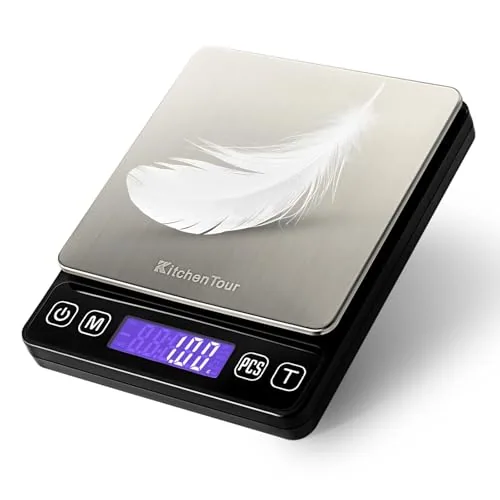
KitchenTour 500 g / 0.01 g Precision Scale
- Range
- 0.03–500 g
- Accuracy
- 0.01 g increments
Best for Weighing small doses of water salts
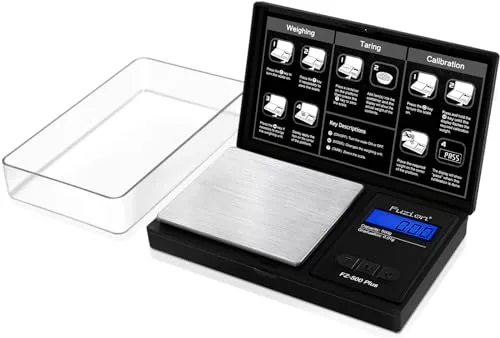
Fuzion Pocket Gram Scale 500 g x 0.01 g
- Range
- 500 g (min 0.05 g)
- Accuracy
- ±0.03 g
- Battery
- 2 x AAA (included)
Best for Small additive weights
Chalk barely dissolves in plain water, so real additions deliver only part of the calcium and carbonate on paper. Most modern guidance uses baking soda instead when a dark beer needs more alkalinity.
Worked example: a pale ale from RO water
Reverse osmosis (RO) or distilled water starts near zero for every ion, which makes the math simple. Say you build 5 gal (19 L) of mash and sparge water and add 5 g of gypsum and 3 g of calcium chloride. Per gallon that is 1 g of gypsum and 0.6 g of calcium chloride, so the totals are calcium about 105 ppm, sulfate about 147 ppm and chloride about 76 ppm, a sulfate-to-chloride ratio near 2:1 that leans crisp and hoppy.
Ion totals: 5 g gypsum + 3 g calcium chloride in 5 gal RO water
ppm = grams per gallon × ppm per g/gal from the salt table
Swap the amounts (2 g gypsum, 5 g calcium chloride) and the ratio flips toward chloride for a rounder amber or brown ale. Run your own numbers in the calculator, which also handles mixing RO with tap water.
Brewing water chemistry calculatorEnter your source water, the volume and grams of each salt; see ion totals, SO4:Cl and residual alkalinity.Sulfate-to-chloride ratio and style
The ratio is a rough balance dial, not a precise rule. Many brewers use guidelines like these:
- Above about 2:1 (more sulfate): crisp, dry finish; West Coast pale ales and IPAs.
- About 1:1: balanced; blonde, amber, many lagers.
- Below about 1:2 (more chloride): soft and full; hazy IPAs, brown ales, stouts.
Absolute levels matter too. A 2:1 ratio at 40 and 20 ppm tastes very different from 300 and 150. Stay inside the ranges in the ion table, and follow BYO’s practical limit of no more than about 2 teaspoons of either calcium salt per 5 gal.
Alkalinity, residual alkalinity and dark vs pale beers
Alkalinity (mostly bicarbonate) resists the natural acidity of malt and pushes mash pH up. Calcium and magnesium partly offset it. Residual alkalinity (RA) combines the two: RA = alkalinity − (Ca / 3.5 + Mg / 7), all in ppm as CaCO3.

Pale beers need low RA, so brewers with hard, alkaline tap water dilute it with RO or add acid. Dark, roasty grists are more acidic and tolerate, or need, higher RA. That is why historical dark beers came from cities with alkaline water. BYO recommends adjusting carbonates first, then calcium salts.
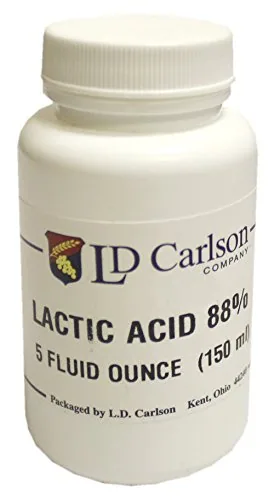
LD Carlson Lactic Acid 88%, 5 oz
- Use
- Lowers mash pH
- Type
- Lactic acid, 88%
- Size
- 5 oz
Best for Mash pH adjustment
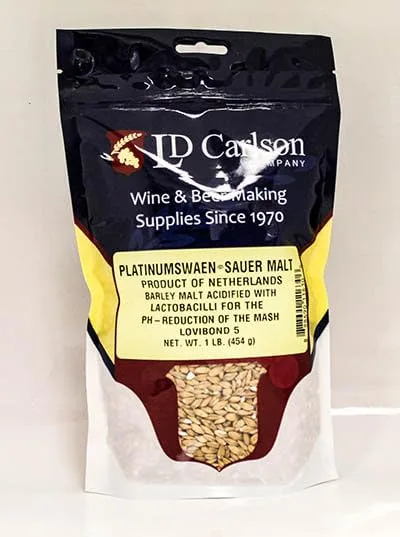
Platinumswaen Sauer Malt (Acidulated), 1 lb Uncrushed
- Type
- Acidulated malt
- Size
- 1 lb, uncrushed
Best for Mash pH adjustment without liquid acid
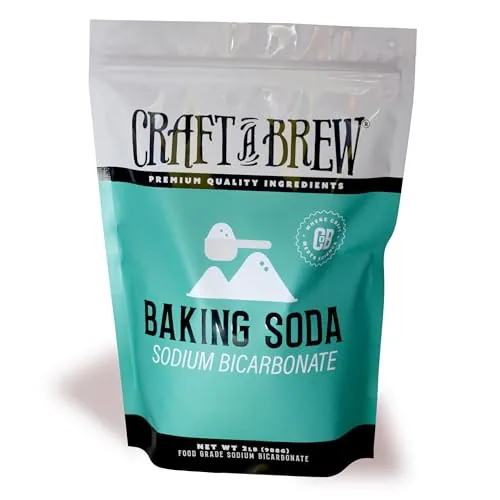
Craft A Brew Baking Soda (Sodium Bicarbonate), 2 lb
- Use
- Reduces acidity in musts
- Type
- Sodium bicarbonate
- Size
- 2 lb
Best for Dark beers with soft water
Extract vs all-grain: how much do you need to do?
Water treatment by brewing method
| Step | Extract | All-grain |
|---|---|---|
| Remove chlorine/chloramine | ✓ Always | ✓ Always |
| Add calcium salts | ~ Small additions for hop or malt balance only | ✓ Common |
| Control alkalinity | ✗ Not needed (no mash) | ✓ Important for pale beers |
| Measure mash pH | ✗ | ✓ With a calibrated meter |
| Use RO or distilled water | ~ Fine, extract carries minerals | ~ Useful base; add salts back |
Source: BYO water treatments; Palmer, How to Brew
BYO cautions extract brewers against building famous city water profiles, because the extract already contains the minerals from its own brewing water. A gram or two of gypsum in a pale ale, or calcium chloride in a stout, is about as far as most extract recipes need to go.
Mistakes to avoid
- Skipping chloramine treatment. Medicinal off-flavors that no other fix removes.
- Copying a city profile blindly. Historical profiles often describe raw water the brewers then treated.
- Measuring salts with kitchen spoons. Salts differ in density; weigh them.
- Adding everything to the mash only. Split additions between mash and sparge, or follow the calculator’s volumes.
- Overdoing magnesium or sodium. Bitter, sour or salty flavors.
- Using iodized or anti-caking table salt. Use plain non-iodized salt if any.
- Changing water and recipe at once. You won’t know which helped.
Who needs what
- Extract brewers: Campden tablets, plus gypsum or calcium chloride for small style tweaks.
- New all-grain brewers: Campden, gypsum, calcium chloride, lactic acid and a 0.01 g scale.
- Hard or alkaline tap water: RO or distilled water to dilute, then salts back in.
- Want precision: a calibrated pH meter to check the mash.
Start with the calculator, then check your mash with a meter as described in mash pH. The full grain process is in how to brew all-grain.
Gear picks for this guide: best pH meters for brewing.
Questions
Does water chemistry matter for extract brewing?
How do I remove chloramine from brewing water?
Should I use tap water or RO water for brewing?
How much gypsum should I add for an IPA?
What is the sulfate-to-chloride ratio?
Can I use bottled spring water?
Sources
- BYO: Water treatments
- Palmer & Kaminski, Water: A Comprehensive Guide for Brewers (Brewers Publications)
- BYO: Charts and calculators (brew-water spreadsheet)
- BYO Mr. Wizard: Mash pH importance
- US EPA: Consumer Confidence Reports (find your water quality report)
- TTB: Wine labeling, declaration of sulfites
- John Palmer, How to Brew (water chapter)