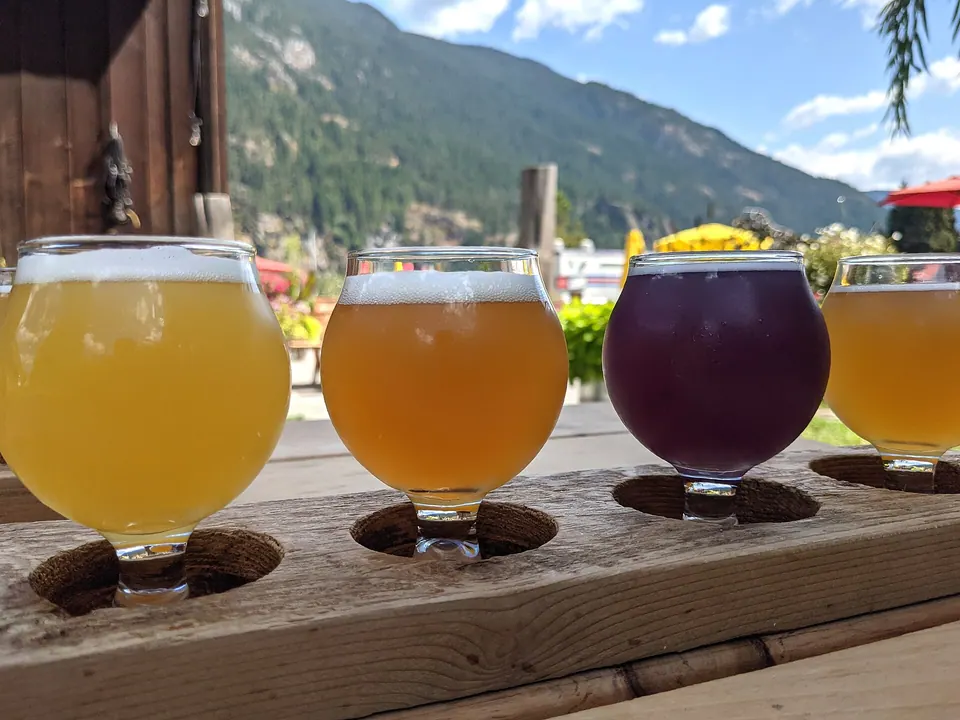
- Kveik are traditional Norwegian farmhouse yeasts. Research shows they form a genetically distinct group of domesticated brewing yeast.
- They ferment fast and fairly clean at temperatures that ruin ordinary ale yeast: Lallemand lists 77–104°F (25–40°C) for LalBrew Voss, with 95–104°F optimal.
- At its optimum, Voss reaches full attenuation in about 2–3 days, per Lallemand.
- That makes kveik the go-to for summer garages and brewers without a fermentation fridge.
- Kveik is not a lager yeast, but strains such as Omega Lutra are marketed for clean, lager-like beers at warm temperatures.
Kveik yeast changed summer homebrewing. These Norwegian farmhouse cultures, passed down for generations and used at temperatures most brewers would call dangerously hot, ferment quickly and cleanly in the 80s and 90s °F. For anyone brewing in a hot garage without a fermentation chamber, kveik turns summer from a break into brewing season.
This guide covers what kveik is, maker data for the dry strains you can buy, how to pitch and ferment it, and which styles suit it. Strain data comes from Lallemand’s LalBrew Voss page and the Omega Lutra listing; the background comes from the 2018 Frontiers in Microbiology study by Preiss, Garshol and colleagues.
What is kveik yeast?
“Kveik” is a Norwegian dialect word for yeast. Farmhouse brewers in western Norway kept their own cultures, dried them on wooden rings or sticks between brews and pitched them into warm wort, often at blood temperature. Lars Marius Garshol documented many of these cultures, and the 2018 study he co-authored found that traditional kveik form a genetically distinct group of domesticated Saccharomyces cerevisiae brewing yeasts, related to but separate from the main lines of modern ale yeast.
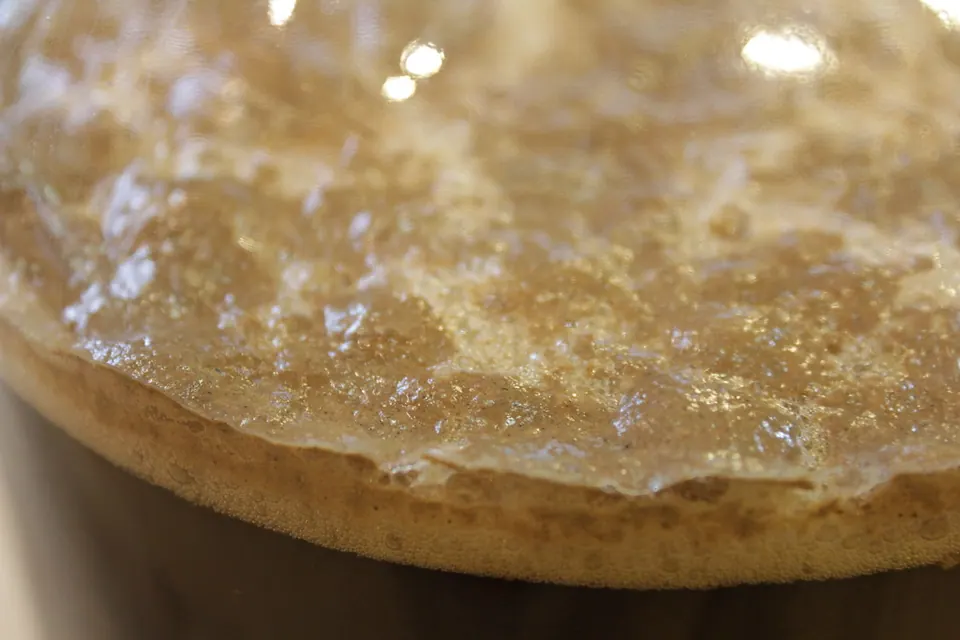
Traditional kveik cultures are often mixtures of several strains. The commercial dry versions are usually single strains isolated from one farmhouse culture, such as Voss, named for the Voss region. They behave consistently from packet to packet, which makes them easy to use.
What the research found
The 2018 study (Preiss, Tyrawa, Krogerus, Garshol and van der Merwe) tested a set of kveik cultures and summarized what makes them unusual. The points that matter for homebrewers:
- Heat tolerance: the authors describe kveik as tolerant of high temperatures, possibly a result of farmhouse brewers pitching into warm wort above 28°C (82°F). Traditionally, kveik was pitched at roughly 28–40°C (82–104°F).
- Fast fermentation: a high fermentation rate, similar to other domesticated brewing lineages.
- No clove phenols: kveik tested as phenolic off-flavor negative (POF−), so it doesn’t make the clove and smoke notes of wheat and Belgian yeasts.
- Alcohol tolerance and flocculation: the authors link genetic markers to high ethanol tolerance and to flocculation.
- Storage: farmhouse brewers historically kept kveik dried for a year or more between brews.
Those traits explain the practical appeal: warm, fast and clean, without the phenolic character that usually comes with farmhouse yeast. Individual strains still differ, so read each maker’s sheet.
Kveik vs regular ale yeast by the numbers
Top of the maker’s temperature range
°F; kveik strains vs two common dry ale yeasts
Dry kveik strains: maker data
| Strain | Temperature | Attenuation | Alcohol tolerance | Dose | Flavor (maker) |
|---|---|---|---|---|---|
| LalBrew Voss (Lallemand) | 77–104°F (25–40°C); optimum 95–104°F | 76–82% | 12% ABV | 50–100 g/hL | Fairly neutral at high temperature, slight orange and citrus |
| Omega Lutra (dry) | 68–95°F (20–35°C) per listing | 75–82% per listing | Not listed in our source | Per the sachet | Marketed as clean, lager-like |
| Mangrove Jack’s M12 Kveik | Not listed in our source | Not listed | Not listed | Per the sachet | Check the maker sheet |
Source: Lallemand LalBrew Voss product data; Omega and Mangrove Jack’s listings
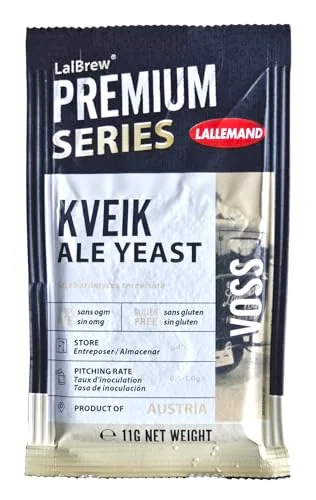
Lallemand LalBrew Voss Kveik Ale Yeast, 11 g
- Type
- Dry kveik ale yeast
- Temp
- 95–104°F (35–40°C) optimal
Best for Summer brewing without temp control
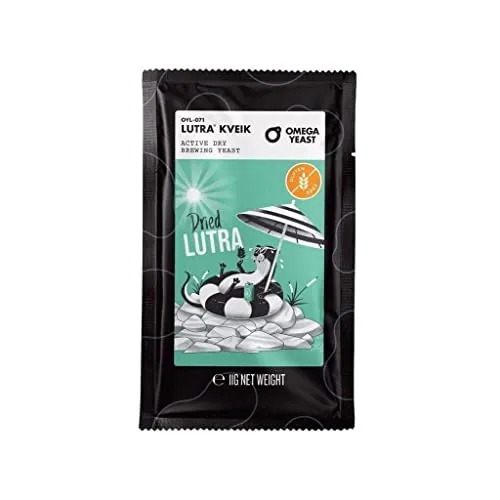
Omega Yeast Lutra Kveik Dry Yeast, 11 g
- Type
- Dry kveik yeast
- Temp
- 68–95°F (20–35°C)
- Attenuation
- 75–82%
Best for Pseudo-lagers in summer
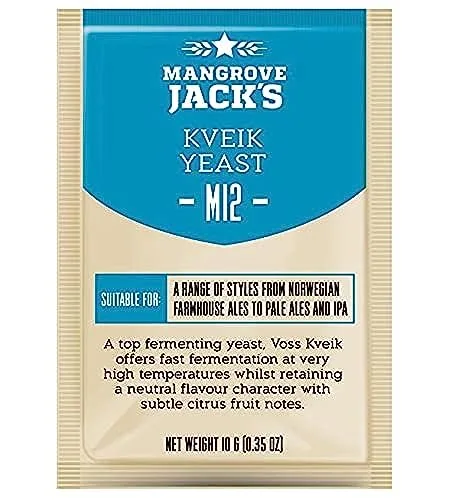
Mangrove Jack's M12 Kveik Yeast, 10 g
- Type
- Dry kveik ale yeast
Best for Warm fermentation
Dry yeast by the maker’s numbers
| Yeast | Use | Fermentation temp | Dose | Attenuation / tolerance | Rehydration |
|---|---|---|---|---|---|
| SafAle US-05 Fermentis | Ale (American) | 18–26°C (64.4–78.8°F) | 50–80 g/hL | 78–82%; not listed on the product page | Optional: ≥10× its weight of sterile water or boiled, hopped wort at 25–29°C (77–84°F), 15–30 min; or direct pitch at or above fermentation temperature |
| SafAle S-04 Fermentis | Ale (English) | 18–26°C (64.4–78.8°F) | 50–80 g/hL | 74–82%; 9–11% ABV | Optional: ≥10× its weight of sterile water or boiled, hopped wort at 25–29°C (77–84°F), 15–30 min; or direct pitch at or above fermentation temperature |
| SafLager W-34/70 Fermentis | Lager | 12–18°C (53.6–64.4°F) | 80–120 g/hL | 80–84%; 9–11% ABV | Optional: ≥10× its weight of sterile water or boiled, hopped wort at 15–25°C (59–77°F), 15–30 min; or direct pitch at or above fermentation temperature |
| LalBrew Nottingham Lallemand | Ale (English) | 10–25°C (50–77°F) | 50–100 g/hL | 78–84%; 14% ABV | Dry pitching is the maker's preferred method (no significant difference vs rehydration, per Lallemand) |
| LalBrew Voss (kveik) Lallemand | Ale (kveik) | 25–40°C (77–104°F) Optimum 35–40°C (95–104°F) per Lallemand | 50–100 g/hL | 76–82%; 12% ABV | Per the sachet |
| Lalvin EC-1118 Lallemand | Wine, cider, mead | 10–30°C (50–86°F) | 25 g/hL | Ferments dry; 18% v/v (subject to conditions) | 35–40°C (95–104°F) water for 20 min with Go-Ferm Protect Evolution (30 g/hL), then temper to within 5–10°C of the must |
Sources: Fermentis: SafAle US-05 product page; Fermentis: SafAle S-04 product page; Fermentis: SafLager W-34/70 product page; Lallemand: LalBrew Nottingham technical data sheet; Lallemand Brewing: LalBrew Voss Kveik Ale Yeast product page; Lallemand: Lalvin EC-1118 technical data sheet. 1 hL = 26.4 US gal, so 50 g/hL ≈ 1.9 g per gallon. Follow the sachet you buy; makers update their sheets.
How to brew with kveik, step by step
- Pick a style that suits it
Pale ales, IPAs, blondes, ambers and farmhouse ales work well. Voss adds a light orange note; Lutra is marketed for cleaner, lager-like beers.
- Chill only as far as you need
Kveik doesn’t need wort chilled to the 60s. Chill into the strain’s range, for example the high 80s to mid-90s °F for Voss. That shortens chilling time on hot summer days.
- Pitch at the maker’s dose
Lallemand lists 50–100 g/hL for Voss, so about 9.5–19 g for 5 gal (19 L); one 11 g sachet covers a typical ale. Traditional brewers often pitched small amounts, but follow the sheet for predictable results.
- Fit a blow-off
Fermentation at 90°F+ is fast and vigorous. Leave plenty of headspace and use a blow-off tube instead of a small airlock.
- Keep it warm, not cold
The bigger risk with kveik is too cool, not too hot. In a cool basement or in autumn, a heat wrap with a controller keeps it in range.
- Check gravity after 3–4 days
Fermentation can finish in 2–3 days at the optimum. Confirm with two matching readings before packaging, as always.
- Package and enjoy young
Very high flocculation means kveik beers clear quickly. Hoppy kveik beers are at their best fresh.
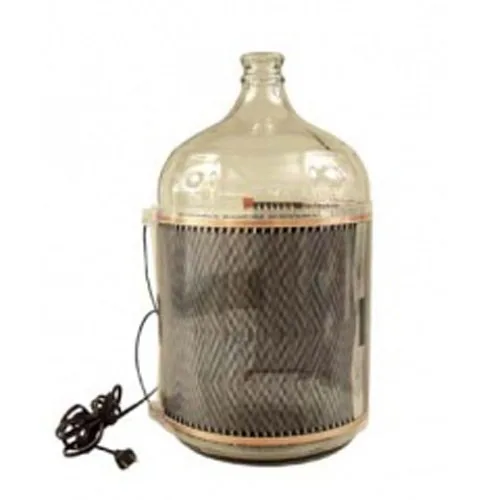
Eagle Brewing FE650 FermWrap Heater, 40W
- Material
- Flexible wrap, tape-on
- Outputs
- Flexible heating wrap, 40 W
- Type
- Fermentation heater
Best for Warming ales in a cold garage
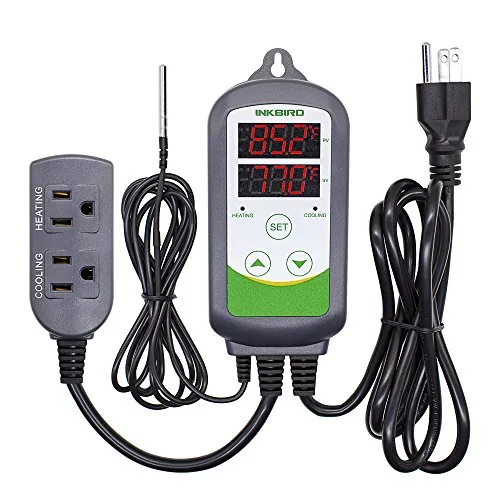
Inkbird ITC-308 Dual-Stage Temperature Controller, 110V
- Outputs
- 2 outlets: heating and cooling
- Range
- °C/°F display, high/low alarms
- Power
- 110V, 10A, 1100 W max (listing)
Best for Fridge or heat-wrap fermentation control
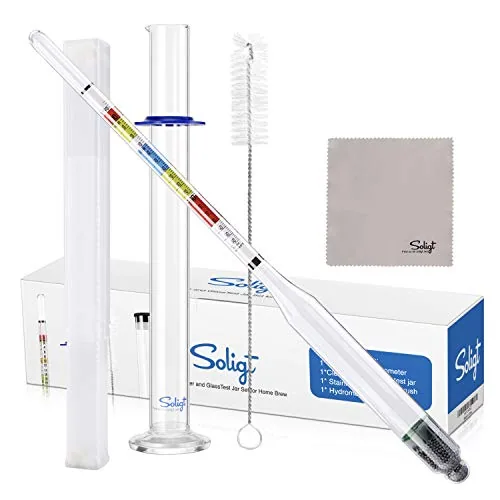
SOLIGT Triple Scale Hydrometer & Glass Test Jar Kit
- Range
- SG 0.990–1.170, Brix 0–35, potential ABV 0–20%
- Scale
- Triple (SG, Brix, potential alcohol)
Best for A complete first hydrometer kit
Kveik for hot garages and summer
A summer garage that sits at 80–95°F (27–35°C) is a problem for normal ale yeast and a good fit for kveik. You can ferment in the open garage, out of direct sun, and let the beer’s own fermentation heat carry it toward the optimum.
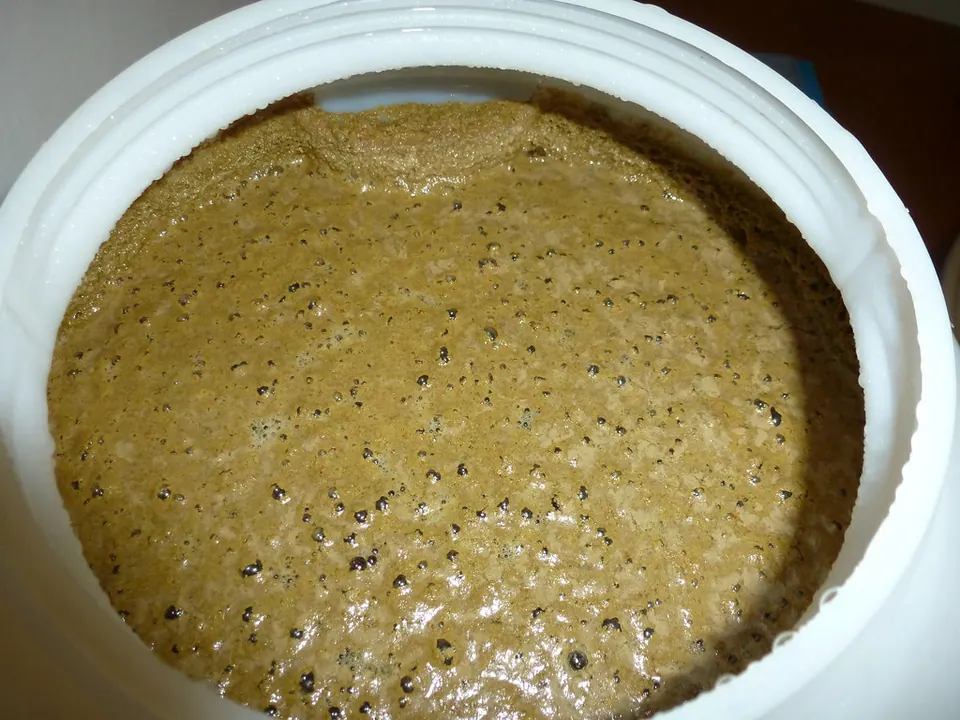
- Keep fermenters off direct sunlight and away from engines, water heaters and other heat sources.
- Expect faster CO2 production: use a blow-off and check it daily.
- Big temperature drops at night can slow kveik; a cooler bag or blanket evens out swings.
- Package promptly and store finished beer cold; heat stales beer after fermentation.
See the temperature control and summer page for chambers, wraps and controllers, and the fermentation temperature guide for the regular ale schedule.
Styles that work, and styles that don’t
Kveik style fit
| Style | Fit | Notes |
|---|---|---|
| Pale ale and IPA | ✓ | Fast turnaround keeps hops fresh |
| Blonde and amber | ✓ | Clean enough for malt-forward beers |
| Norwegian farmhouse ale | ✓ | The traditional home of kveik |
| Pseudo-lager (lager-style ale) | ~ | Lutra and similar strains; not a true lager |
| Stout and porter | ~ | Works; citrus notes may show |
| Hefeweizen, Belgian ales | ✗ | Need their own yeast character |
| True lagers | ✗ | Need lager yeast at 48–55°F |
Source: Lallemand and Omega strain descriptions; BJCP 2021
Beer styles by the numbers (BJCP 2021 vital statistics)
| Style | OG | FG | IBU | Color (SRM) | ABV |
|---|---|---|---|---|---|
| 18A Blonde Ale | 1.038–1.054 | 1.008–1.013 | 15–28 | 3–6 | 3.8–5.5% |
| 18B American Pale Ale | 1.045–1.060 | 1.010–1.015 | 30–50 | 5–10 | 4.5–6.2% |
| 19A American Amber Ale | 1.045–1.060 | 1.010–1.015 | 25–40 | 10–17 | 4.5–6.2% |
| 21A American IPA | 1.056–1.070 | 1.008–1.014 | 40–70 | 6–14 | 5.5–7.5% |
Source: BJCP 2021 Beer Style Guidelines. Ranges are for judging; your recipe can sit anywhere inside them. Color swatches are an on-screen approximation.
Example: a summer kveik pale ale (5 gal extract)
Use the American pale ale outline from beginner beer styles: about 6 lb of light DME, 1 lb of crystal 40°L steeped, a 60-minute bittering addition and a generous late addition of a citrusy hop such as Citra or Cascade. Chill only to about 90°F (32°C), pitch one sachet of Voss, fit a blow-off and keep the fermenter out of the sun. Check gravity on day 3 and day 5; if the readings match, package and drink it fresh while the hops are bright.
Harvesting and drying kveik
Because kveik tolerates drying, many homebrewers save some from each batch, the way farmhouse brewers did. The simplest method: after fermentation, take a spoonful of thick slurry from a clean, healthy batch, spread it thinly on baking paper, let it dry at room temperature in a clean, covered place and store the flakes in a sealed jar in the freezer or fridge.
This is a hobby technique with real contamination risk. Use slurry only from batches that tasted clean, sanitize everything that touches it, and start over with a fresh sachet if a batch turns sour, phenolic or slow. For predictable results, a new commercial sachet each time is still the easiest route.
Mistakes to avoid
- Fermenting kveik too cool. Below the range it slows and may stall.
- Tiny airlocks. Hot, fast fermentations need a blow-off.
- Assuming fast means finished. Take two matching readings.
- Expecting a true lager. Kveik pseudo-lagers are clean ales.
- Leaving fermenters in the sun. Light skunks hoppy beer, and heat after fermentation stales it.
- Overloading an outdoor outlet. Heat wraps and controllers in garages belong on GFCI-protected outlets.
Who should brew with kveik
- No fermentation fridge, hot summers: kveik is the simplest fix.
- Want beer fast: grain to glass in about a week or two is realistic for hoppy ales.
- Want clean lagers: buy lager yeast and a fridge; kveik is a stand-in at best.
- Curious about tradition: read Garshol’s work and the 2018 study on kveik’s origins.
Use the ABV calculator on kveik beers too; attenuation is high, and the beer is for adults 21+ only. Log every fermentation temperature in the brew-day log to learn how your strain behaves.
Gear picks for this guide: best dry yeast for IPA and pale ale and best fermenters for homebrew.
Questions
What is kveik yeast?
What temperature should I ferment kveik at?
Does kveik need temperature control?
How fast does kveik ferment?
Can kveik make a lager?
Does kveik taste fruity?
Can I reuse kveik yeast?
Sources
- Lallemand Brewing: LalBrew Voss kveik ale yeast
- Preiss, Tyrawa, Krogerus, Garshol & van der Merwe (2018), Traditional Norwegian kveik are a genetically distinct group of domesticated Saccharomyces cerevisiae brewing yeasts, Frontiers in Microbiology
- Fermentis: SafAle US-05 product page
- Lallemand: LalBrew Nottingham technical data sheet
- BJCP 2021 Beer Style Guidelines
- BYO: Charged up! (GFCI and electrical basics)