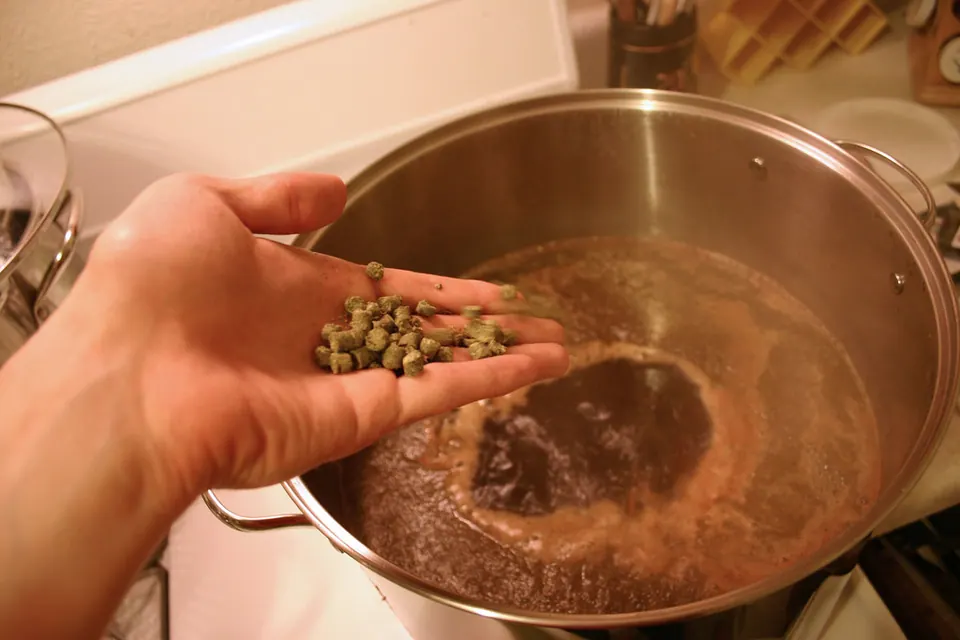
- For a clean West Coast IPA, SafAle US-05 is the reference dry strain: Fermentis lists 64–79°F (18–26°C), 50–80 g/hL and 78–82% apparent attenuation.
- LalBrew Verdant is the dry pick for hazy and English-style IPAs, with apricot, tropical and citrus notes per Lallemand.
- In a hot garage, kveik strains (LalBrew Voss, Omega Lutra) ferment warm: Lallemand lists Voss's optimum at 95–104°F (35–40°C).
- One 11.5 g sachet covers about 3.8–6 gal at the US-05 dose; stronger IPAs may need two. Check with the pitch-rate calculator.
The best dry yeast for IPA is the one that matches the IPA you want: crisp and bitter, juicy and hazy, English and bready, or brewed in a summer garage with no fridge. Dry yeast is the easy default for home brewers because it ships and stores well, and its makers publish the numbers that matter: temperature, dose and attenuation.
This list ranks nine dry strains from five brands, using maker technical sheets and listing data only. Where a listing gives no numbers (Mangrove Jack's M44 and Fermentis S-04 here), we say so and point you to the maker's sheet. The data table further down pulls its figures straight from the Fermentis and Lallemand sheets.
Our picks
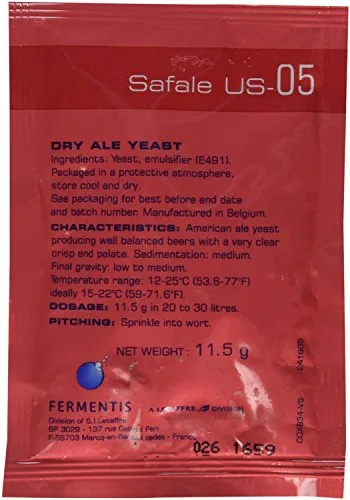
Fermentis SafAle US-05 Dry Ale Yeast, 11.5 g
Fermentis
- Type
- Dry ale yeast, American
- Dose
- 50–80 g/hL (11.5 g ≈ 3.8–6 gal)
- Temp
- 59–75°F (15–24°C)
SafAle US-05 is the clean American ale reference. Fermentis's product page lists 64–79°F (18–26°C), a dose of 50–80 g/hL and 78–82% apparent attenuation, with optional rehydration or direct pitching. One 11.5 g sachet treats about 3.8–6 gal at that dose. The listing itself gives a narrower 59–75°F 'ideal' range; we use the maker page.
Best for: Crisp, bitter American IPAs and pale ales
Skip if: You want fruity yeast character in a hazy IPA
- Maker dose and temperature published
- 78–82% apparent attenuation
- Direct pitch allowed by Fermentis
- Low to medium sedimentation per listing
- Listing and maker temperature ranges differ
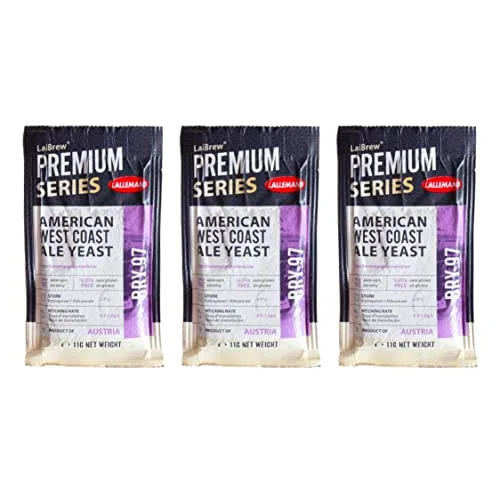
Lallemand LalBrew BRY-97 West Coast Ale Yeast (3-pack)
Lallemand (LalBrew)
- Type
- Dry ale yeast, American
- Temp
- 59–72°F
LalBrew BRY-97 is Lallemand's American West Coast ale strain, sold here as a three-pack. The listing gives 59–72°F and says it produces a clean finish that lets hop flavor and aroma come through, with no rehydration or starter needed.
Best for: West Coast IPAs and American pale ales
Skip if: You only brew one batch a year (three sachets)
- Clean finish per maker
- 59–72°F listed
- Three sachets
- Attenuation not on this listing
- Dose not on this listing
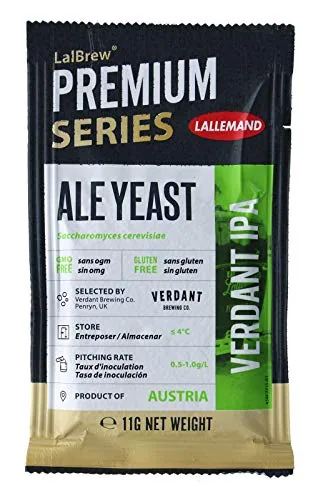
Lallemand LalBrew Verdant IPA Yeast, 11 g
Lallemand (LalBrew)
- Type
- Dry ale yeast, English-derived
LalBrew Verdant was developed with Verdant Brewing Co. Lallemand describes notes of apricot with tropical fruit and citrus that merge with hop aroma, and lists NEIPA, English IPA, American pale, English bitter, sweet stout and sours as fits.
Best for: NEIPAs and English-style IPAs
Skip if: You want a neutral yeast that stays out of the way
- Fruity esters that suit hazy IPA
- Wide style list per maker
- 11 g sachet
- Temperature not on this listing
- Dose not on this listing
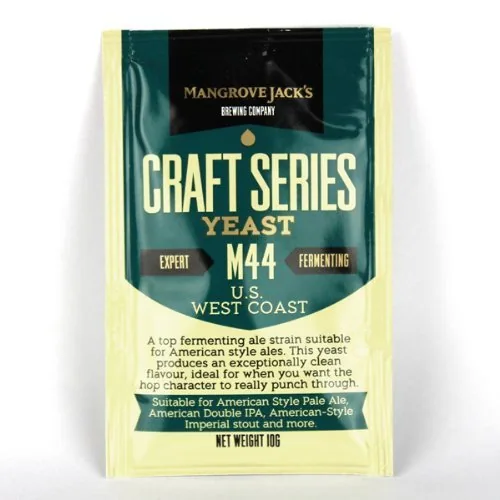
Mangrove Jack's M44 US West Coast Dry Yeast
Mangrove Jack's
- Type
- Dry ale yeast, American
M44 is Mangrove Jack's US West Coast dry strain, sold for clean IPAs and pale ales. This listing gives no temperature, dose or attenuation, so download Mangrove Jack's sheet before you plan the batch.
Best for: Brewers who want a second clean American strain to compare
Skip if: You need maker numbers on the listing
- Clean American ale strain
- Single sachet
- Temperature not listed
- Dose and attenuation not listed
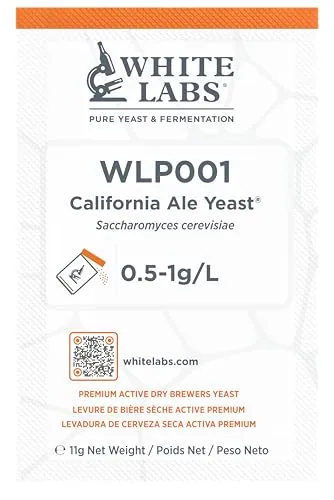
White Labs WLP001 California Ale Yeast (Dry)
White Labs
- Type
- Dry ale yeast, American
- Temp
- 64–73°F (18–23°C)
- Attenuation
- 73–85%
White Labs' dry WLP001 California Ale lists 73–85% attenuation, medium flocculation, high alcohol tolerance (10–15%) and 64–73°F (18–23°C). The style list runs from American IPA and double IPA to barleywine.
Best for: Double IPAs and brewers used to liquid WLP001
Skip if: Your garage runs above 73°F without control
- 73–85% attenuation listed
- 10–15% alcohol tolerance listed
- 64–73°F range
- Narrower warm limit
- Dose not on this listing
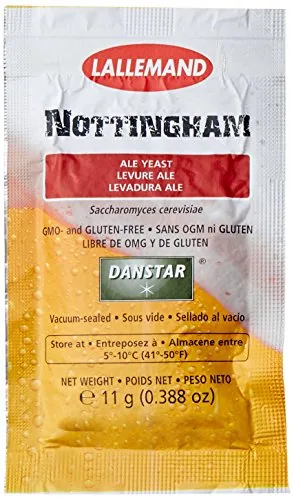
Lallemand LalBrew Nottingham Ale Yeast, 11 g
Lallemand (LalBrew)
- Type
- Dry ale yeast, English
- Dose
- 50–100 g/hL
- Temp
- 59–68°F (listing); 10–25°C on TDS
- Attenuation
- 78–84% (TDS)
LalBrew Nottingham is an English strain that ferments clean and fast. Lallemand's sheet lists 50–77°F (10–25°C), 50–100 g/hL, 78–84% attenuation and 14% ABV tolerance, and says dry pitching is the preferred method. The listing's 59–68°F range is narrower than the sheet's.
Best for: A reliable spare packet for any pale ale or IPA
Skip if: You want an American-yeast character
- Dry pitch preferred per Lallemand
- Wide 50–77°F (10–25°C) range
- 14% ABV tolerance
- Listing title and bullets disagree on sachet size
- English, not American, strain
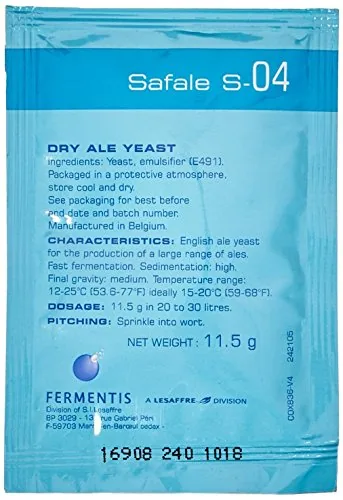
Fermentis SafAle S-04 Dry Ale Yeast, 11.5 g
Fermentis
- Type
- Dry ale yeast, English
SafAle S-04 is Fermentis's English ale strain for bitters, porters, stouts and English IPA. This listing gives no fermentation data at all, so use the Fermentis technical sheet for temperature and dose.
Best for: English IPAs with a malty backbone
Skip if: You want a West Coast profile
- English ale character
- 11.5 g sachet
- No temperature on this listing
- No dose on this listing
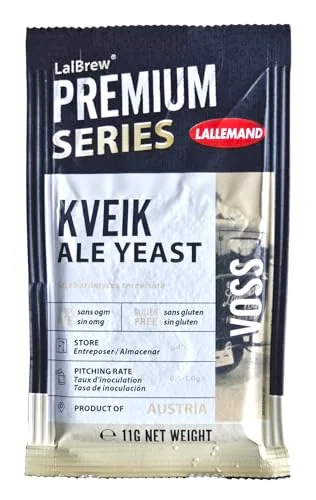
Lallemand LalBrew Voss Kveik Ale Yeast, 11 g
Lallemand (LalBrew)
- Type
- Dry kveik ale yeast
- Temp
- 95–104°F (35–40°C) optimal
LalBrew Voss is a Norwegian kveik strain. Lallemand lists a very high optimal range of 95–104°F (35–40°C), 76–82% attenuation, 12% ABV tolerance, 50–100 g/hL, very high flocculation and a neutral profile with subtle orange and citrus notes. It lets you ferment an IPA in summer without temperature control.
Best for: Summer IPAs with no fermentation chamber
Skip if: You want a classic American-yeast profile
- 95–104°F optimum
- Very high flocculation
- Fast, warm fermentation
- Citrus/orange note isn't neutral for every IPA
- Dose not on this listing
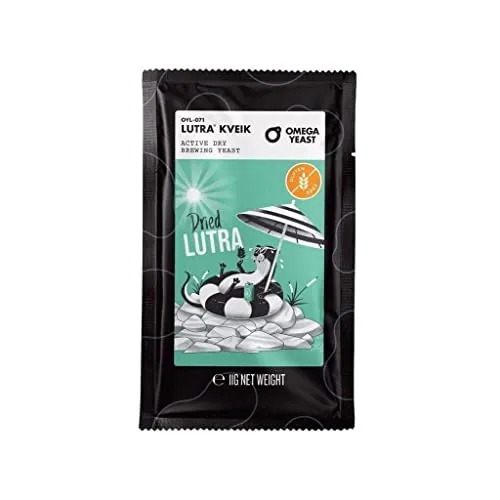
Omega Yeast Lutra Kveik Dry Yeast, 11 g
Omega Yeast
- Type
- Dry kveik yeast
- Temp
- 68–95°F (20–35°C)
- Attenuation
- 75–82%
Omega's Lutra is a kveik strain sold as clean and heat-tolerant: 68–95°F (20–35°C), 75–82% attenuation and medium-high flocculation per the listing, with no temperature control needed. It's the warm-garage choice when you want less orange character than Voss.
Best for: Clean IPAs and pale ales in summer
Skip if: You can already hold 64–68°F
- 68–95°F range listed
- 75–82% attenuation
- Clean profile per maker
- Dose not on this listing
- Contains emulsifier E491 per listing
Dry yeast for IPA compared by maker numbers
Three numbers decide most of the outcome: the temperature range (where the yeast tastes the way the maker describes), the dose (how much yeast per volume) and attenuation (how dry the beer finishes). The table below is built from the Fermentis and Lallemand technical sheets; the strain table after it adds listing data for the others.
Dry yeast by the maker’s numbers
| Yeast | Use | Fermentation temp | Dose | Attenuation / tolerance | Rehydration |
|---|---|---|---|---|---|
| SafAle US-05 Fermentis | Ale (American) | 18–26°C (64.4–78.8°F) | 50–80 g/hL | 78–82%; not listed on the product page | Optional: ≥10× its weight of sterile water or boiled, hopped wort at 25–29°C (77–84°F), 15–30 min; or direct pitch at or above fermentation temperature |
| SafAle S-04 Fermentis | Ale (English) | 18–26°C (64.4–78.8°F) | 50–80 g/hL | 74–82%; 9–11% ABV | Optional: ≥10× its weight of sterile water or boiled, hopped wort at 25–29°C (77–84°F), 15–30 min; or direct pitch at or above fermentation temperature |
| SafLager W-34/70 Fermentis | Lager | 12–18°C (53.6–64.4°F) | 80–120 g/hL | 80–84%; 9–11% ABV | Optional: ≥10× its weight of sterile water or boiled, hopped wort at 15–25°C (59–77°F), 15–30 min; or direct pitch at or above fermentation temperature |
| LalBrew Nottingham Lallemand | Ale (English) | 10–25°C (50–77°F) | 50–100 g/hL | 78–84%; 14% ABV | Dry pitching is the maker's preferred method (no significant difference vs rehydration, per Lallemand) |
| LalBrew Voss (kveik) Lallemand | Ale (kveik) | 25–40°C (77–104°F) Optimum 35–40°C (95–104°F) per Lallemand | 50–100 g/hL | 76–82%; 12% ABV | Per the sachet |
| Lalvin EC-1118 Lallemand | Wine, cider, mead | 10–30°C (50–86°F) | 25 g/hL | Ferments dry; 18% v/v (subject to conditions) | 35–40°C (95–104°F) water for 20 min with Go-Ferm Protect Evolution (30 g/hL), then temper to within 5–10°C of the must |
Sources: Fermentis: SafAle US-05 product page; Fermentis: SafAle S-04 product page; Fermentis: SafLager W-34/70 product page; Lallemand: LalBrew Nottingham technical data sheet; Lallemand Brewing: LalBrew Voss Kveik Ale Yeast product page; Lallemand: Lalvin EC-1118 technical data sheet. 1 hL = 26.4 US gal, so 50 g/hL ≈ 1.9 g per gallon. Follow the sachet you buy; makers update their sheets.
Other IPA strains: listing data
| Strain | Maker | Temperature (listed) | Attenuation (listed) | Flocculation |
|---|---|---|---|---|
| LalBrew BRY-97 | Lallemand | 59–72°F | Not listed | Not listed |
| LalBrew Verdant IPA | Lallemand | Not listed | Not listed | Not listed |
| M44 US West Coast | Mangrove Jack's | Not listed | Not listed | Not listed |
| WLP001 California Ale (dry) | White Labs | 64–73°F (18–23°C) | 73–85% | Medium |
| SafAle S-04 | Fermentis | Not listed | Not listed | Not listed |
| Lutra kveik | Omega | 68–95°F (20–35°C) | 75–82% | Medium-high |
Source: Product listings, November 2026
Warm limit of each strain's listed range
Upper temperature from the maker sheet or listing, °F
The warm limit isn't a target. Most clean American strains taste cleanest toward the cool end of their range, and kveik is the exception that likes heat.
How much dry yeast for a 5-gallon IPA?
Makers dose dry yeast by weight per volume. At the US-05 dose of 50–80 g/hL, a 5 gal (19 L) batch needs roughly 9.5–15 g, so one 11.5 g sachet sits in the middle of the range. Lallemand's Nottingham range of 50–100 g/hL runs to about 19 g for the same batch. Stronger IPAs, especially double IPAs, sit at the top of the range or above, which usually means two sachets.
A starter isn't needed for dry yeast; makers dose by weight. Rehydration is optional for US-05 per Fermentis, and Lallemand prefers dry pitching for Nottingham. Either way, follow the sachet.
How to pitch dry yeast into an IPA step by step
- Check the date and storage
Fermentis says to keep US-05 below 75°F (24°C) for up to 6 months and below 59°F (15°C) beyond that. A fridge is ideal.
- Chill the wort into range
Cool to the lower part of the strain's range before pitching, for example the mid-60s °F for US-05 or BRY-97. Kveik is the exception: pitch it warm.
- Aerate
Shake or splash the cooled wort before pitching. If you later repitch harvested yeast, Lallemand notes that wort aeration is required.
- Pitch the right weight
Use the pitch-rate calculator. For big IPAs, plan two sachets.
- Hold temperature for the first days
Most flavor is set early. A swamp cooler or controller helps; in summer, switch to kveik.
- Dry hop, then confirm final gravity
Add dry hops per your recipe, then wait for a stable gravity over 2–3 days before packaging. Log OG and FG for the ABV calculator.
Mistakes to avoid
- Fermenting clean American yeast too warm. A garage at 80°F (27°C) is above US-05's maker range and above BRY-97's listed range.
- Under-pitching a double IPA. High gravity needs more yeast; check the dose against volume and gravity.
- Trusting the listing over the maker sheet. Listings for US-05 and Nottingham show narrower temperature ranges than the maker data; use the sheet.
- Rehydrating in the wrong water. If you rehydrate US-05, Fermentis specifies at least 10× its weight of sterile water or boiled, hopped wort at 77–84°F (25–29°C).
- Leaving opened sachets out. Fermentis says to reseal, keep at 39°F (4°C) and use within 7 days.
- Choosing Voss for a classic West Coast IPA. Its orange and citrus notes can show; Lutra or a chamber with US-05 are closer.
Who should choose which yeast?
Pick by IPA style and garage
| You brew… | Choose | Why |
|---|---|---|
| West Coast IPA, temp control | US-05 or BRY-97 | Clean, published ranges |
| Hazy / NEIPA | Verdant | Apricot, tropical and citrus esters per maker |
| Double IPA | WLP001 dry or US-05 (two sachets) | Listed 10–15% tolerance; maker doses |
| English IPA | S-04 or Nottingham | English ale character |
| Any IPA, hot garage, no chamber | Lutra (cleaner) or Voss | Warm ranges up to 95–104°F |
IPAs are often stronger than commercial lagers, so pour with that in mind.
Browse every strain in yeast and nutrients, hops and malt in ingredients and milling, and warm-weather gear in temperature control and summer. Work out bitterness in the IBU calculator. Beer worts rarely need extra nutrient, but high-adjunct or very strong worts can; see the best yeast nutrients.
SafAle US-05 is the safest choice for a clean West Coast IPA, because Fermentis publishes every number you need: 64–79°F (18–26°C), 50–80 g/hL and 78–82% attenuation. Pick LalBrew Verdant for hazy IPAs, WLP001 dry for drier double IPAs, and Nottingham as the fast, clean spare. In a hot garage, Omega Lutra keeps things clean up to 95°F and LalBrew Voss runs up to 104°F.
Before you buy, read rehydrate dry yeast or direct pitch? and kveik yeast: brewing without temperature control. For a closer look, see Dry vs liquid yeast.
We compared maker technical sheets (Fermentis US-05; Lallemand Nottingham, Voss and EC-1118, the sheets behind our yeast table) and listing data for each strain's temperature range, dose, attenuation, flocculation and alcohol tolerance. Where the listing and the maker sheet disagree, we use the maker sheet and say so. We did not ferment with these yeasts. No scores or prices.