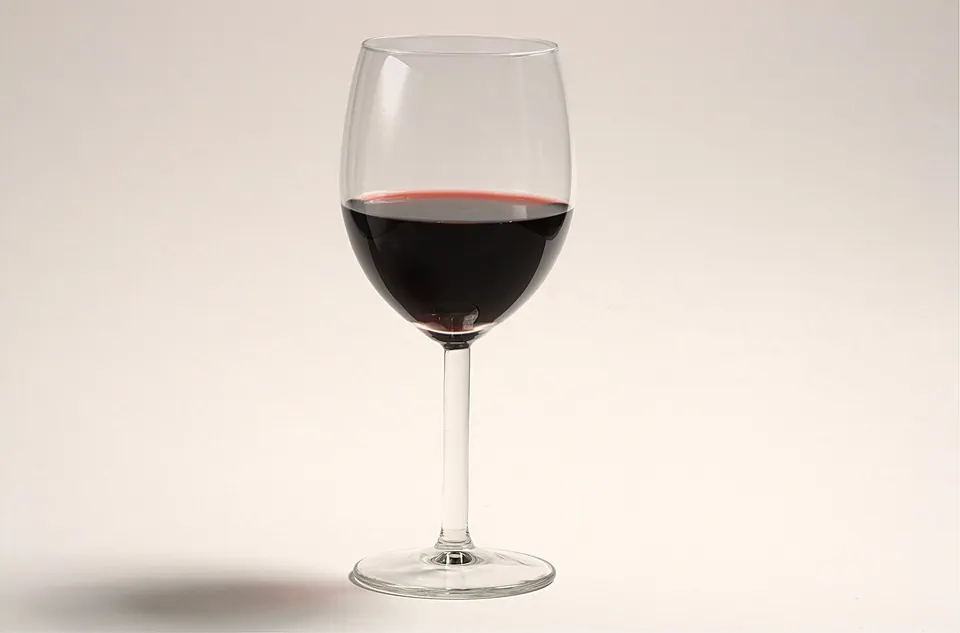
- Learning how to make wine from a kit is mostly following the sheet in the box: kits are built for a 4–8 week timeline.
- You need a 6–8 gal primary, a 6 gal carboy, a hydrometer, a degassing tool, a siphon, 30 bottles and a corker for a standard 6 gal (23 L) kit.
- WineMaker’s kit guide: ferment warm (kits often call for 72–77°F, 22–25°C), and degas fully before fining day or the wine will not clear.
- Kits include sulfite and sorbate packets; add them exactly when the sheet says, and tell sulfite-sensitive guests.
- Bulk-age or bottle-age a few extra weeks if you can; most kit reds improve with time.
How to make wine from a kit is the easiest question in home winemaking, because the kit does most of the thinking. A wine kit contains concentrated grape juice (sometimes with skins or oak), a yeast sachet and numbered additive packets: usually bentonite, sulfite, sorbate and a two-part clarifier. Your job is clean equipment, the right temperature and patience.
This guide follows the general order printed on most 6 gal (23 L) kits and the technique notes in WineMaker magazine’s kit articles. Your kit’s instruction sheet always wins over this summary; where it gives a day or a gravity, use it. We compare kit instructions, listings and published guides; we did not make these kits.
What you need
Equipment for a 6 gal (23 L) wine kit
| Item | Why | Notes |
|---|---|---|
| Primary fermenter, 7.9 gal (30 L) or larger | Room for foaming in the first week | ✓ Bucket with lid and airlock grommet |
| 6 gal (23 L) carboy | Clearing and aging with little headspace | ~ Glass, PET or a wide-mouth fermenter |
| Hydrometer and test jar | Gravity readings decide each step | ✓ Essential |
| Degassing rod or whip | Kits must be degassed before fining | ✓ Drill-mounted saves time |
| Siphon and tubing | Racking off sediment | ✓ Auto-siphon is easiest |
| 30 × 750 mL bottles, corks, corker | Packaging | ~ Floor corkers take the least effort |
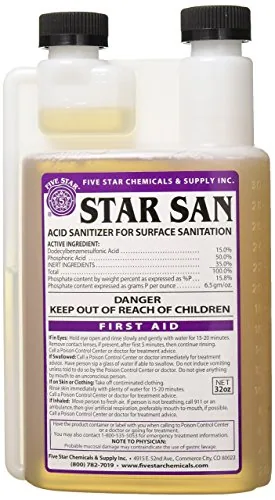
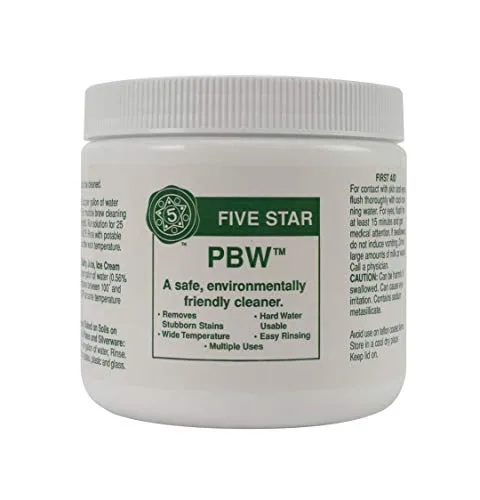
| Cleaner and no-rinse sanitizer | Sanitation | ✓ Use at label dilution |
Source: Typical kit instruction sheets; equipment kit listings
An equipment starter kit covers most of the table. Check the listing for what it leaves out: the Master Vintner starter kit, for example, lists a wine ingredient kit and bottles as things you still need.
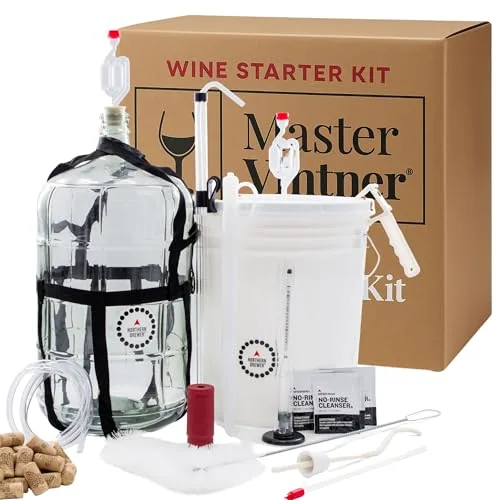
Master Vintner Wine Making Starter Kit, 6 gal
- Batch size
- 6 gal
- Type
- Equipment kit
- Still need
- Wine ingredient kit, bottles
Best for First 6-gallon wine kit
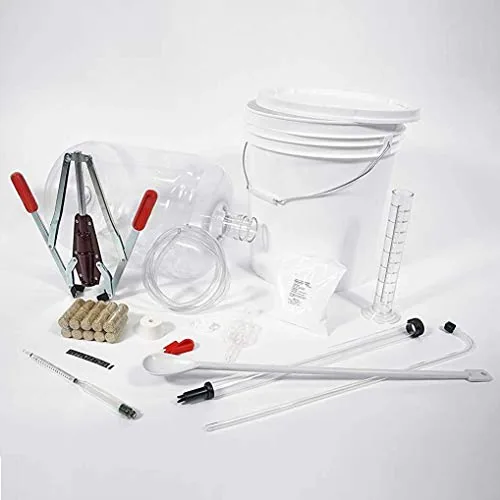
Wild Grapes Wine Equipment Starter Kit, 6 gal
- Batch size
- 6 gal (23 L)
- Type
- Equipment kit
- Still need
- Wine ingredient kit
Best for Starting with Wild Grapes kits
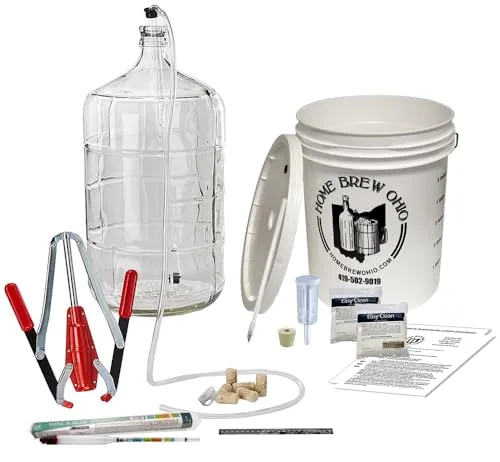
Winemakers Depot Premium Wine Equipment Kit with Auto-Siphon
- Batch size
- 6 gal
- Type
- Equipment kit
Best for Everything but the wine kit
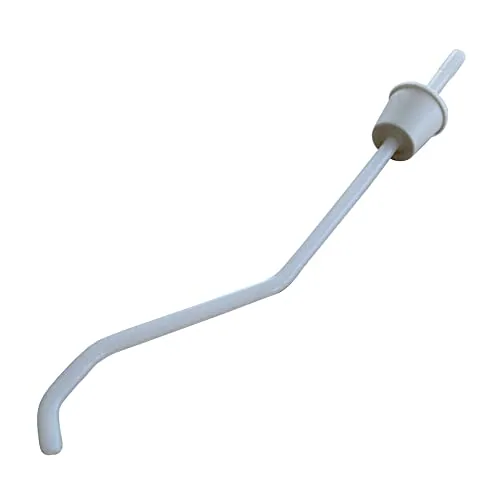
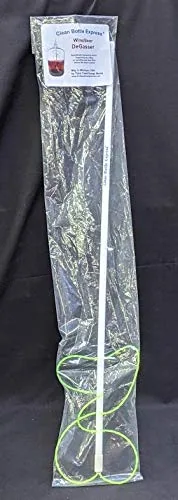
Clean Bottle Express Degassing Rod
- Type
- Drill-mounted degassing rod
Best for Degassing in glass carboys
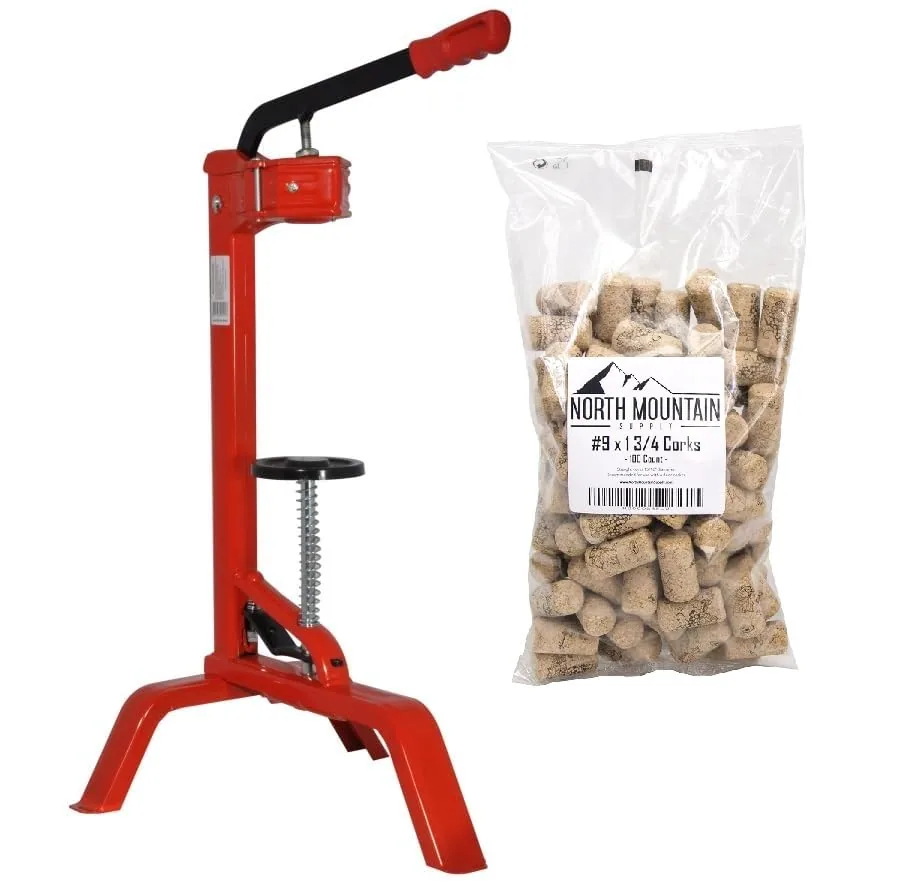
North Mountain Supply Portuguese Floor Corker + 100 #9 Corks
- Type
- Floor corker
- Includes
- 100 #9 x 1¾" agglomerated corks
Best for Bottling 6-gallon wine kits
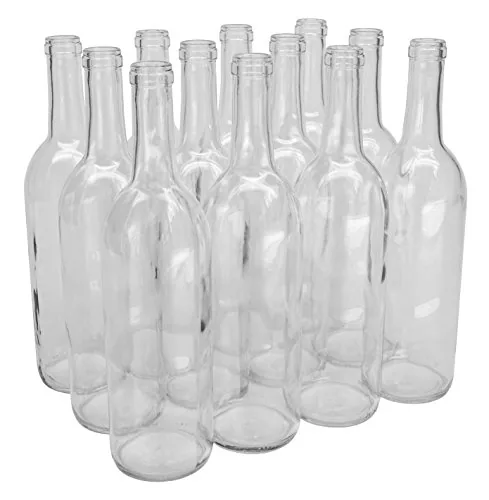
North Mountain Supply 750 mL Flint Bordeaux Wine Bottles, 12
- Type
- Bordeaux wine bottles, cork finish
- Count
- 12
- Size
- 750 mL
Best for Bottling a wine kit
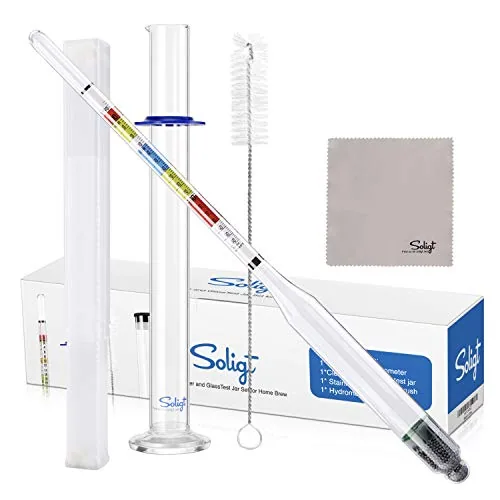
SOLIGT Triple Scale Hydrometer & Glass Test Jar Kit
- Range
- SG 0.990–1.170, Brix 0–35, potential ABV 0–20%
- Scale
- Triple (SG, Brix, potential alcohol)
Best for A complete first hydrometer kit
Choosing a wine kit
Kits differ mainly in juice volume and concentration, whether they include grape skins or oak, and how long they take. Premium kits with skins (such as RJ Spagnols En Primeur, which lists about six weeks) aim for more body; quicker kits are ready in about four weeks per their makers. Read the “includes” line: the Fontana Merlot listing, for instance, names bentonite, sulphite, sorbate, chitosan and kieselsol. Chitosan is shellfish-derived, worth knowing if you pour for guests with allergies.
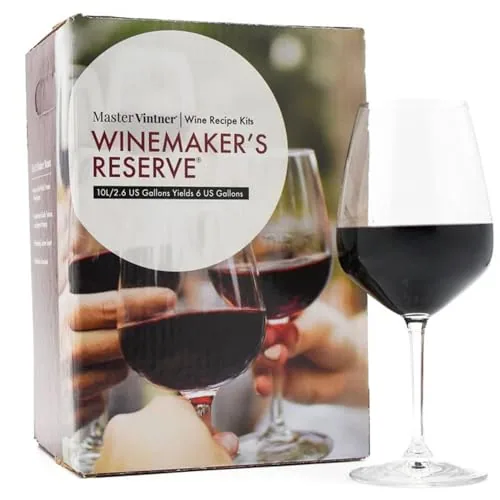
Master Vintner Winemaker's Reserve Cabernet Sauvignon Kit, 6 gal
- Batch size
- 6 gal
- Type
- Wine ingredient kit (red)
- Still need
- Winemaking equipment
Best for Red wine from a kit
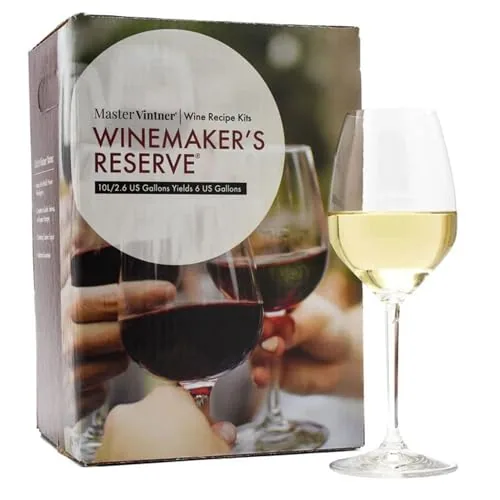
Master Vintner Winemaker's Reserve Chardonnay Kit, 6 gal
- Batch size
- 6 gal
- Type
- Wine ingredient kit (10 L, white)
- Still need
- Winemaking equipment
Best for White wine from a kit
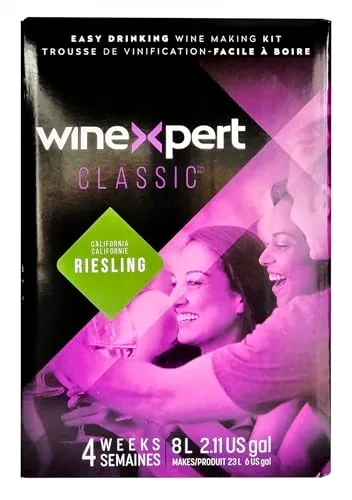
Winexpert Classic California Riesling Wine Kit, 6 gal
- Batch size
- 6 gal
- Type
- Wine ingredient kit (white)
Best for Off-dry white
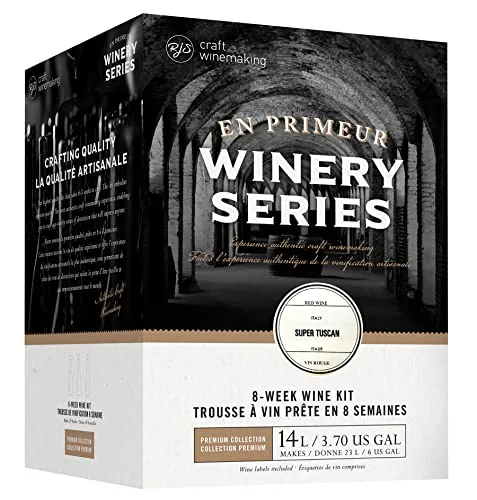
RJ Spagnols En Primeur Super Tuscan with Skins, 6 gal
- Batch size
- 6 gal
- Type
- Premium wine kit with grape skins
- Includes
- All ingredients; 6-week fermentation
Best for Gifting a premium wine kit
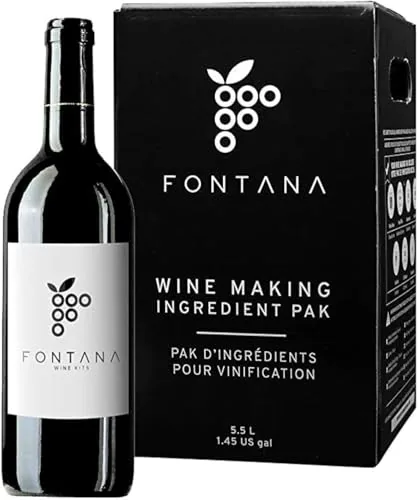
Fontana Merlot Wine Kit, 6 gal
- Batch size
- 6 gal (30 bottles)
- Type
- Wine ingredient kit (red)
Best for Kit red wine
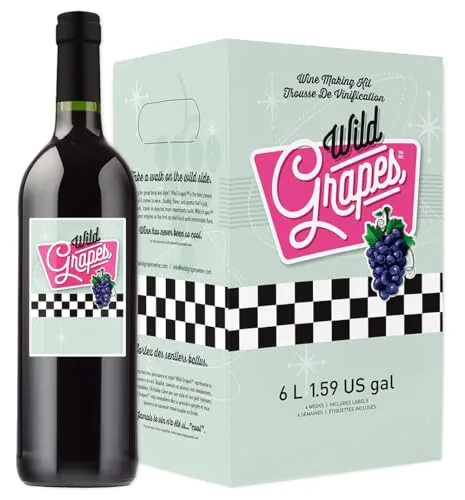
Wild Grapes Cabernet Sauvignon Wine Kit, 30 bottles
- Batch size
- Up to 30 x 750 mL
- Type
- Wine ingredient kit (red)
- Includes
- Wine base, yeast, fining agents, 30 labels
Best for Pairing with the Wild Grapes equipment kit
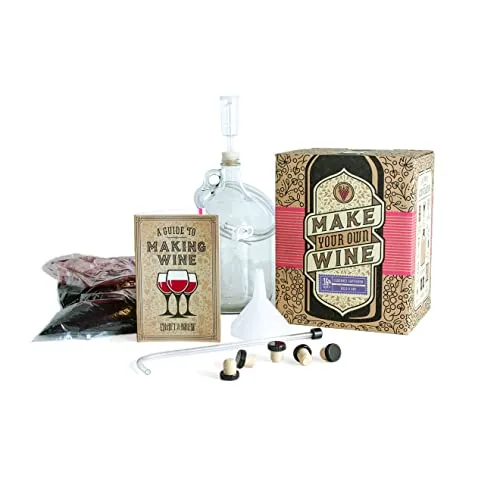
Craft A Brew Cabernet Sauvignon Wine Kit, 1 gal
- Batch size
- 1 gal
- Type
- Equipment + ingredient kit
- Includes
- Ingredients and reusable equipment
Best for Small-space first wine
New to fermenting? A 1 gal (3.8 L) kit like the Craft A Brew Cabernet makes five bottles and uses smaller gear, a low-stakes way to learn the steps before committing to 30 bottles.
How to make wine from a kit: the steps
- Clean and sanitize everything
Clean first, then sanitize with a no-rinse sanitizer at label dilution. See cleaning vs sanitizing.
- Mix the juice and add bentonite
Most kits start with bentonite stirred into warm water in the primary, then the juice concentrate and top-up water to the line on the sheet. Stir hard.
- Take a starting gravity
Record the specific gravity; the sheet lists the expected range. You will need it for the ABV calculator.
- Pitch the yeast at kit temperature
WineMaker notes kits often call for 72–77°F (22–25°C), warmer than traditional grape winemaking, because they are designed to finish fast. Sprinkle the yeast as the sheet says and fit the lid and airlock.
- Primary fermentation
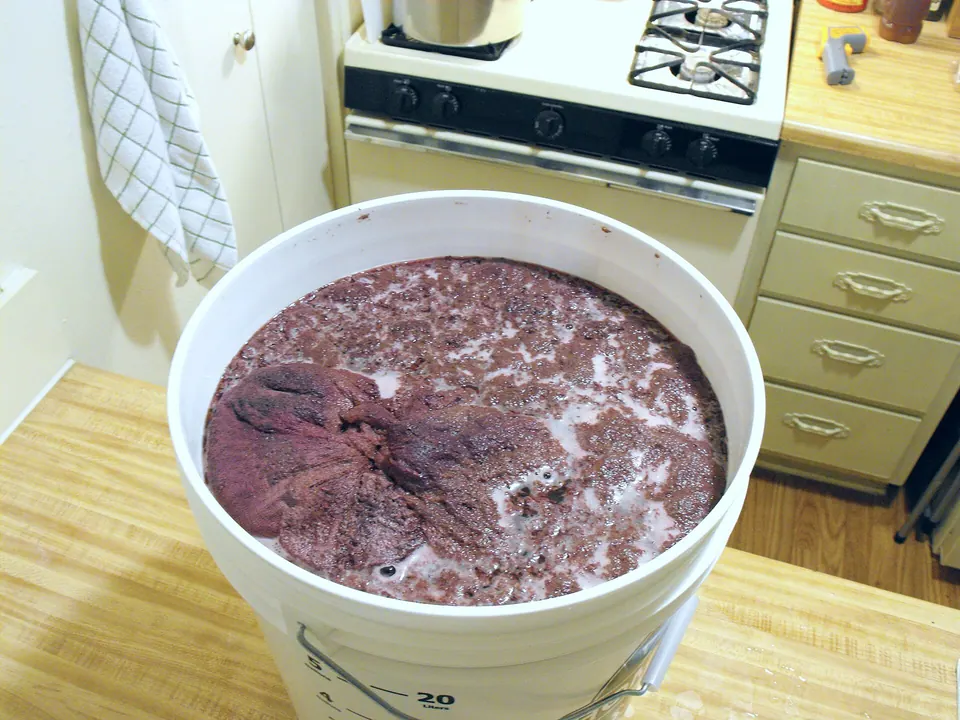
At the warm end, WineMaker says fermentation may finish in about five days; at the cool end, roughly twice as long. Avoid temperatures above about 100°F (37°C), which can produce off-flavors.
- Rack to the carboy
When the gravity reaches the number on the sheet, siphon the wine into the carboy, leaving the heavy sediment behind, and let it finish.
- Confirm it is dry
Most sheets want a specific gravity just below 1.000 that holds steady over two days before stabilizing.
- Degas, stabilize and fine
Add the sulfite and sorbate packets in the order printed, then degas thoroughly; WineMaker says the only way to get brilliant clarity is to degas fully at or before fining day, keeping the wine warm. Then add the clarifier packets in order.
- Clear, rack and bottle
Leave it undisturbed for the clearing time on the sheet, rack off the sediment, then bottle and cork. Store bottles on their side once the corks have set, per the cork maker.
- Age and log
Many kit reds improve with a few extra months. Note dates and gravities in the brew-day log.
Kit timing and temperatures by the numbers
Temperature landmarks for kit fermentation
From WineMaker’s kit fermentation article
Typical 6 gal kit timeline (your sheet may differ)
| Stage | Roughly when | Check |
|---|---|---|
| Primary | Days 1–7 | Gravity reaches the rack point on the sheet |
| Secondary | Days 7–14 | Gravity steady just under 1.000 |
| Stabilize, degas, fine | Around day 14 | No fizz when you shake a sample |
| Clearing | Days 15–28 (4-week kits) or longer | Wine is bright when held to a light |
| Bottling | Week 4, 6 or 8 depending on kit | Rack off sediment first |
Source: General pattern of 4–8 week kit instruction sheets; WineMaker
WineMaker also gives a quick test for leftover CO2: half-fill a hydrometer jar, shake it for 60 seconds and compare with an unshaken sample. If the shaken one fizzes or tastes sharp, keep degassing.
Bottles, corks and storage
A 6 gal (23 L) kit fills about thirty 750 mL bottles. Reused commercial wine bottles work if they take a standard cork (screw-cap bottles will not seal with a cork). Soak off labels, clean the bottles, and sanitize them on bottling day; a bottle rinser and drying tree speed this up.
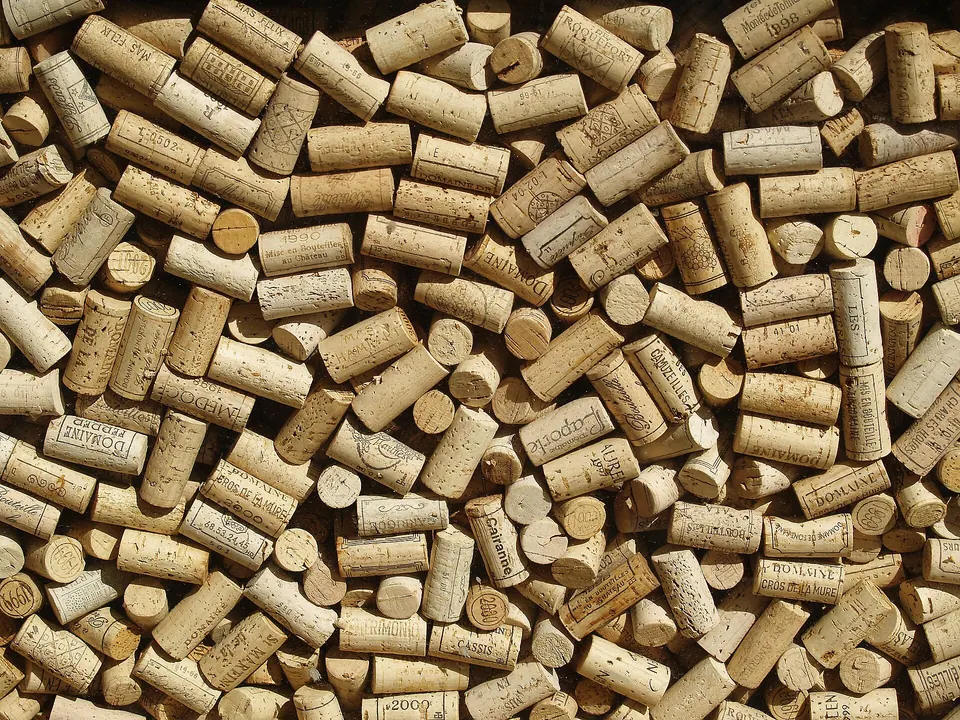
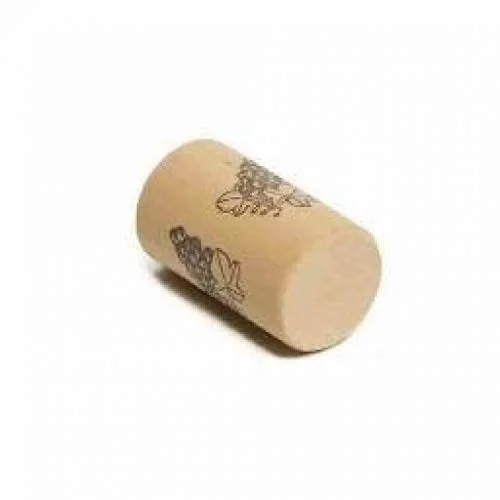
Corks. Size #9 corks are the usual size for standard wine bottles with a floor corker; #8 corks are easier to drive with a hand corker. Synthetic corks resist drying out and taint; natural and agglomerated corks are traditional. Follow the cork maker’s guidance on soaking (many say do not soak) and on how long to keep bottles upright after corking so the cork can expand before you lay them down.
Corkers. Double-lever hand corkers are cheap and portable but take effort for 30 bottles. A floor corker compresses the cork and drives it in one pull, which matters when you are bottling several kits a year.
Storage. Keep bottles cool, dark and steady. Big temperature swings push wine past the cork. Virginia Tech’s home winemaking guide suggests storing finished bottles at 50–60°F, which a basement often manages better than a garage.
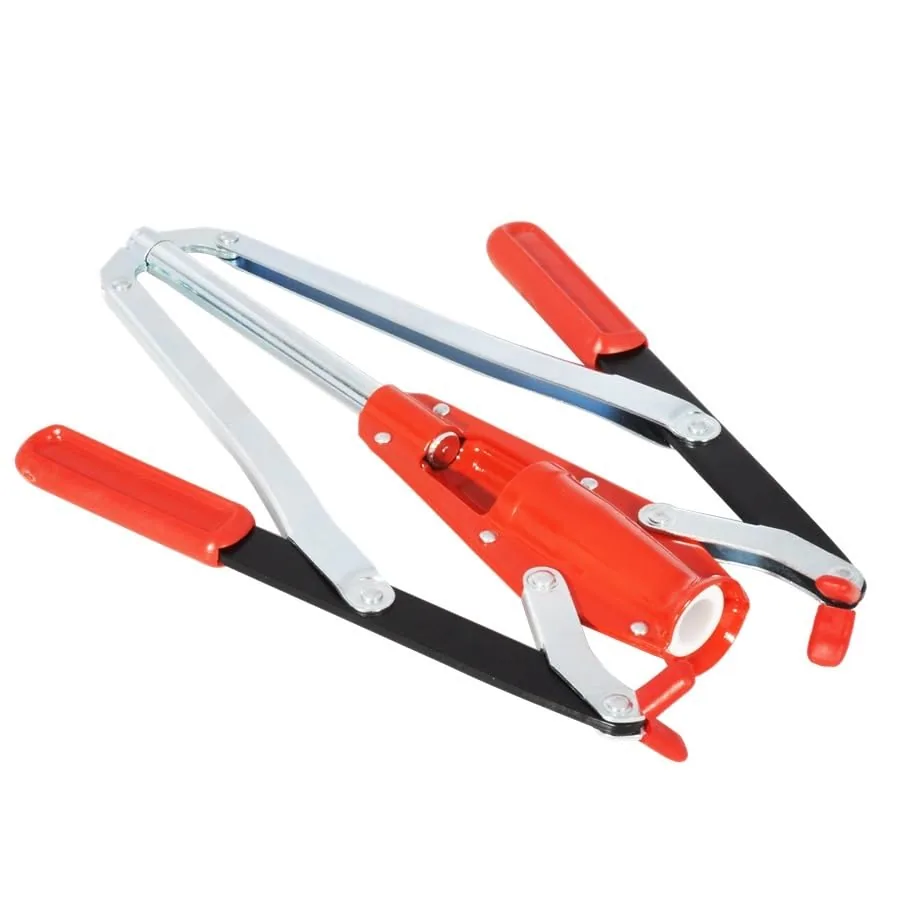
North Mountain Supply Double Lever Hand Corker
- Type
- Twin-lever hand corker
Best for Occasional wine bottling
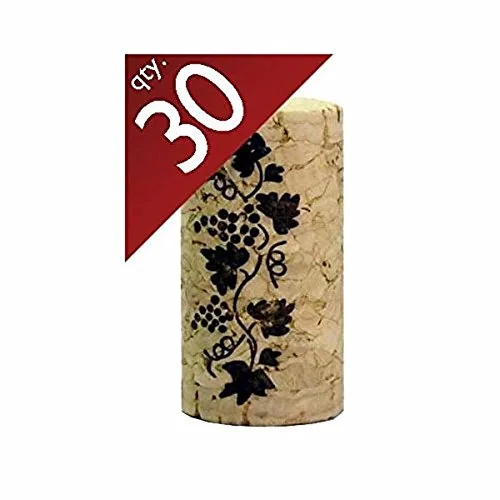
LD Carlson #9 x 1¾" Premium Corks, 30 ct
- Type
- Straight wine corks
- Count
- 30
- Size
- #9, 15/16" x 1¾"
Best for Bottling one wine kit
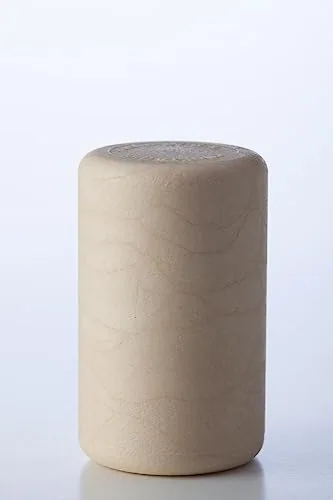
North Mountain Supply Annum Synthetic Corks 23 x 38 mm, 50 ct
- Type
- Synthetic corks
- Count
- 50
- Size
- 23 x 38 mm (comparable to #8)
Best for Wine for drinking within a year
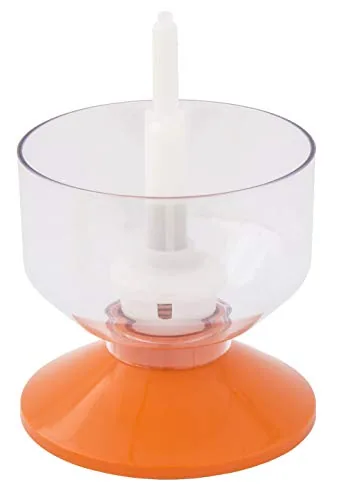
North Mountain Supply BR-DX Deluxe Bottle Rinser
- Type
- Deluxe bottle rinser (Vinator style)
- Size
- Bench or bottle-tree mount
Best for Faster bottle sanitizing
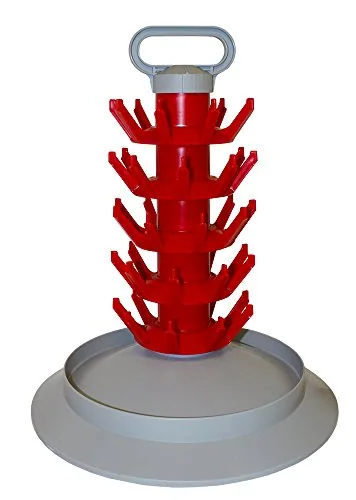
LD Carlson Econo 45 Bottle Drying Tree
- Type
- Bottle drying tree
- Count
- 45 bottles
Best for Drying bottles after sanitizing
Sulfites, safety and the law
The sulfite packet (potassium metabisulfite) protects the wine from oxidation and spoilage, and the sorbate packet keeps leftover yeast from restarting fermentation once you sweeten or bottle. TTB requires commercial wine with 10 ppm or more of sulfur dioxide to say “Contains sulfites”, and FDA uses the same 10 ppm threshold for foods. Home wine has no label, so tell guests who are sensitive to sulfites, often people with asthma.
Federal rules let a household make up to 100 gal of wine (including cider and mead) a year with one adult, or 200 gal with two or more, for personal or family use only and never for sale (27 CFR 24.75). See is homebrewing legal for the details.
Common wine kit mistakes
- Fermenting too cool. Kits are designed for warm fermentation; a cold basement stretches the schedule and can leave gas in the wine.
- Skimping on degassing. Gassy wine will not clear and tastes sharp.
- Racking before fining. Kit makers warn that racking off the sediment before the fining step can stop the wine from clearing; follow the sheet’s order.
- Adding packets out of order. Sulfite, sorbate and the two-part clarifier work in sequence.
- Topping up with water. It dilutes the wine; most sheets allow a small amount or none.
- Bottling cloudy wine. Give it more time; sediment in the bottle is permanent.
Which kit should you start with?
Start with a 1 gal kit if you want to learn the steps cheaply or have no space. Pick a 4-week 6 gal kit if you want 30 bottles quickly. Choose a premium kit with skins if you are willing to wait and want a fuller red. Want fresh fruit instead? See how to make fruit wine. Want it sweeter? Read stabilize and backsweeten first. All kits live in the wine, cider, mead and kombucha category.
Gear picks for this guide: best wine making kits and best wine yeast.
ABV calculatorWork out ABV from OG and FG with the standard and high-gravity formulas, hydrometer temperature correction,…Printable brew-day log and recipe sheetFree brew-day log: record recipe, water and salts, mash, gravities, yeast, fermentation temperatures,…Questions
How long does it take to make wine from a kit?
Do I need to degas wine from a kit?
What temperature should a wine kit ferment at?
Can I make wine from a kit without a carboy?
Is homemade kit wine safe to drink?
Why do wine kits include sulfites?
Sources
- WineMaker: Fermenting and degassing wine kits (Tim Vandergrift)
- TTB: Wine labeling, declaration of sulfites
- 21 CFR 101.100: Food; exemptions from labeling (sulfites, Cornell LII)
- 27 CFR 24.75: Wine for personal or family use (Cornell LII)
- EPA: Star San label (Reg. No. 65001-1, PDF)
- Virginia Tech Extension HORT-213: Wine making for the home gardener
- NIAAA: What is a standard drink?