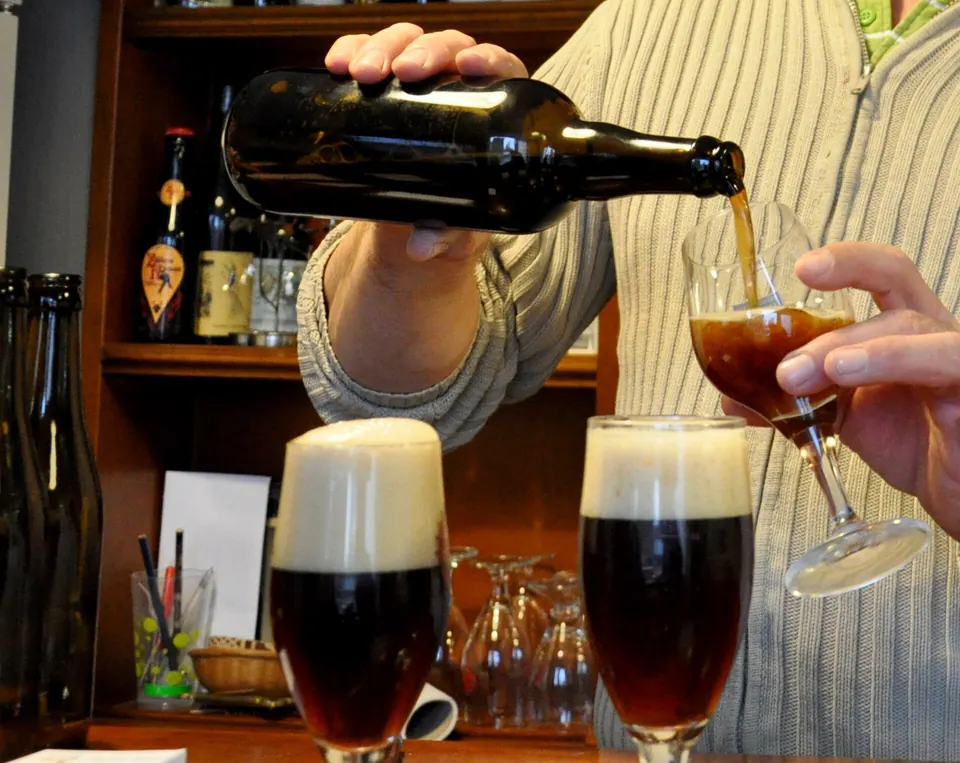
- One volume of CO2 means the beer holds as much CO2 gas (at standard conditions) as its own volume. Most beers sit between about 2.0 and 2.8 volumes.
- Styles differ: British ales low (about 1.5–2.2), American ales and lagers in the middle, German wheat beers high (2.8 and up), per BYO.
- Beer already contains some CO2 after fermentation; how much depends on the warmest temperature it reached.
- Bottle conditioning adds CO2 with weighed priming sugar; force carbonation adds it from a cylinder at the pressure set by the chart.
- Standard 12 oz bottles aren’t meant for more than about 3.0 volumes.
Carbonation explained in one sentence: CO2 dissolves into beer under pressure, and the colder the beer, the more gas it holds at a given pressure. Everything else, from priming sugar weights to regulator settings, follows from that physical rule.
Brewers describe carbonation in “volumes of CO2.” This guide explains what the unit means, what levels different styles use, and how both ways of carbonating (yeast in a sealed bottle, or gas from a cylinder) reach the target. The numbers come from the BYO carbonation priming chart and the formulas behind our priming sugar calculator and keg carbonation chart.
What does “volumes of CO2” mean?
If you could pull all the dissolved CO2 out of a 12 oz beer and hold it at standard temperature and pressure, a 2.5-volume beer would yield about 30 oz of gas: two and a half times the beer’s own volume. Some brewers use grams per liter instead; one volume is roughly 2 g of CO2 per liter.
Carbonation level changes how a beer tastes and feels. Higher carbonation adds a sharp, prickly bite and lifts aroma; lower carbonation feels softer and lets malt show. That is why styles carry such different targets.
CO2 volumes by style family (bottle or keg)
| Style family | Volumes of CO2 | Bottle-safe? |
|---|---|---|
| British ales | 1.5–2.2 | ✓ standard bottles |
| American ales | 2.2–3 | ✓ standard bottles |
| European lagers | 2.4–2.6 | ✓ standard bottles |
| American lagers | 2.5–2.8 | ✓ standard bottles |
| Belgian ales | 2–4.5 | ~ standard bottles only to about 3 vol |
| German weizen | 2.8–5.1 | ~ standard bottles only to about 3 vol |
Style ranges: BYO: Carbonation priming chart. Standard 12 oz pry-off bottles are not meant for more than about 3.0 volumes. Bottle only after the gravity reads the same 2–3 days in a row.
Within each family, pick the low end for malty or cask-like beers and the high end for crisp, aromatic ones. The BYO ranges are wide on purpose: Belgian ales run from about 2.0 to 4.5 volumes, and the top of that range requires bottles rated for it.
Residual CO2: the carbonation you already have
Fermentation saturates beer with CO2 at atmospheric pressure. When fermentation ends, some of that gas stays dissolved, and how much depends on temperature: cold beer holds more. If the beer warmed up at any point after fermentation, it lost gas it can’t get back, so priming calculators use the warmest temperature the beer reached, not the current one.
Residual CO2 by warmest temperature after fermentation
Vres = 3.0378 − 0.050062·T + 0.00026555·T² (T in °F), fitted to the BYO table
The formula tracks BYO’s table closely: BYO lists 0.85 volumes at 68°F (formula 0.87) and 1.21 at 47°F (formula 1.27). A lager that stayed at 50°F already has about 1.2 volumes and needs much less priming sugar than an ale that peaked at 72°F.
Two ways to carbonate
Priming sugar vs forced carbonation
| Bottle conditioning (priming) | Forced carbonation (keg) | |
|---|---|---|
| CO2 comes from | Yeast fermenting added sugar in a sealed bottle | A CO2 cylinder through a regulator |
| What you control | Weight of priming sugar | Regulator pressure and beer temperature |
| Time | About 2 weeks at room temperature | About 1–2 weeks cold at serving pressure, or days with burst methods |
| Sediment | ~ Thin yeast layer in each bottle | ✓ Clear after the first pint |
| Adjustable after the fact | ✗ Fixed once capped | ✓ Change the pressure anytime |
| Risk | ✗ Bottle bombs if bottled early or over-primed | ~ Foam if pressure or temperature is off |
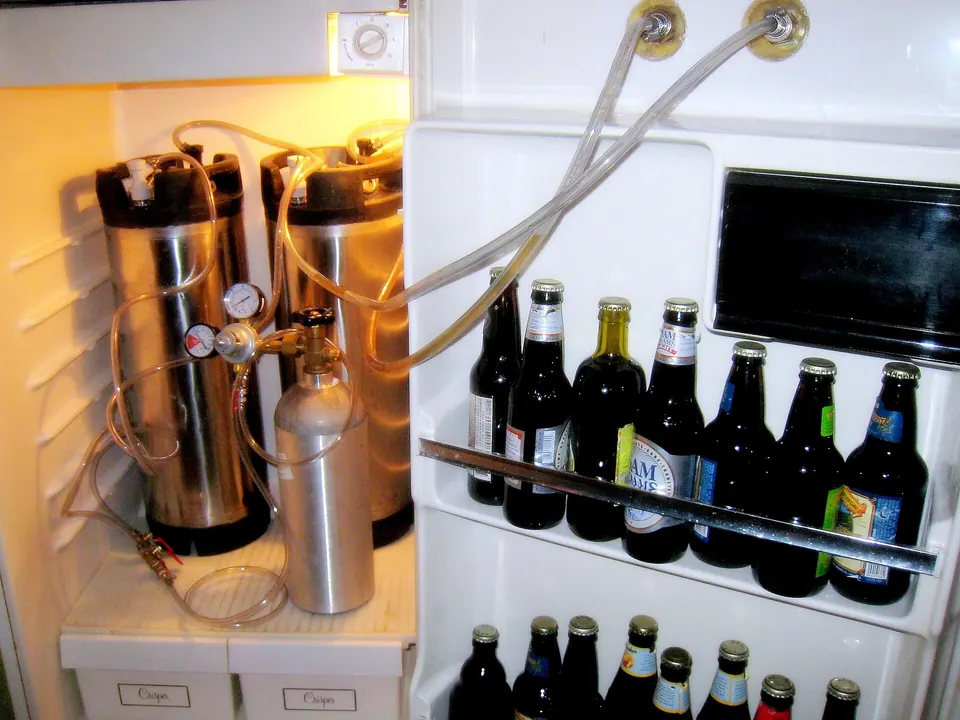
| Equipment | Bottles, caps, capper | Keg, cylinder, regulator, cold space |
Source: Palmer, How to Brew; AHA kegging introduction
Priming math
Sugar needed = (target volumes − residual volumes) × gallons × a factor per sugar. BYO’s chart works out to about 16.7 g of corn sugar (dextrose monohydrate), 15.3 g of anhydrous dextrose or 14.5 g of table sugar per gallon per volume. Dry malt extract needs roughly a third more than corn sugar and varies by brand, so treat it as an estimate.
Worked example from the calculator: 5 gal at 2.5 volumes, warmest temperature 68°F, residual 0.86 volumes, gives (2.5 − 0.86) × 5 × 16.7 ≈ 137 g (4.8 oz) of corn sugar.
Priming sugar calculatorVolume, warmest temperature and style target in; grams and ounces of each sugar out, with a warning above about 3.0 volumes.Pressure math
Forced carbonation uses Henry’s law in practice: at equilibrium, the dissolved CO2 depends on the gas pressure above the beer and the beer’s temperature. The chart below is built from the empirical formula most calculators use, checked against BYO’s grid (40°F, 2.4 volumes: formula 11.19 psi, BYO 11.2).
Keg pressure (psi, sea level) by beer temperature and target CO2 volumes
| Beer temp | 1.8 vol | 2.0 vol | 2.2 vol | 2.4 vol | 2.6 vol | 2.8 vol | 3.0 vol | 3.2 vol |
|---|---|---|---|---|---|---|---|---|
| 32°F 0°C | 1.6 | 3.5 | 5.4 | 7.3 | 9.2 | 11.0 | 12.9 | 14.8 |
| 34°F 1.1°C | 2.3 | 4.3 | 6.3 | 8.2 | 10.2 | 12.1 | 14.1 | 16.0 |
| 36°F 2.2°C | 3.1 | 5.1 | 7.2 | 9.2 | 11.2 | 13.3 | 15.3 | 17.3 |
| 38°F 3.3°C | 3.9 | 6.0 | 8.1 | 10.2 | 12.3 | 14.4 | 16.5 | 18.6 |
| 40°F 4.4°C | 4.7 | 6.8 | 9.0 | 11.2 | 13.4 | 15.5 | 17.7 | 19.8 |
| 42°F 5.6°C | 5.5 | 7.7 | 10.0 | 12.2 | 14.4 | 16.7 | 18.9 | 21.1 |
| 44°F 6.7°C | 6.3 | 8.6 | 10.9 | 13.2 | 15.5 | 17.8 | 20.1 | 22.4 |
| 46°F 7.8°C | 7.1 | 9.5 | 11.8 | 14.2 | 16.6 | 19.0 | 21.3 | 23.7 |
| 48°F 8.9°C | 7.9 | 10.4 | 12.8 | 15.3 | 17.7 | 20.1 | 22.6 | 25.0 |
| 50°F 10°C | 8.7 | 11.3 | 13.8 | 16.3 | 18.8 | 21.3 | 23.8 | 26.3 |
| 52°F 11.1°C | 9.6 | 12.2 | 14.8 | 17.3 | 19.9 | 22.5 | 25.1 | 27.6 |
| 54°F 12.2°C | 10.4 | 13.1 | 15.7 | 18.4 | 21.1 | 23.7 | 26.3 | 29.0 |
| 56°F 13.3°C | 11.3 | 14.0 | 16.7 | 19.5 | 22.2 | 24.9 | 27.6 | 30.3 |
Formula: PSI = −16.6999 − 0.0101059·T + 0.00116512·T² + 0.173354·T·V + 4.24267·V − 0.0684226·V². Checked against the BYO grid (40°F and 2.4 vol: 11.19 psi by formula, 11.2 psi on the chart). Regulator gauges read relative to local air pressure. BYO notes that Denver needs about 3 psi over the sea-level chart; add roughly 0.5 psi per 1,000 ft. Sources: BYO: Carbonation priming chart; Brewer's Friend: Force carbonation chart; Brewers Association: Draught Beer Quality Manual.
Keg carbonation chart and PSI calculatorFind the regulator setting for any temperature, volume and altitude.How to hit your target carbonation
- Pick a target from the style
Use the style family table, or the BJCP style description, and choose a number, for example 2.5 volumes for an American pale ale.
- Note the warmest temperature (bottling)
Check your fermentation log for the highest temperature the beer reached after fermentation, including any free-rise or warm conditioning.
- Calculate and weigh
Enter both in the priming calculator and weigh the sugar in grams. For kegs, read the PSI for the beer’s serving temperature.
- Give it time
Bottles need about 2 weeks warm; kegs need 1–2 weeks cold at a steady pressure to reach equilibrium.
- Taste and adjust next time
Write down the target and how it tasted. If it feels too sharp or too soft, change the target by 0.2–0.3 volumes on the next batch.
Safe limits for bottles
Standard American 12 oz pry-off bottles are designed for typical beer carbonation, not for highly carbonated Belgian or wheat styles. Our tools warn above about 3.0 volumes. For higher targets, use bottles the maker rates for higher pressure (thick Belgian or champagne-style bottles) or serve from a keg.
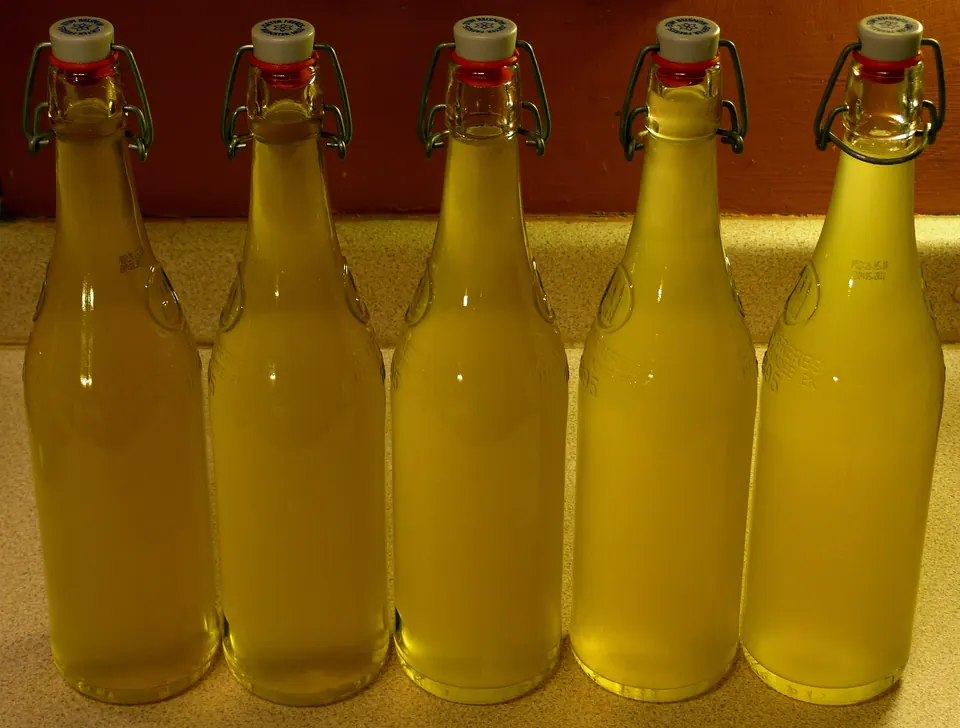
The other half of bottle safety is a finished fermentation. Leftover sugar in under-fermented beer adds CO2 on top of the priming dose, so a 2.5-volume plan can turn into a dangerous number. Confirm a stable final gravity first; see how to use a hydrometer.
Altitude, temperature and gauge readings
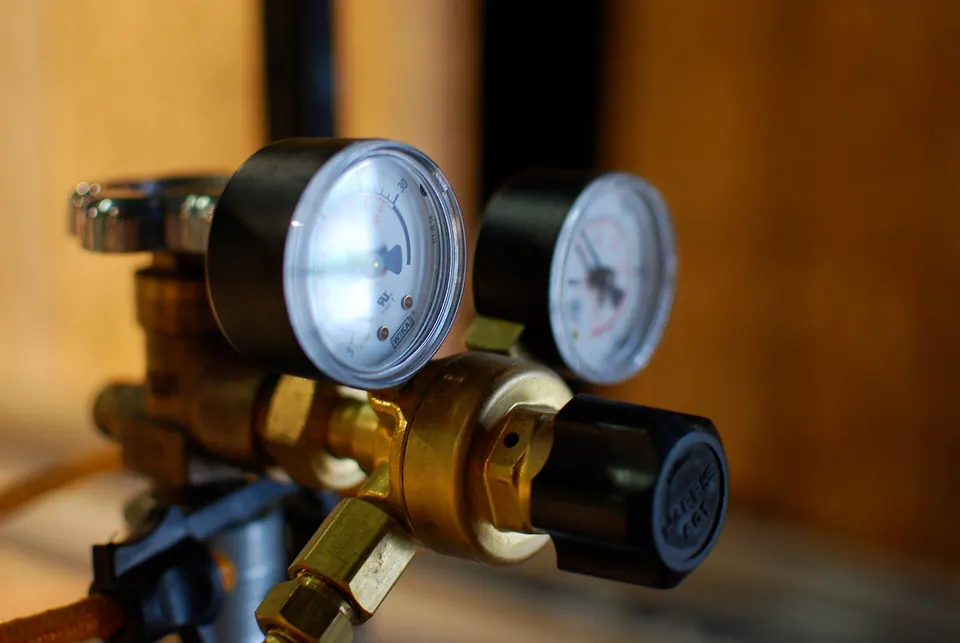
Regulator gauges read pressure above the local air pressure. At altitude the air pushes less, so the same gauge reading puts less CO2 into the beer. Add about 0.5 psi per 1,000 ft; BYO notes that Denver needs about 3 psi above the sea-level chart.
Temperature matters just as much. A keg that warms from 38 to 46°F at the same pressure slowly loses carbonation, and a keg moved into a colder fridge at the same setting slowly gains it. Keep the setting matched to the beer’s actual temperature.
Other ways to carbonate: keg priming and spunding
Two less common methods sit between bottling and forced carbonation.
Priming a keg
You can add priming sugar to a keg instead of using the cylinder for carbonation. Because the keg’s headspace is small compared with 50 bottles’ worth of necks, many brewers use about half the bottling amount; the keg then conditions warm for about 2 weeks like bottles do. You still need CO2 to serve, and the first pints carry more yeast.
Spunding (natural carbonation under pressure)
A spunding valve is an adjustable relief valve fitted to a pressure-rated fermenter or keg. Close the vessel near the end of fermentation and the yeast’s own CO2 builds pressure up to the valve setting, carbonating the beer as it finishes. Set the valve from the same chart: the pressure that matches your target volumes at the beer’s temperature. A spunding valve is not a safety device, so the vessel still needs its own pressure relief valve, and the pressure must stay below the vessel’s rating. See pressure fermenting and spunding.
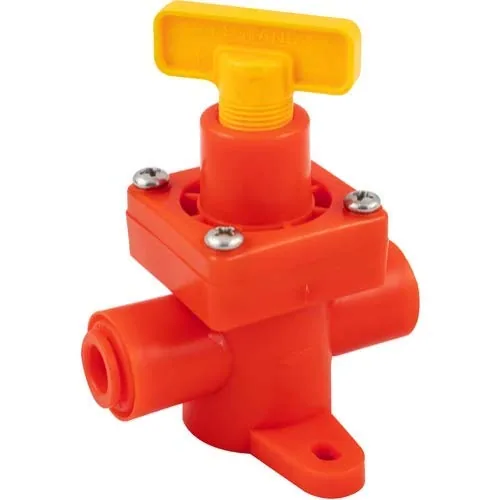
KegLand BlowTie Diaphragm Spunding Valve (KL03643)
- Pressure
- Adjustable (range not listed)
- Outputs
- Diaphragm spunding valve
- Type
- Spunding valve
Best for Pressure fermenting in kegs or FermZilla
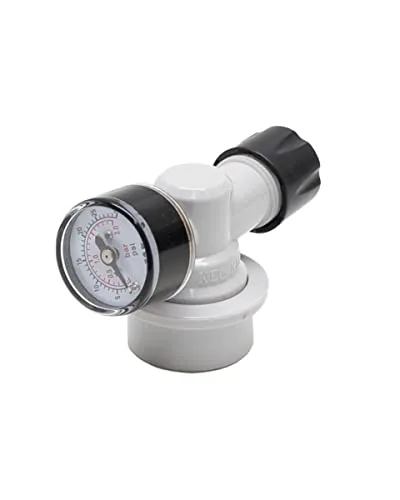
Keg King Spundy Compact Spunding Valve, Ball Lock
- Pressure
- Adjustable, accurate at low pressure (maker)
- Outputs
- Ball lock clip-on spunding valve
- Type
- Spunding valve
Best for Pressure fermenting in a corny keg
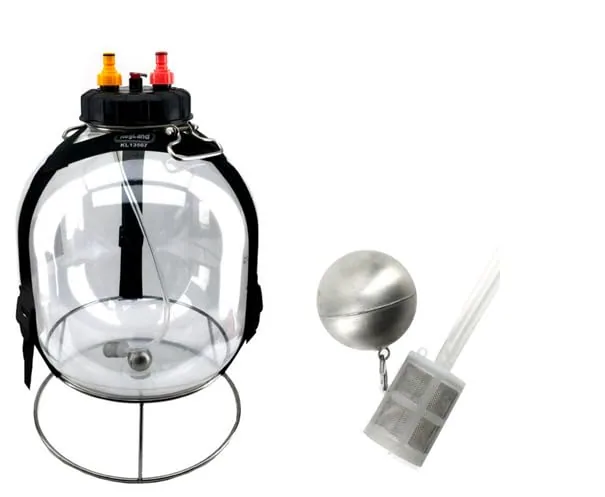
KegLand FermZilla All Rounder 30L Pressure Brewing Kit
- Volume
- 30 L (7.9 gal)
- Material
- PET
- Pressure
- 2.5 bar (36.2 psi)
Best for Pressure fermenting and closed transfers
Mistakes to avoid
- Using the current temperature for residual CO2. Use the warmest the beer reached after fermentation.
- Measuring sugar with a scoop. Weigh it.
- Aiming for weizen levels in ordinary bottles. Stay at or below about 3.0 volumes in standard glass.
- Ignoring altitude on a keg. High-altitude kegs end up under-carbonated at chart pressure.
- Expecting instant results. Both methods need time to reach equilibrium.
- Blaming carbonation for foam. Foamy pours from kegs are usually warm beer or short lines, not overcarbonation.
Which method suits you
- Few batches a year, sharing bottles, aging strong beers: bottle conditioning. Start with how to bottle homebrew.
- Frequent batches, want beer on tap in days: kegging. Start with how to keg homebrew.
- Both: keg, then fill bottles from the keg with a counter-pressure filler or beer gun.
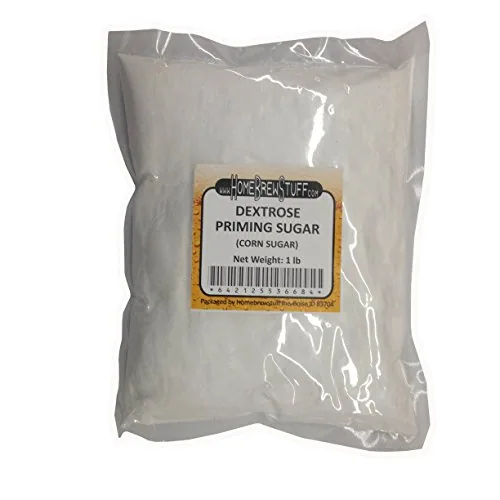
Craft Brew Union Corn Sugar (Dextrose), 1 lb
- Type
- Priming sugar (dextrose)
- Size
- 1 lb
Best for Bottle-conditioning a 5-gallon batch
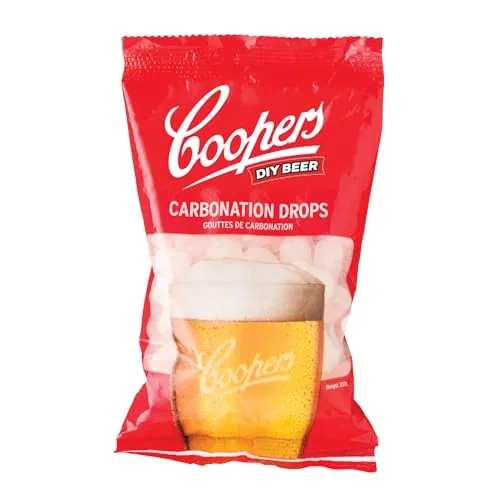
Coopers Carbonation Drops
- Type
- Carbonation drops
- Count
- 60
- Size
- Enough for 6 gal per maker
Best for Priming without measuring
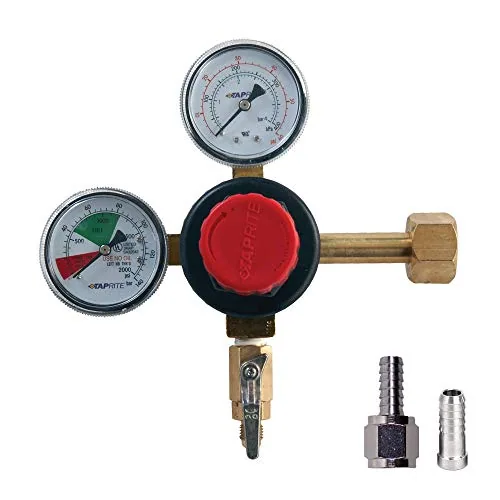
Taprite Dual Gauge CO2 Regulator with MFL Check Valve
- Couplers
- MFL check valve; 1/4 and 5/16 in. barbs
- Gauges
- Dual gauge
- Pressure
- Safety blow-off at 55–60 PSI
Best for First kegging regulator
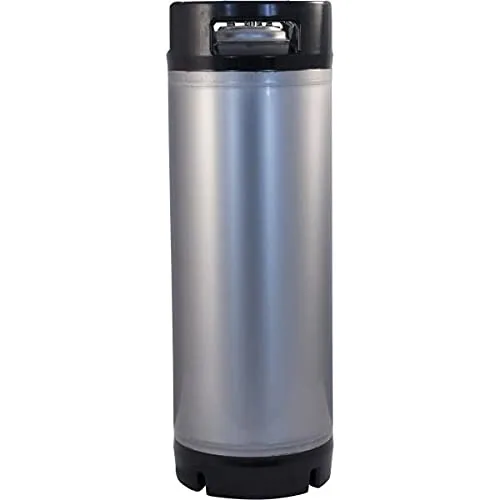
KegLand New Cornelius Keg, 5 Gal, Ball Lock
- Kegs
- 5 gal (19 L), ball lock
- Pressure
- 130 PSI operating
- Material
- 304 stainless
Best for First homebrew keg
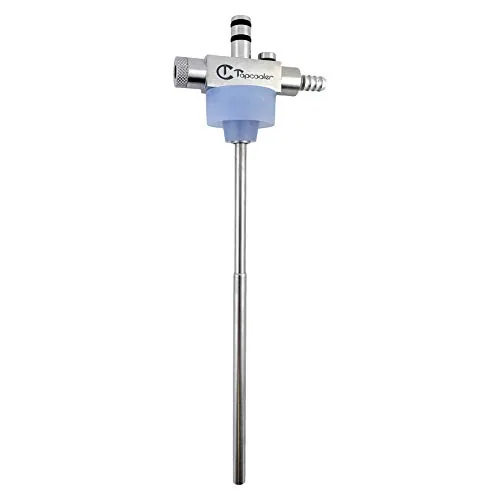
Tapcooler Counter Pressure Bottle Filler
- Taps
- Attaches to forward-sealing faucets
- Gauges
- Pressure relief valve; CO2 purge
- Type
- Counter-pressure bottle filler
Best for Bottling from kegs for competitions
Gear picks for this guide: best homebrew keg systems and best bottle cappers.