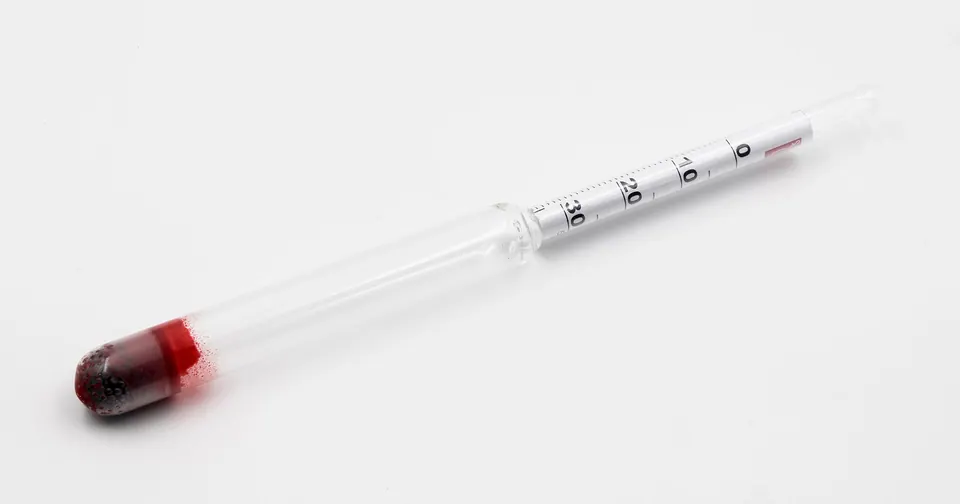
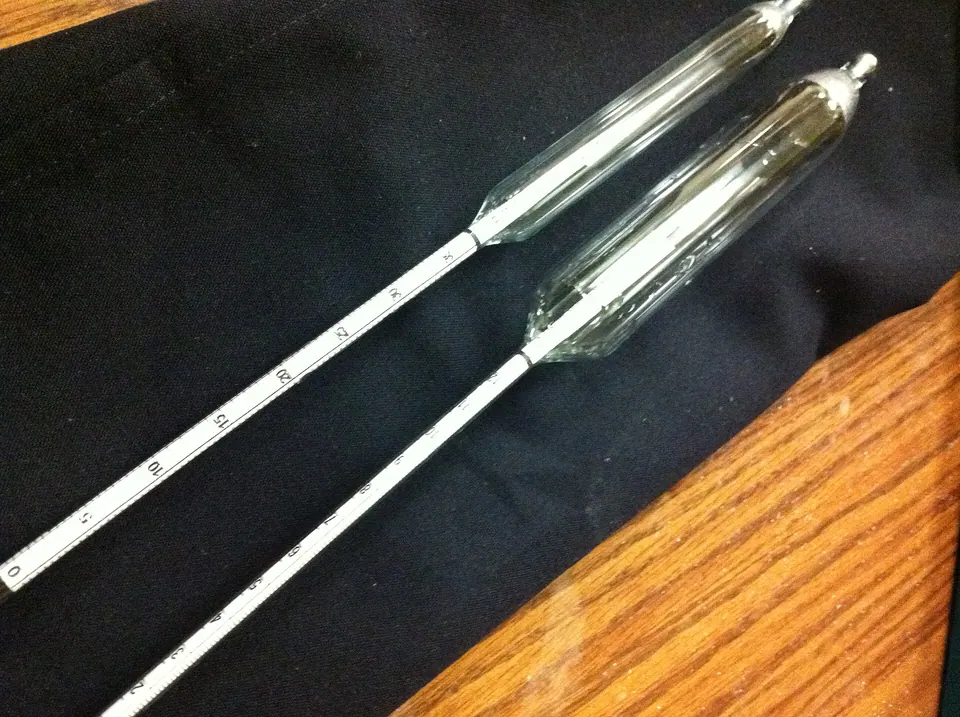
- A hydrometer floats higher in sugary wort and lower as yeast turns sugar into alcohol. The number on the stem is specific gravity (SG).
- Take an original gravity (OG) reading before pitching and final gravity (FG) readings at the end.
- Read at the bottom of the meniscus, at eye level, with the hydrometer floating freely.
- Most hydrometers read true at 60°F (15.6°C); some at 68°F. Correct warmer or cooler samples.
- Standard ABV = (OG − FG) × 131.25. The ABV calculator also shows standard drinks per serving.
Learning how to use a hydrometer takes five minutes and answers the three questions every brewer has: did I hit the recipe, is fermentation finished, and how strong is this beer? A hydrometer is a weighted glass float with a scale. In dense, sugary wort it rides high; as fermentation turns sugar into alcohol, which is lighter than water, it sinks lower.
This guide follows the American Homebrewers Association’s method for accurate readings, the temperature-correction polynomial printed on our ABV calculator, and Palmer’s How to Brew. A hydrometer is the only tool that can safely tell you when beer is ready to bottle.
Hydrometer scales: SG, Plato and potential alcohol
Most brewing hydrometers are triple-scale. Specific gravity is what recipes and calculators use in the US. Plato (or Brix) expresses the same thing as percent sugar by weight. Potential alcohol is a rough guide intended for wine; brewers use the SG difference instead.
What a reading tells you
| Reading | Scale | Meaning |
|---|---|---|
| 1.000 | SG | Pure water at calibration temperature (check yours) |
| 1.040–1.060 | SG | Typical OG for everyday beers (about 10–15°P) |
| 1.065 and up | SG | Higher-gravity beer; needs more yeast and oxygen |
| 1.008–1.015 | SG | Typical FG for many ales |
| Below 1.000 | SG | Possible in very dry beers, cider and wine (alcohol is lighter than water) |
| °P ≈ 259 − 259 / SG | Plato | Conversion used by the pitch-rate calculator |
Source: AHA; BJCP 2021 vital statistics; GarageBrewer formulas
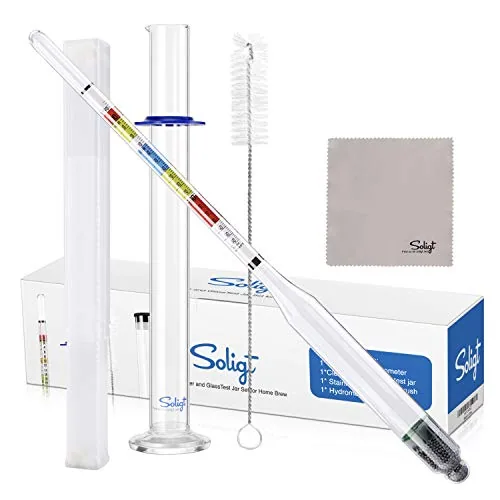
SOLIGT Triple Scale Hydrometer & Glass Test Jar Kit
- Range
- SG 0.990–1.170, Brix 0–35, potential ABV 0–20%
- Scale
- Triple (SG, Brix, potential alcohol)
Best for A complete first hydrometer kit
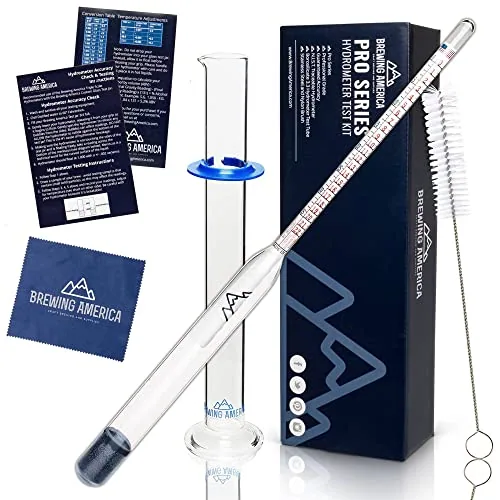
Brewing America Triple Scale Hydrometer & Test Jar (USA-Made)
- Range
- SG 0.990–1.170 (listing)
- Accuracy
- NIST-traceable (per maker)
- Scale
- Triple scale
Best for Brewers who want a US-made glass hydrometer
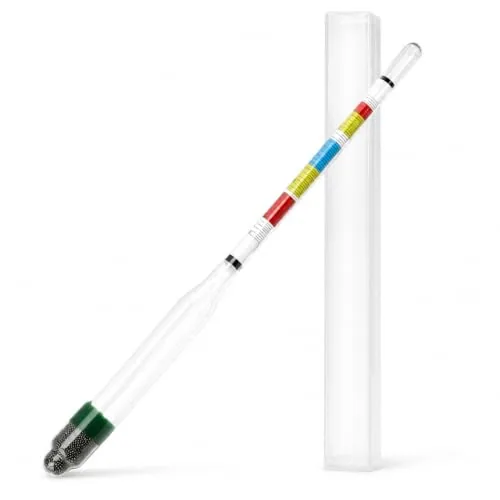
FastRack Triple Scale Hydrometer
- Scale
- Triple (SG, Balling, potential alcohol)
Best for Replacing a broken hydrometer
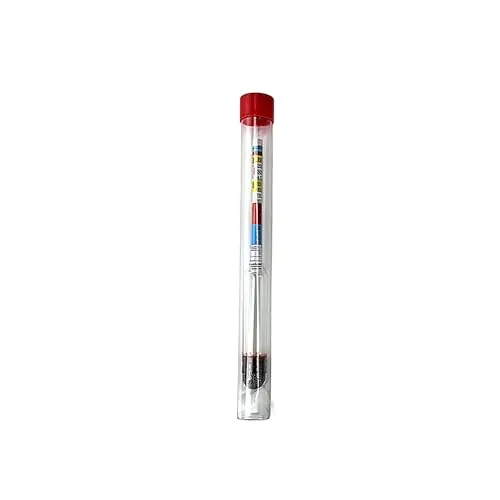
North Mountain Supply 8" Italian Glass Triple Scale Hydrometer
- Range
- SG 0.99–1.16, potential alcohol 0–20%, Brix 0–35
- Scale
- Triple
- Material
- Lead- and mercury-free glass
Best for Small test jars and short samples
How to use a hydrometer, step by step
- Sanitize the sampler
Sanitize a wine thief, turkey baster or the auto-siphon. The AHA notes that every time you open the fermenter you add contamination risk, so sample only as often as you need.
- Fill the test jar
Use a test jar wide enough that the hydrometer floats without touching the sides or bottom. Don’t use the plastic shipping tube unless the maker says it doubles as a test jar.
- Float and spin
Lower the hydrometer in, give it a gentle spin to knock off bubbles, and wait until it settles. Make sure it isn’t clinging to the wall.
- Read at the meniscus bottom
Get your eye level with the liquid surface and read the line at the bottom of the curve, not where the liquid creeps up the stem. Reading the top of the meniscus gives a value a few points too high, per the AHA.
- Take the temperature
Measure the sample temperature and correct the reading if it isn’t at the calibration temperature.
- Record, taste, discard
Write the reading in your log, taste the sample (it tells you a lot) and throw it away. Never pour it back into the fermenter.
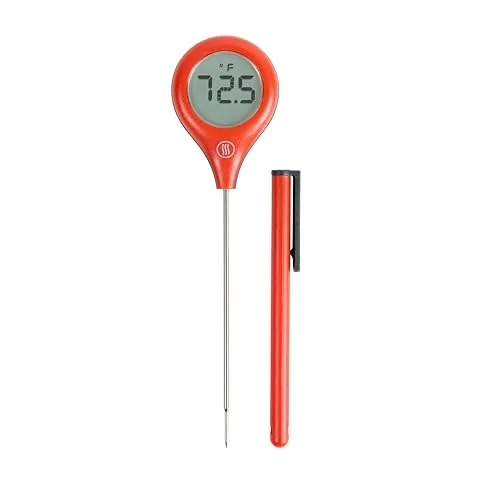
Correcting for temperature
Liquids expand as they warm, so warm samples read lower than they should. Check the paper inside your hydrometer for its calibration temperature: older models are usually 59–60°F and newer ones up to 68–70°F, according to the AHA. A quick calibration check: distilled water at that temperature should read exactly 1.000.
True gravity of a sample that reads 1.050
Hydrometer calibrated at 60°F; correction polynomial from the ABV calculator
Small differences don’t matter much, but a hot wort sample is off by several points. The cleanest fix is to cool the sample to near calibration temperature (set the jar in cold water) and then read. Never put a glass hydrometer into boiling wort.
ABV calculatorIncludes the temperature correction for 60°F and 68°F hydrometers, plus a refractometer mode.Original gravity: did you hit the recipe?
Take the OG after the wort is chilled, topped up and well mixed, right before you pitch yeast. With extract partial boils, top-up water that hasn’t mixed fully is the most common source of a misleading reading; stir hard first.
Compare it with the recipe and with the style range. A few points low means a slightly lighter beer; it isn’t a problem. For all-grain, a big miss points to efficiency or volume, which the dilution and boil-off calculator can help correct next time.
All-grain brewers take one more reading: pre-boil gravity, from a cooled sample of the wort collected in the kettle. It tells you before the boil whether you are on track. Because the boil concentrates sugar, the gravity points multiply up as volume drops: 6.5 gal at 1.044 boiled down to 5.5 gal ends near 1.052. If the pre-boil number is low, a longer boil or a little dry malt extract brings it up; if high, a measured top-up of water brings it down.
Beer styles by the numbers (BJCP 2021 vital statistics)
| Style | OG | FG | IBU | Color (SRM) | ABV |
|---|---|---|---|---|---|
| 18A Blonde Ale | 1.038–1.054 | 1.008–1.013 | 15–28 | 3–6 | 3.8–5.5% |
| 18B American Pale Ale | 1.045–1.060 | 1.010–1.015 | 30–50 | 5–10 | 4.5–6.2% |
| 19A American Amber Ale | 1.045–1.060 | 1.010–1.015 | 25–40 | 10–17 | 4.5–6.2% |
| 15B Irish Stout | 1.036–1.044 | 1.007–1.011 | 25–45 | 25–40 | 3.8–5.0% |
| 21A American IPA | 1.056–1.070 | 1.008–1.014 | 40–70 | 6–14 | 5.5–7.5% |
Source: BJCP 2021 Beer Style Guidelines. Ranges are for judging; your recipe can sit anywhere inside them. Color swatches are an on-screen approximation.
Final gravity: is fermentation done?
Fermentation is finished when the gravity stops changing, not when the airlock stops. Take a reading, wait 2–3 days, take another. If both match and sit near the expected FG, you can bottle or keg. If the beer is still well above the expected FG, it may be stuck: warm it a few degrees and rouse the yeast.
Expected FG comes from the yeast’s attenuation (percent of sugar it eats) and the recipe’s fermentability. Fermentis lists 78–82% apparent attenuation for US-05, which turns an OG of 1.050 into an FG around 1.009–1.011. Mash temperature, crystal malt and unfermentable extract can push the real number higher.
How to calculate ABV
The standard homebrew formula is ABV = (OG − FG) × 131.25. It is accurate enough for most beers. Above about 6% ABV, the alternate formula (also in the calculator) reads a little higher and is often preferred for strong beers.
Worked ABV examples (standard formula)
| OG | FG | ABV |
|---|---|---|
| 1.040 | 1.010 | 3.9% |
| 1.050 | 1.012 | 5.0% |
| 1.060 | 1.014 | 6.0% |
| 1.075 | 1.015 | 7.9% (alternate formula about 8.3%) |
Source: Brewer’s Friend ABV calculator (standard and alternate formulas)
Bottle conditioning adds a small amount of alcohol from the priming sugar, typically a few tenths of a percent.
Hydrometer vs refractometer vs digital hydrometer
A refractometer needs only a few drops, which is handy on brew day, but once alcohol is present its reading is skewed and needs a correction formula (the calculator includes Sean Terrill’s). Digital floating hydrometers such as the Tilt and RAPT Pill log gravity and temperature continuously; they are convenient trend trackers, and makers list their own accuracy (Tilt claims ±0.002 SG). Confirm the final reading with a glass hydrometer before bottling.
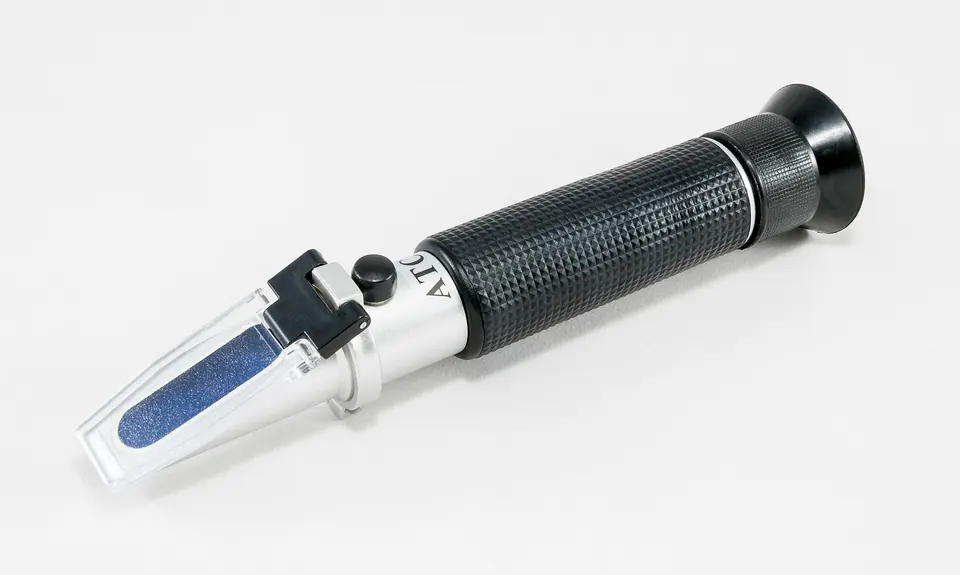
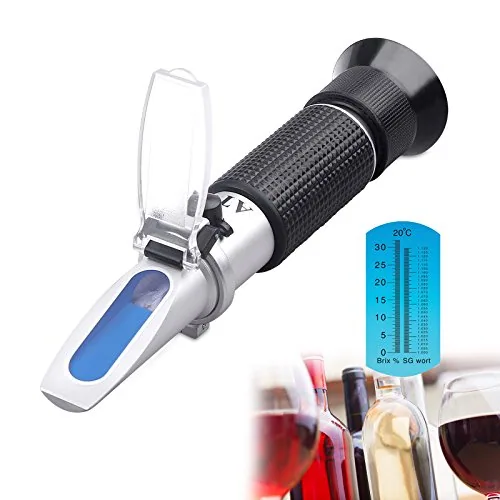
Tiaoyeer Brix/SG Refractometer with ATC
- Range
- Brix 0–32%, SG 1.000–1.130
- Accuracy
- ±0.2% Brix
- Scale
- Dual (Brix, SG)
Best for Quick wort gravity checks on brew day
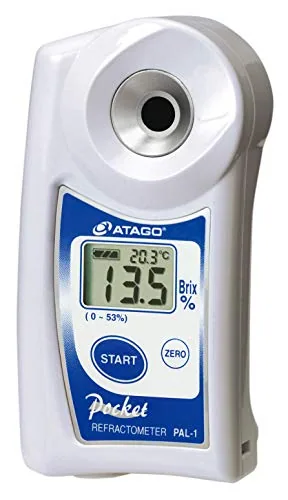
Atago PAL-1 Digital Pocket Refractometer
- Range
- 0.0–53.0% Brix
- Scale
- Brix
- ATC
- Not listed
Best for Winemakers and brewers who want a digital Brix reading
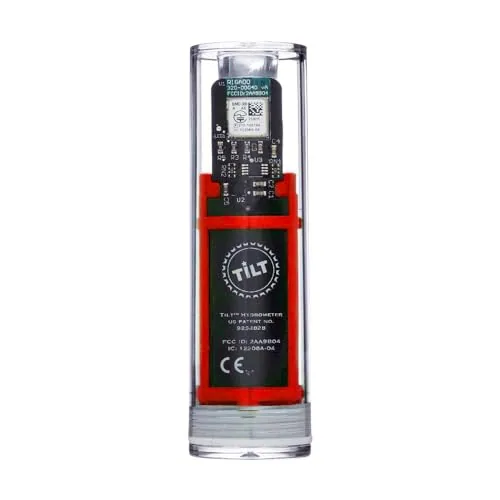
Tilt Wireless Hydrometer & Thermometer (Red)
- Range
- SG 0.990–1.120
- Accuracy
- ±0.002 SG (per Tilt)
- Connectivity
- Bluetooth to app or Tilt Pi
Best for A second fermenter alongside a black Tilt
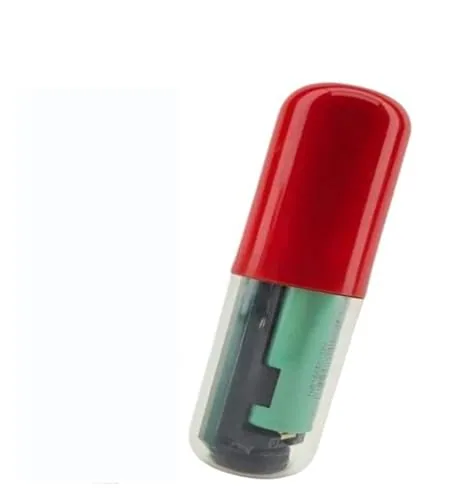
KegLand RAPT Pill Digital Hydrometer & Thermometer (Red)
- Connectivity
- Not listed on this listing (RAPT app per maker)
Best for A Tilt alternative in a KegLand setup
Mistakes to avoid
- Reading the top of the meniscus. Read the bottom; the top reads high.
- Ignoring temperature. Hot samples read low; cool them or correct.
- Bubbles on the stem. CO2 in fermenting beer lifts the hydrometer. Spin it, or pour the sample back and forth to degas.
- A reading with the float touching the jar. It must float freely.
- Unmixed top-up water. Stir before the OG reading.
- Returning the sample to the fermenter. Discard it.
- Bottling on a single reading. Two matching readings, days apart.
Which tool should you buy?
- Every brewer: a glass triple-scale hydrometer and a test jar. Buy a spare; they break.
- All-grain brewers: add a refractometer for quick pre-boil checks.
- Data lovers or busy schedules: a digital hydrometer to watch the curve without opening the fermenter.
- Everyone: an instant-read thermometer for temperature corrections.
Next, put the readings to work: how to bottle homebrew uses the FG check, and fermentation temperature explains why gravity sometimes stalls.
Gear picks for this guide: best hydrometers for homebrewing and best refractometers for brewing.