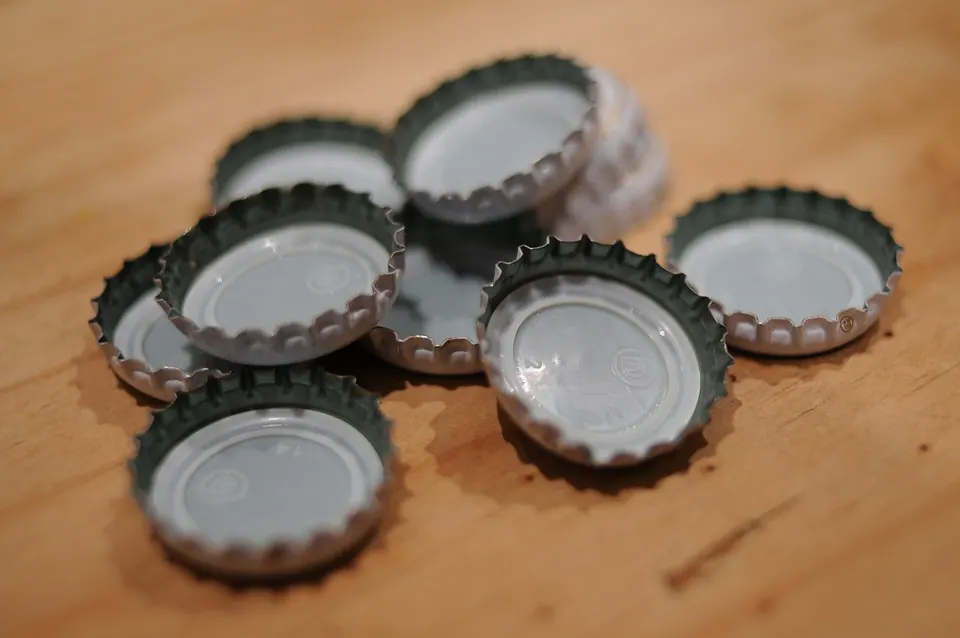
- The best bottle capper for 5-gallon batches is a bench capper: it adjusts for bottle height and caps with one lever. The Ferrari Super Agata and Homebrewers Outpost B502 are our picks.
- Two-lever (wing) cappers like the Black Beauty, Red Beauty and Emily are cheaper and smaller but take two hands.
- Standard US beer caps are 26 mm; Belgian and champagne bottles often take 29 mm, which needs a capper that lists 29 mm (HO B502, North Mountain Supply).
- Use pry-off bottles, prime with a calculator and bottle only at a stable gravity to avoid bottle bombs.
The best bottle capper crimps a crown cap evenly every time, without cracking the bottle neck. Two styles dominate: two-lever “wing” cappers that you squeeze down over the cap, and bench cappers that hold the bottle on a base while one lever presses a bell over the cap. A 5-gallon batch is about 50 bottles, so speed and comfort add up.
We compared nine cappers and capper kits from eight brands. Cap sizes, bottle fit and included caps are as listed; when a listing doesn’t name a cap size, we say standard crown as the maker does. We also looked at what each one leaves you to buy, because a capper alone won’t get beer into bottles: you still need bottles, caps, a bottling bucket, a filler, priming sugar and sanitizer.
Our picks
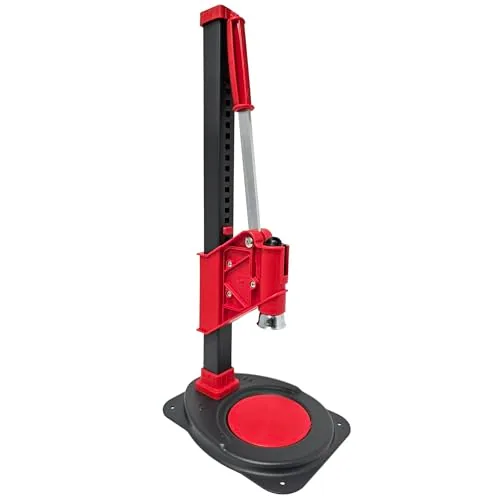
Ferrari Super Agata Bench Capper
FastRack
- Type
- Adjustable bench capper
- Cap size
- Standard crown
The Ferrari Super Agata is an adjustable bench capper with a magnetic bell, a self-adjusting spring-mounted mechanism, a wide metal base with a non-slip pad and pre-drilled holes for bolting down. Height adjusts quickly for 12 oz and larger bottles.
Best for: Bottling full 5-gallon batches
Skip if: You only bottle a few beers at a time
- Quick height adjustment
- Magnetic bell
- Can be bolted down
- Standard crown only (29 mm not listed)
- Takes bench space
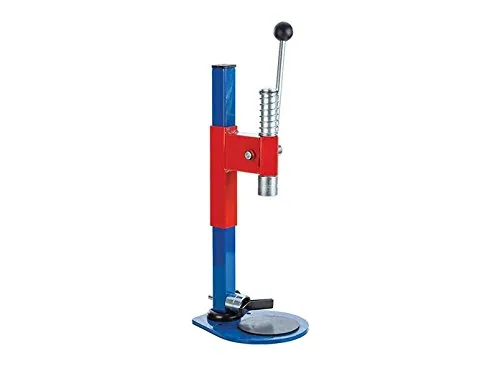
Homebrewers Outpost B502 Deluxe Bench Capper
Homebrewers Outpost
- Type
- Adjustable bench capper
- Cap size
- 26 and 29 mm
Homebrewers Outpost’s B502 is heavy-gauge, enamel-coated steel, adjusts vertically for different bottles and caps both 26 mm and 29 mm bottles, so it handles US beer bottles and many Belgian and champagne-style bottles.
Best for: Brewers who bottle Belgian styles, sparkling cider or mead
Skip if: You only use standard 12 oz bottles
- 26 and 29 mm
- Heavy steel
- Adjustable height
- Bell swap needed between sizes (check the manual)
- Large footprint
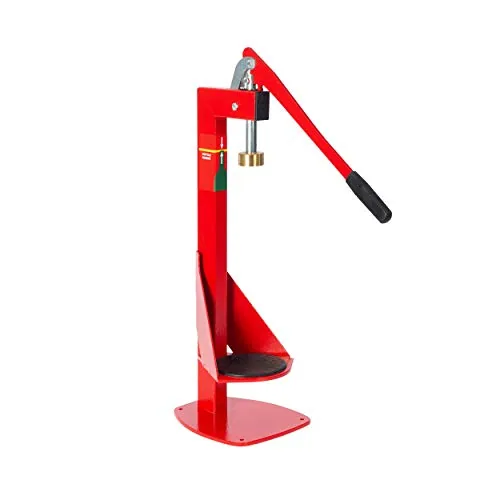
North Mountain Supply Heavy Duty Bench Capper, Made in Italy
North Mountain Supply
- Type
- All-metal bench capper
- Cap size
- 2 crimping bells (2 sizes)
North Mountain Supply’s Italian-made bench capper is all metal, one-handled, and ships with two crimping bells for 26 mm and 29 mm caps.
Best for: Beer, cider and kombucha bottles with two cap sizes
Skip if: You want the lightest capper to store
- All metal
- Two bells included
- Made in Italy
- Height range not listed
- Heavier to store
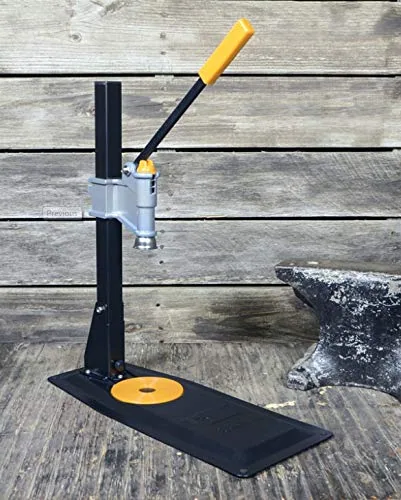
Anvil Bottle Capper
Anvil Brewing Equipment
- Type
- Free-standing bench capper
- Size
- One-hand operation, heavy gauge
Anvil’s free-standing bench capper is heavy gauge and built for one-hand operation, so your other hand can feed bottles.
Best for: Fast capping on bottling day
Skip if: You need a listed 29 mm option
- One-hand operation
- Heavy gauge
- Free-standing base
- Cap sizes not listed
- Few details on the listing
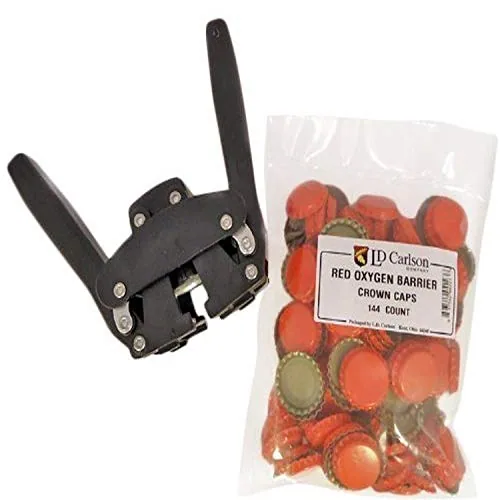
Learn To Brew Black Beauty Capper with 144 Oxygen Barrier Caps
Learn To Brew
- Type
- Two-lever capper + caps
- Count
- 144 caps
- Size
- 12/22 oz beer, 750/187 ml champagne bottles
Learn To Brew’s Black Beauty is a two-lever capper with a magnet, bundled with 144 red oxygen-barrier crown caps. It fits 12 oz and 22 oz beer bottles and 750 ml and 187 ml champagne bottles per the listing.
Best for: Your first bottling day
Skip if: You bottle 5 gallons often and want a bench capper
- 144 oxygen-barrier caps
- Magnet holds the cap
- Fits several bottle types
- Two hands needed
- Cap size not stated
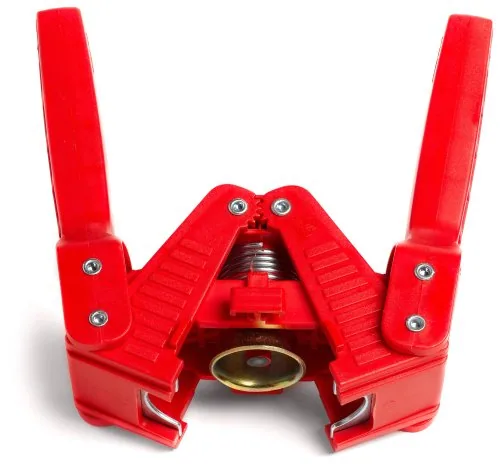
FastRack Red Baron Bottle Capper
FastRack
- Type
- Handheld capper with magnetic bell
- Cap size
- 26 mm
FastRack’s Red Baron is a handheld bench-top capper with a magnetic bell for 26 mm caps, a non-slip base and holes to bolt it down. It is smaller than full bench cappers but still holds the bottle for you.
Best for: Small spaces and occasional batches
Skip if: You need 29 mm caps
- Magnetic bell
- 26 mm caps
- Bolt-down base
- Plastic and metal build
- 26 mm only
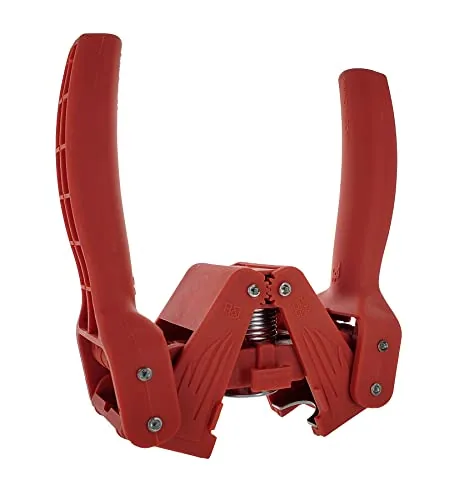
Chicago Brew Werks Red Beauty Double Lever Capper
Chicago Brew Werks
- Type
- Two-lever capper with magnet
- Size
- 12 oz and 22 oz bottles
Chicago Brew Werks’ Red Beauty is a double-lever capper with a magnet that fits 12 oz and 22 oz beer bottles.
Best for: Gift sets and a spare capper
Skip if: You bottle champagne-style bottles
- Magnet
- 12 and 22 oz bottles
- Compact
- Two hands needed
- Cap size not stated
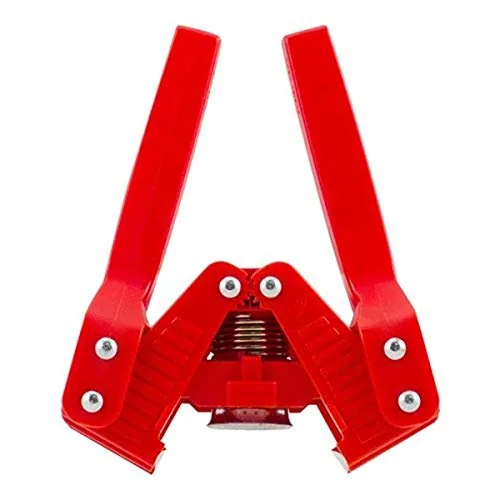
Eagle B490 Emily Bottle Capper with Magnet
Eagle Brewing
- Type
- Two-lever capper, self-lubricating nylon
- Cap size
- Standard crown
Eagle’s B490 Emily is a two-lever capper made from self-lubricating nylon, lighter than metal cappers, with a magnet to hold the cap.
Best for: Small batches and travel to a friend’s bottling day
Skip if: You want metal levers
- Self-lubricating nylon
- Light
- Magnet
- Nylon levers
- Bottle sizes not listed
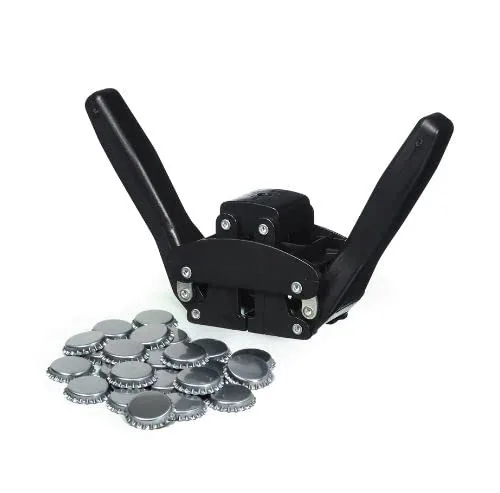
Craft A Brew Capping Kit with 100 Caps
Craft A Brew
- Type
- Capper + caps
- Count
- 100 caps
- Cap size
- Pry-off crown
Craft A Brew’s capping kit pairs an Italian capper with 100 caps, enough for ten 1-gallon or two 5-gallon batches per the maker. It is for pry-off bottles; one gallon yields about eight to ten 12 oz bottles.
Best for: 1-gallon kit brewers
Skip if: You already have caps and want a bench capper
- 100 caps
- Clear pry-off guidance
- Small
- Capper style not detailed
- Not for twist-off bottles
Bench or wing: which bottle capper is best for you?
Cappers compared by listed specs
| Capper | Style | Cap sizes | Magnet | Caps included |
|---|---|---|---|---|
| Ferrari Super Agata | Bench, adjustable | Standard crown | ✓ | ✗ |
| Homebrewers Outpost B502 | Bench, adjustable | ✓ 26 and 29 mm | Not listed | ✗ |
| North Mountain Supply | Bench, all metal | ✓ 26 and 29 mm (2 bells) | Not listed | ✗ |
| Anvil | Bench, one-hand | Not listed | Not listed | ✗ |
| Black Beauty (Learn To Brew) | Two-lever | Not stated | ✓ | ✓ 144 |
| FastRack Red Baron | Bench-top, handheld | 26 mm | ✓ | ✗ |
| Red Beauty (Chicago Brew Werks) | Two-lever | Not stated | ✓ | ✗ |
| Eagle Emily | Two-lever, nylon | Standard crown | ✓ | ✗ |
| Craft A Brew kit | Capper + caps | Pry-off crown | Not listed | ✓ 100 |
Source: Maker listings, November 2026
12 oz bottles per batch
Arithmetic (128 fl oz per gal ÷ 12) before losses to trub; Craft A Brew says 8–10 per gallon
At 50-plus bottles per 5-gallon batch, a bench capper saves real effort. For 1–2 gallon batches, a wing capper is plenty.
Check the bell, too. A magnetic bell holds the cap while you line up the bottle, which matters when your other hand is steadying a wet bottle.
What you still need with a bottle capper
A capper is one tool in the bottling kit. For a 5-gallon batch, plan on:
- About 50 pry-off bottles (12 oz), or fewer larger 22 oz or 500 ml bottles. Northern Brewer’s starter kit listing says you still need about 50 bottles.
- Crown caps in the right size. 26 mm for standard US bottles, 29 mm for many Belgian and champagne-style bottles. Oxygen-absorbing or oxygen-barrier caps are sold for beers you plan to age.
- A bottling bucket with a spigot and a spring-tip bottle filler, so you fill from the bottom without splashing.
- Priming sugar measured by weight, or carbonation drops dosed per the maker.
- Sanitizer used at label dilution for bottles, caps, bucket and filler.
- A closed box or crate to store bottles while they carbonate.
Bench cappers need a sturdy table at a comfortable height; bolting the base down, where the maker provides holes (Super Agata, Red Baron), keeps it from walking across the bench. Wing cappers work anywhere, which makes them a good spare to keep in a kit box.
Swing-top bottles skip caps and cappers entirely, but they still need priming done carefully, intact gaskets and the same bottle-bomb precautions as crown-capped bottles.
How much priming sugar before you cap?
Capping is the last step; the carbonation is set by the priming sugar you add first. Pick the CO2 volumes for your style, then calculate the sugar from batch size and the warmest temperature the beer reached. The priming sugar calculator does the math and warns above the bottle limit.
CO2 volumes by style family (bottle or keg)
| Style family | Volumes of CO2 | Bottle-safe? |
|---|---|---|
| British ales | 1.5–2.2 | ✓ standard bottles |
| American ales | 2.2–3 | ✓ standard bottles |
| European lagers | 2.4–2.6 | ✓ standard bottles |
| American lagers | 2.5–2.8 | ✓ standard bottles |
| Belgian ales | 2–4.5 | ~ standard bottles only to about 3 vol |
| German weizen | 2.8–5.1 | ~ standard bottles only to about 3 vol |
Style ranges: BYO: Carbonation priming chart. Standard 12 oz pry-off bottles are not meant for more than about 3.0 volumes. Bottle only after the gravity reads the same 2–3 days in a row.
How to cap bottles in 6 steps
- Confirm fermentation is done
Take gravity readings until they match 2–3 days in a row. See our hydrometer picks.
- Clean and sanitize bottles and caps
Use pry-off bottles only, inspect necks for chips, and sanitize bottles and caps at label dilution.
- Prime and fill
Mix the calculated priming sugar into the beer, then fill each bottle with a bottle filler, leaving about an inch of headspace.
- Set the capper height
On a bench capper, adjust the bell height to the bottle first, then lock it.
- Cap with a smooth press
Place the cap (the magnet holds it), press evenly to crimp, and check that the skirt is crimped all the way around.
- Store safely and record
Store bottles in a closed box at room temperature, check one after a week or two, then refrigerate. Note priming and bottling dates; the ABV calculator adds the small priming boost to strength.
Capping mistakes to avoid
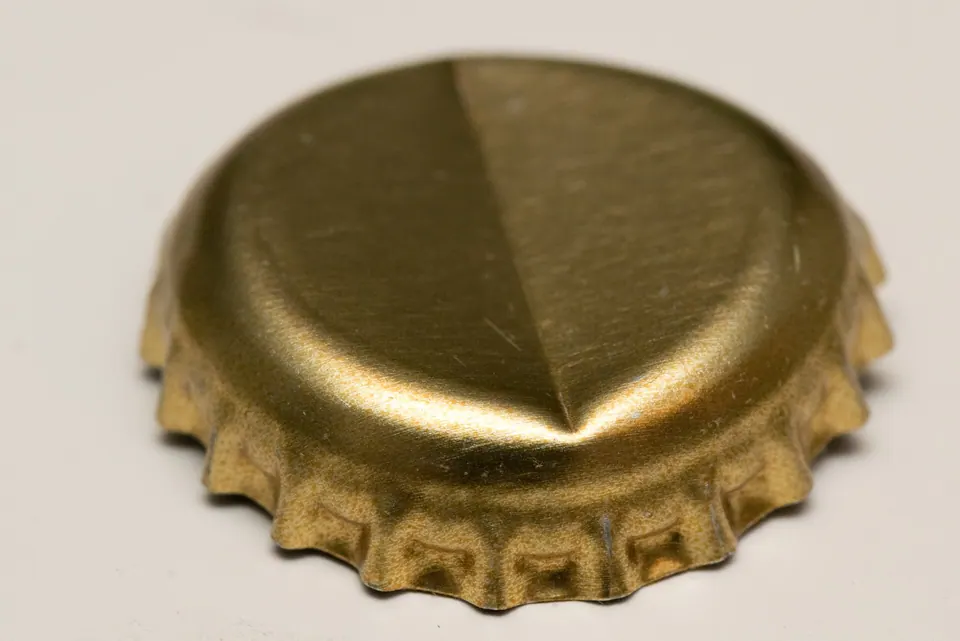
- Twist-off bottles. Craft A Brew says its kit is for pry-off bottles; twist-off necks don’t seal reliably with crown caps.
- Wrong cap size. 29 mm bottles need a 29 mm bell (HO B502, North Mountain Supply).
- Tilted bottles. Press straight down; a tilted press crimps unevenly and can chip the neck.
- Bottling too early. Unfinished fermentation plus priming sugar is how bottle bombs happen.
- Too much priming sugar. Standard bottles are good to about 3.0 volumes; use the calculator.
Who should pick which capper?
| If you… | Pick |
|---|---|
| Bottle 5-gallon batches often | Ferrari Super Agata |
| Bottle Belgian styles, cider or mead in 29 mm bottles | Homebrewers Outpost B502 or North Mountain Supply |
| Want to cap with one hand | Anvil bottle capper |
| Are buying for a first bottling day | Black Beauty with 144 caps |
| Have little storage space | FastRack Red Baron or Eagle Emily |
| Brew 1-gallon kits | Craft A Brew capping kit |
| Want a spare or a gift for a brewer 21+ | Red Beauty |
Thinking about kegs instead? Compare costs in the budget builder and see our homebrew keg systems. Shop bottles, fillers and caps in bottling and capping or start with your first brew day.
The Ferrari Super Agata is the best bottle capper for regular 5-gallon bottling, and the Homebrewers Outpost B502 or North Mountain Supply bench capper is the pick if you use 29 mm bottles. For a first batch, the Black Beauty with 144 caps covers you; for 1-gallon kits, the Craft A Brew kit.
Before you buy, read how to bottle homebrew (and avoid bottle bombs) and carbonation explained: volumes of CO2. For a closer look, see Bottling vs kegging homebrew.
We compared capper style, listed cap sizes, bottle fit, magnets and included caps from maker listings, and used BYO’s priming chart and Palmer’s How to Brew for bottling and bottle-bomb guidance. We did not cap bottles with these products. No scores, ratings or prices.