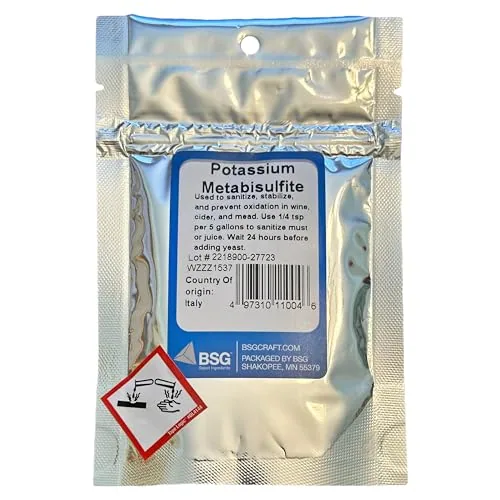
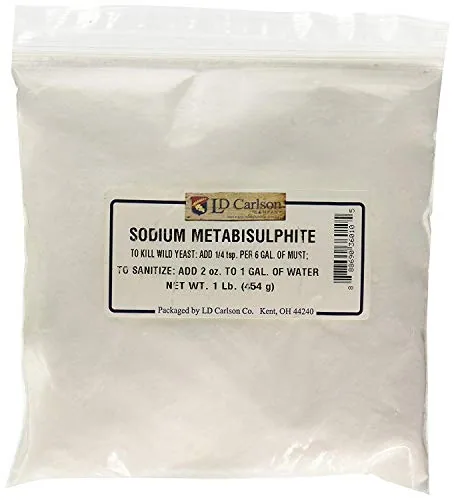
- Campden tablets (potassium or sodium metabisulfite) add sulfite. Sulfite is antimicrobial (it suppresses wild yeast and spoilage bacteria) and an antioxidant (it slows browning and oxidation).
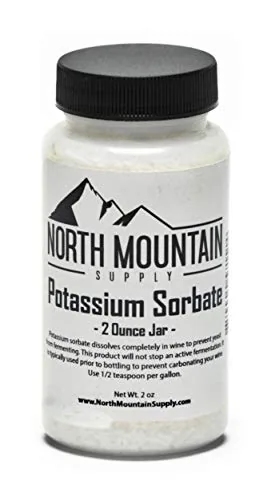
- Potassium sorbate stops yeast from reproducing. It doesn't kill yeast and won't stop a fermentation that's already active.
- To backsweeten wine, cider or mead, use both, at the label dose, on a finished, clear batch. Sorbate alone is not the recommended practice.
- Sulfites must be declared on commercial wine at 10 ppm or more (TTB). Home wine has no label, so tell sulfite-sensitive guests, who are often people with asthma.
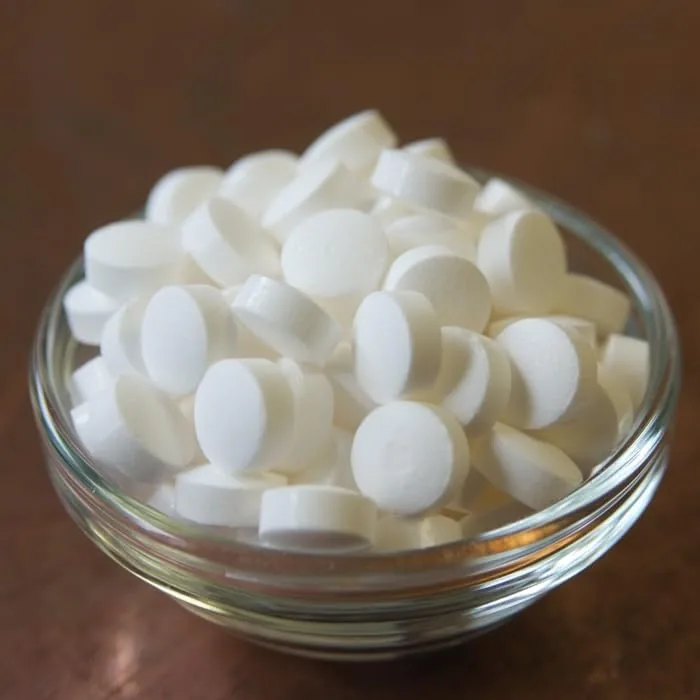
Campden tablets vs potassium sorbate is a common mix-up, because both are "stabilizers" sold side by side for wine, cider and mead. They do different jobs. Campden tablets and metabisulfite powder release sulfur dioxide (SO2) in the must or wine, which protects it from spoilage organisms and oxygen. Potassium sorbate leaves living yeast alone but prevents it from multiplying, so a small dose of new sugar can't restart fermentation in the bottle.
This page explains each one, when to use them alone or together, how labels say to use them, and the sulfite rules worth knowing, with picks from LD Carlson, Craft A Brew, BSG, Chicago Brew Werks, North Mountain Supply and CellarScience. All are in the brewing chemicals hub, and the wine, cider, mead and kombucha page has the kits that use them.
Campden tablets and metabisulfite
Add sulfite (SO2): antimicrobial and antioxidant; also removes chloramine from brewing water
Browse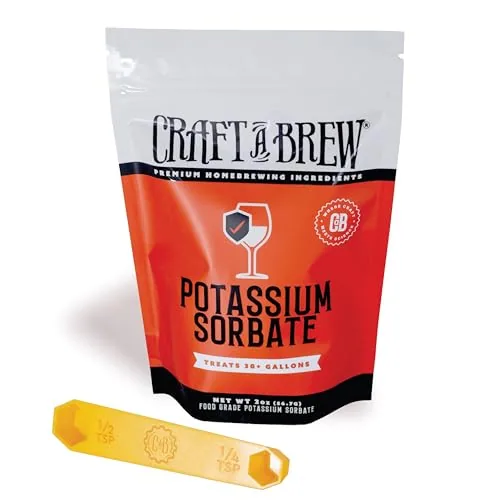
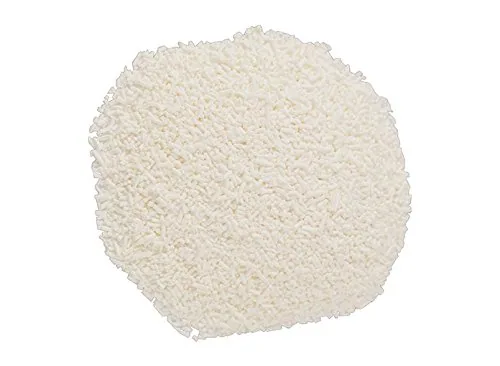
Picks from each side
Campden tablets and metabisulfite
LD Carlson Potassium Campden Tablets, 1 lb
- Use
- Sulfite addition for wine and cider
- Type
- Potassium metabisulfite tablets
- Size
- 1 lb
Best for Winemakers and chloramine treatment
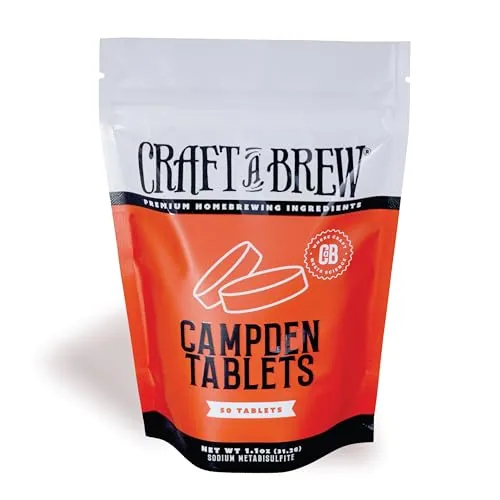
Craft A Brew Campden Tablets (Sodium Metabisulfite), 50 ct
- Use
- Sulfite addition for wine, fruit wine and cider
- Type
- Sodium metabisulfite tablets
- Size
- 50 tablets
Best for 1-gallon wine and cider batches
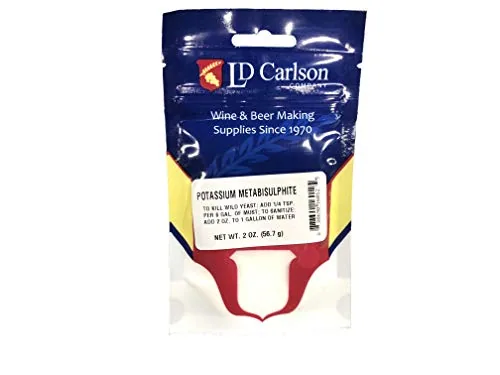
LD Carlson Potassium Metabisulfite, 2 oz
- Use
- Wine and cider sulfite addition
- Type
- Potassium metabisulfite
- Size
- 2 oz
Best for Stabilizing wine and cider
BSG HandCraft Potassium Metabisulfite, 2 oz
- Use
- Sulfite addition
- Type
- Potassium metabisulfite
- Size
- 2 oz
Best for Wine and cider stabilizing
Chicago Brew Werks Sodium Metabisulfite, 1 lb
- Use
- Not listed
- Type
- Sodium metabisulfite
- Size
- 1 lb
Best for Bulk sulfite
Potassium sorbate
North Mountain Supply Potassium Sorbate, 2 oz
- Use
- Stabilizer before back-sweetening
- Type
- Potassium sorbate, food grade
- Size
- 2 oz
Best for Sweet wines and ciders
Craft A Brew Potassium Sorbate, 2 oz
- Use
- Stabilizer for back-sweetening wine, cider, mead
- Type
- Potassium sorbate, food grade
- Size
- 2 oz (treats 20+ gal per maker)
Best for Back-sweetening a semi-dry mead
CellarScience Sorbistat K (Potassium Sorbate), 1 lb
- Use
- Wine stabilizer
- Type
- Potassium sorbate
- Size
- 1 lb
Best for Frequent winemakers
Campden tablets vs potassium sorbate side by side
| Campden / metabisulfite | Potassium sorbate | |
|---|---|---|
| Active part | Sulfur dioxide (SO2) released from metabisulfite | Sorbic acid (as its potassium salt) |
| Suppresses wild yeast and bacteria | ✓ Antimicrobial | ✗ |
| Protects against oxidation and browning | ✓ Antioxidant | ✗ |
| Stops yeast from multiplying | ~ At higher free SO2, not reliably alone | ✓ |
| Stops an active fermentation | ✗ Not at normal doses | ✗ |
| Use before fermentation | ✓ Common for must and fresh juice | ✗ Would prevent fermentation |
| Use to backsweeten | ✓ Together with sorbate | ✓ Together with sulfite |
| Removes chloramine from brewing water | ✓ Common beer use | ✗ |
| Wines with malolactic fermentation | ✓ | ✗ Can cause a geranium off-flavor |
| Allergy and labeling note | Adds sulfites; declare at ≥10 ppm on commercial wine | No sulfite |
Source: TTB sulfite declaration; Craft A Brew and LD Carlson listings; Penn State Extension cider resources
What Campden tablets and metabisulfite do
Campden tablets are pre-measured potassium or sodium metabisulfite; the powder is the same chemistry in bulk. In must or wine, they release SO2. Craft A Brew's listing describes adding a tablet to the must 24 hours before pitching yeast, which gives your chosen yeast a clean start with less competition, and adding it with potassium sorbate on bottling day as a preservative. It also notes the tablets fight browning and oxidation and can remove chlorine or chloramine from water.
- Potassium vs sodium: LD Carlson's Campden tablets and K-meta powders are potassium metabisulfite; Craft A Brew's tablets and Chicago Brew Werks' powder are sodium metabisulfite. Many winemakers prefer the potassium form to avoid adding sodium. Either way, dose by the label of the product you have.
- Tablets vs powder: tablets are easiest for 1–6 gallon batches; powder suits bigger batches and is measured by weight.
- In beer: brewers use Campden in brewing water to remove chlorine and chloramine. The water chemistry calculator includes a Campden step (about one tablet per 20 gal per AHA/BYO guidance; check your label).
What potassium sorbate does
Potassium sorbate inhibits yeast reproduction. It doesn't kill the yeast already there, and it won't stop an active fermentation; it stops new cells from forming. That's why you add it only after fermentation has finished and the wine, cider or mead has cleared and been racked off the yeast. Craft A Brew's listing pitches its sorbate for back-sweetening meads and wines that finish semi-dry, and says a 2 oz jar treats 20+ gallons.
Winemaking guidance generally pairs sorbate with sulfite rather than using it alone; sulfite covers the bacteria sorbate doesn't. Don't add sorbate to a wine that has gone or will go through malolactic fermentation: lactic bacteria can turn sorbate into a compound with a strong geranium smell. And there's no reason to add sorbate to a dry wine you won't sweeten.
Sulfite levels: what the numbers mean
Sulfite (SO2) levels in context
Parts per million (mg/L)
Two takeaways. First, the 10 ppm threshold is low: nearly any wine dosed with Campden will be above it, and yeast itself can produce some SO2 (Lallemand's EC-1118 data sheet notes up to 50 mg/L under low-nutrient conditions). Second, if you want to know your level rather than guess, free-SO2 test kits exist; the CHEMetrics K-9610 reads 10–100 ppm and Accuvin sells a free SO2 kit.
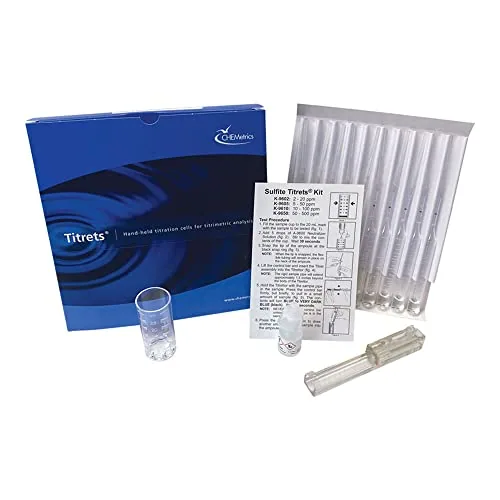
CHEMetrics K-9610 Free Sulfite Titrets Kit
- Range
- 10–100 ppm
- Type
- Iodometric titration ampoules
Best for Free SO2 checks
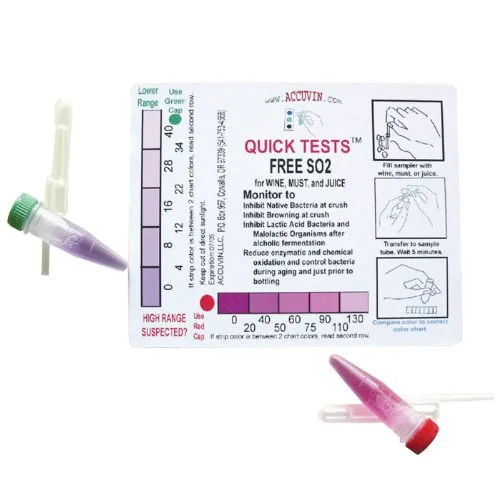
Accuvin Free SO2 Test Kit
- Range
- Not listed
- Type
- Free SO2 test kit
Best for Tracking sulfite levels
How to use them together to backsweeten
Doses vary by product, batch size and pH, so measure per the label on each package; we don't give off-label doses. The order most guides follow:
- Ferment completely
Wait for the same gravity reading 2–3 days in a row. Record it, and work out strength with the ABV calculator.
- Clear and rack
Let the batch clear and rack it off the sediment, so fewer yeast cells remain.
- Add sulfite
Dissolve Campden or metabisulfite per the label and stir gently.
- Add sorbate
Dissolve potassium sorbate in a little water per the label and stir it in.
- Wait, then sweeten
Give it the time the label suggests, then add sugar, honey or juice to taste.
- Watch before bottling
Keep it a few days and confirm the gravity stays put. Kegging and keeping it cold is an extra safety margin.
Our stabilize and backsweeten guide goes step by step, and the hard cider guide shows where Campden fits for fresh juice.
Who needs which
| Situation | Campden | Sorbate |
|---|---|---|
| Fresh-pressed juice or fruit must before pitching | ✓ | ✗ |
| Dry wine for aging | ✓ | ✗ |
| Sweet or semi-sweet wine, cider or mead | ✓ | ✓ |
| Removing chloramine from beer water | ✓ | ✗ |
| Wine through malolactic fermentation | ✓ | ✗ |
| Sulfite-sensitive drinkers | ~ Avoid or tell them | ✓ No sulfite |
Choose Campden (or K-meta) for juice and must prep, oxidation protection and chloramine removal. Add potassium sorbate only when you plan to sweeten a finished batch, and always with sulfite. For a dry cider or wine with no added sugar, sorbate isn't needed. Gear for all of this sits in the wine, cider and mead hub.
Mistakes to avoid
- Using sorbate to stop an active fermentation. It won't; it only prevents new yeast growth.
- Sorbate without sulfite. Pair them, per most winemaking guidance.
- Pitching yeast right after Campden. Wait the time on the label (Craft A Brew suggests 24 hours) so the free SO2 drops.
- Guessing doses or using two products at once. Measure by the label of the exact product, tablet or powder.
- Forgetting the guests. Tell people your wine contains sulfites; sensitive people, often with asthma, can react.
- Adding sorbate to an MLF wine. Expect a geranium-like off-flavor.
Campden tablets (sulfite) are the everyday protector: antimicrobial and antioxidant, used on must, on finished wine and in brewing water for chloramine. Potassium sorbate has one job: stop yeast from multiplying so you can backsweeten. For sweet wine, cider or mead, use both at the label dose on a finished, clear batch, and tell guests the wine contains sulfites.
We compared the label directions and listing data for the Campden, metabisulfite, sorbate and SO2 test products shown, the TTB and FDA sulfite rules, Lallemand's EC-1118 data sheet and extension cider resources. We give no doses beyond what the labels state.