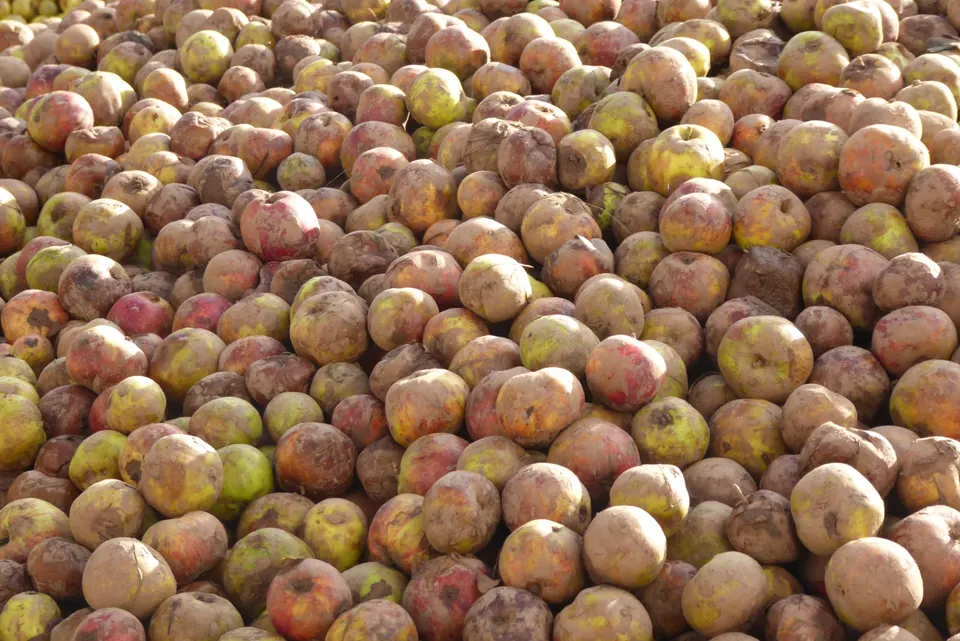
- Two kinds of cider kit: equipment kits where you bring the juice (Craft A Brew, Brooklyn Brew Shop, Gilchrist Orchard) and ingredient kits with concentrate (Cider House Select, Mangrove Jack's, BrewDemon, HomeBrewStuff).
- The 6-gallon concentrate kits need sugar on top: 2 lb of dextrose for Cider House Select, 2.2 lb (1 kg) for Mangrove Jack's.
- Makers list about 5.2% ABV (Cider House Select) and 4.5% ABV (BrewDemon Forbidden Fruit).
- If you backsweeten, stabilize first or keep the cider cold; sweet cider in sealed bottles is a classic bottle-bomb recipe.
The best hard cider kit turns apple juice into a dry or sweet cider with as little fuss as possible. Cider is the easiest fermented drink to start: no boiling, no grain, and a 1-gallon jug fits on a kitchen counter. The decision is mostly about size and whether you want to bring your own juice.
We compare nine picks from eight brands by listed batch size, contents and what you still need: three equipment kits for your own juice, four ingredient kits with concentrate, and two dedicated cider yeasts. Cider is legally wine under federal rules and is for adults 21 and over; the household limits apply, and we cover them below.
Our picks
Craft A Brew Hard Cider Kit, 1 gal
Craft A Brew
- Batch size
- 1 gal
- Type
- Equipment + ingredient kit
- Includes
- Equipment and supplies
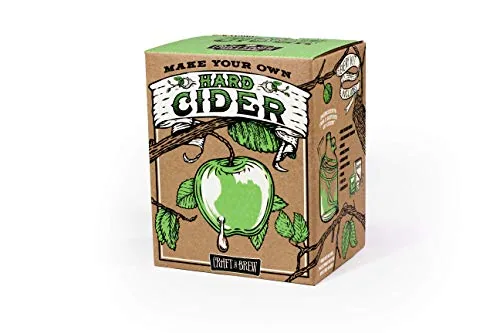
Craft A Brew's hard cider kit has the reusable equipment and supplies for a 1-gallon batch, plus the maker's guide to making hard cider. You bring the juice; the kit is set up to make a dry, sparkling cider.
Best for: A first cider in a small kitchen
Skip if: You want concentrate included
- 1 gallon, counter-sized
- Reusable equipment
- Step-by-step guide
- You still need juice
- Bottles not listed as included
Brooklyn Brew Shop Hard Cider Making Kit
Brooklyn Brew Shop
- Batch size
- 3 batches (per maker)
- Type
- Equipment + ingredient kit
- Includes
- Reusable glass fermenter
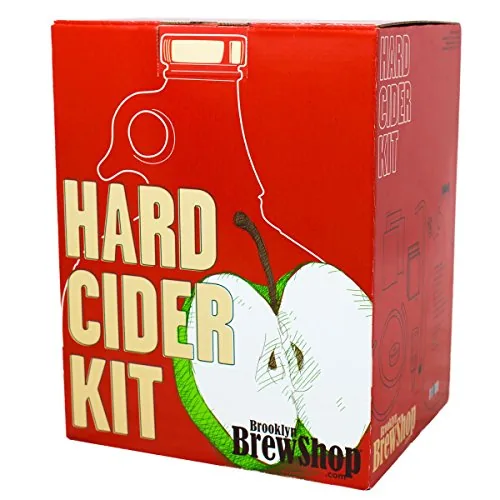
Brooklyn Brew Shop's kit lists a 1-gallon reusable glass fermenter, three yeast packets, vinyl tubing and clamp, racking cane and tip, a chambered airlock, three cleanser packets and a screw-cap stopper, enough for three batches with video instructions. You add apple cider or juice.
Best for: A gift for a beginner 21+ who will make more than one batch
Skip if: You don't want glass
- Supplies for 3 batches
- Glass 1 gal fermenter
- Video instructions
- You still need juice and bottles
- Glass jug needs careful handling
Gilchrist Orchard Hard Cider Kit, 2 gal
Gilchrist Orchard
- Batch size
- 2 gal
- Type
- Equipment + ingredient kit
- Includes
- 2 gal bucket, lid, airlock, spigot, yeast
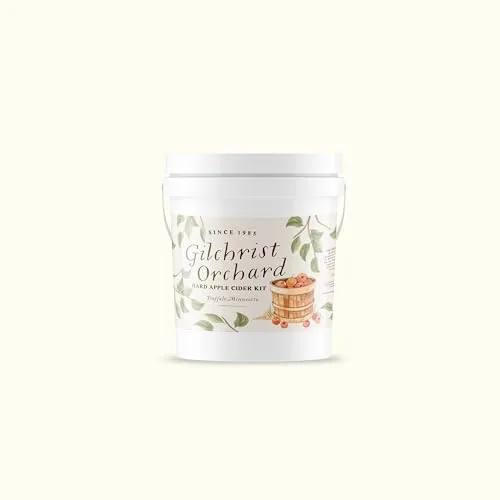
Gilchrist Orchard's kit lists a reusable 2-gallon bucket, gasketed lid, bubbler airlock, a spigot (you drill a 1-inch hole if you want it), yeast, yeast energizer, Campden tablets (optional depending on your juice), sanitizer and a cider booklet.
Best for: Fresh-pressed or orchard juice in 2-gallon batches
Skip if: You don't own a drill and want the spigot
- 2 gal plastic bucket
- Campden and energizer included
- Spigot for sampling and bottling
- Spigot needs a 1-inch hole drilled
- You still need juice and bottles
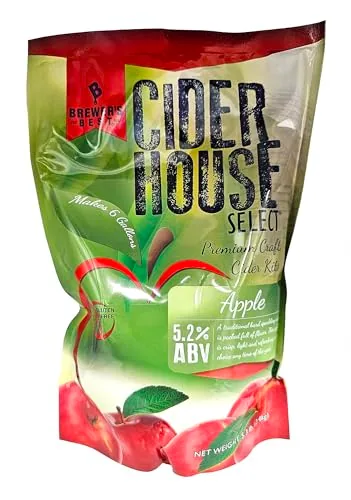
Cider House Select Apple Cider Kit, 6 gal
Cider House Select
- Batch size
- 6 gal
- Type
- Cider ingredient kit
- Still need
- 2 lb dextrose and equipment
Cider House Select's Apple Cider kit (sold under Brewer's Best) makes 6 gallons of golden cider at about 5.2% ABV, per the maker. You add 2 lb of dextrose and use your own fermentation and bottling equipment.
Best for: Beer brewers who already own 6-gallon gear
Skip if: You have no fermenter or bottling setup
- Makes 6 gal
- About 5.2% ABV per maker
- Uses standard beer gear
- You still need 2 lb dextrose and equipment
- Contents not itemized on this listing
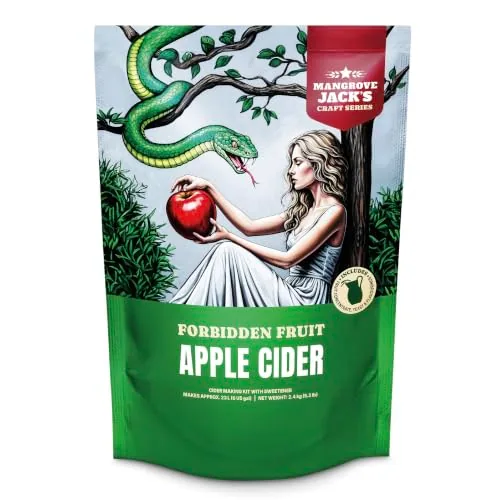
Mangrove Jack's Craft Series Sweet Apple Cider Kit, 6 gal
Mangrove Jack's
- Batch size
- 6 gal
- Type
- Cider concentrate kit
- Includes
- Juice concentrate, yeast, instructions
Mangrove Jack's Craft Series Sweet Apple Cider is a cold-filled juice concentrate pouch with flavoring, sweetener, yeast and instructions, making up to 6 US gal (23 L) of sweet-style cider. You add 2.2 lb (1 kg) of dextrose and water.
Best for: Sweet, crisp cider without backsweetening yourself
Skip if: You want a fully dry cider
- Sweetener included
- Yeast included
- Up to 6 gal (23 L)
- You still need 2.2 lb dextrose and equipment
- ABV not listed
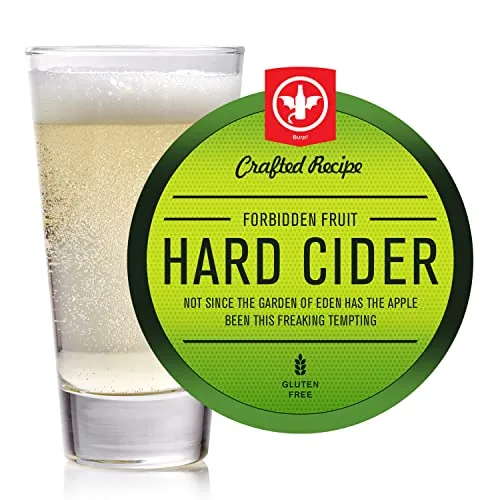
BrewDemon Forbidden Fruit Hard Cider Recipe Kit, 2 gal
BrewDemon
- Batch size
- 2 gal
- Type
- Cider recipe kit
- Still need
- BrewDemon or similar fermenter
BrewDemon's Forbidden Fruit is a 2-gallon cider recipe kit made with New Zealand apples, about 4.5% ABV per the maker. It's designed for the BrewDemon 2-gallon conical, but any 2-gallon system works.
Best for: Owners of a 2-gallon fermenter, including Mr. Beer-size kits
Skip if: You have no 2-gallon fermenter
- About 4.5% ABV per maker
- Quick to prepare
- 2 gal batch
- You still need a 2 gal fermenter and bottles
- Ingredients only
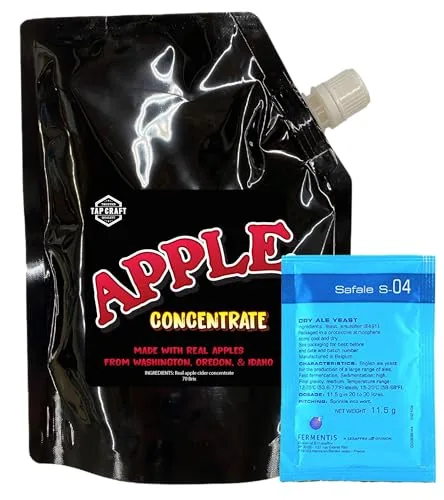
HomeBrewStuff 1 gal Hard Cider Refill Kit
HomeBrewStuff
- Batch size
- 1 gal
- Type
- Ingredient refill
- Includes
- 24 oz apple concentrate, One Step, S-04 yeast
HomeBrewStuff's refill has 24 oz of apple juice concentrate, a packet of One Step cleanser, a packet of SafAle S-04 yeast and a recipe guide for 1 gallon. Just add water to a jug you already have.
Best for: Refilling a 1-gallon jug from a previous kit
Skip if: You have no 1-gallon fermenter
- Concentrate, cleanser and yeast
- 1 gal
- Just add water
- You still need a 1 gal fermenter, airlock and bottles
- Uses a beer yeast (S-04)
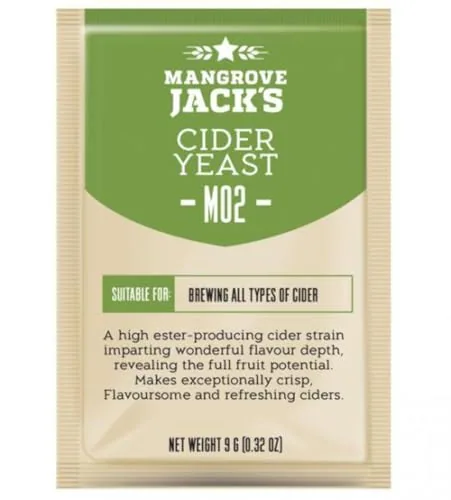
Mangrove Jack's M02 Cider Yeast, 9 g
Mangrove Jack's
- Type
- Dry cider yeast
- Dose
- 9 g treats 23 L (5 gal)
- Temp
- 54–82°F (12–28°C)
Mangrove Jack's M02 is a dry cider yeast for apple cider, fruit cider and perry. The listing gives 9 g for 5 gal (23 L) and 54–82°F (12–28°C), so it's easy to plan with your own juice.
Best for: Upgrading a juice kit's yeast
Skip if: Your kit's yeast is fine for you
- 9 g treats 5 gal
- 54–82°F (12–28°C)
- Cider and perry
- Attenuation not listed
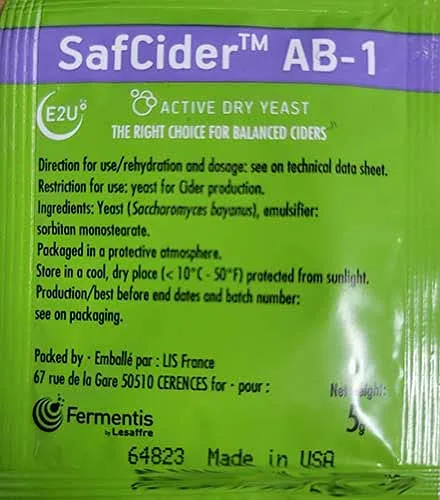
Fermentis SafCider AB-1 Dry Cider Yeast, 5 g (3-pack)
Fermentis
- Type
- Dry cider yeast
- Size
- 3 x 5 g
Fermentis SafCider AB-1 comes as three 5 g sachets of dry cider yeast. The listing has no fermentation data, so use the Fermentis sheet for dose and temperature.
Best for: Several small cider batches
Skip if: You want numbers on the listing
- Cider-specific strain
- Three sachets
- No data on this listing
Hard cider kits compared
Hard cider kits: size, contents and what you still need
| Kit | Type | Batch | Includes | You still need |
|---|---|---|---|---|
| Craft A Brew Hard Cider | Equipment + supplies | 1 gal | Reusable gear, guide | Juice, bottles |
| Brooklyn Brew Shop | Equipment + yeast | 1 gal × 3 batches | Glass jug, 3 yeasts, airlock, tubing, cleanser | Juice, bottles |
| Gilchrist Orchard | Equipment + supplies | 2 gal | Bucket, lid, airlock, spigot, yeast, energizer, Campden | Juice, bottles, a drill for the spigot |
| Cider House Select Apple | Ingredients | 6 gal, ~5.2% ABV | Not itemized | 2 lb dextrose, equipment |
| Mangrove Jack's Sweet Apple | Ingredients | Up to 6 gal (23 L) | Concentrate, flavoring, sweetener, yeast | 2.2 lb (1 kg) dextrose, equipment |
| BrewDemon Forbidden Fruit | Ingredients | 2 gal, ~4.5% ABV | Recipe mix | 2 gal fermenter, bottles |
| HomeBrewStuff refill | Ingredients | 1 gal | 24 oz concentrate, One Step, S-04 | 1 gal fermenter, bottles |
Source: Maker listings, November 2026
Batch size per kit
US gallons, as listed
How to make hard cider from a kit step by step
- Pick the juice
For juice kits, use pure apple juice (no other ingredients) or fresh cider. Check the label: juice with preservatives such as potassium sorbate or sodium benzoate may not ferment. Fresh, unpasteurized juice is often treated with Campden first, per the kit.
- Clean and sanitize
Sanitize the jug or bucket, airlock and anything that touches the juice, at label dilution.
- Fill and read gravity
Fill to the kit's volume and take an original gravity reading for the ABV calculator.
- Pitch the yeast
Add the kit's yeast or a cider strain at its listed dose, for example 9 g of M02 per 5 gal, and keep it in the yeast's temperature range.
- Wait for a stable gravity
Fermentation is done when gravity reads the same over 2–3 days. Rack off the sediment if your kit says to.
- Carbonate or stabilize, not both by accident
For sparkling dry cider, prime with the priming sugar calculator. For sweet still cider, stabilize (sulfite plus sorbate) before backsweetening. Don't add sugar to unstabilized cider in sealed bottles.
- Log it
Note the juice, yeast, OG and FG in the brew-day log so you can repeat a good batch.
Is homemade cider legal and safe?
Federal rules treat cider as wine: an adult household may make it for personal or family use, up to 100 gallons a year with one adult and 200 with two or more, and may not sell it. State law varies.
Federal homebrew rules at a glance
Quoted from the U.S. Code, the CFR and TTB. Not legal advice: state and local law can be stricter.
- Beer for personal or family use
- 200 gal per calendar year with 2+ adults in the household; 100 gal with one adult 26 U.S.C. 5053(e) (Cornell LII)
- Wine (incl. cider and mead)
- Same 200 / 100 gal per household; may not under any circumstances be sold or offered for sale 27 CFR 24.75 (Cornell LII)
- Who counts as an adult
- 18+ under the rule, but where local law sets a higher purchase age that age applies: in practice 21 everywhere in the US 27 CFR 25.205 (Cornell LII)
- Selling homebrew
- Not allowed: "Adults may not produce beer for sale or offer their beer for sale" TTB: Beer FAQs
- Competitions and club events
- Removal is allowed for personal or family use, including organized affairs, exhibitions or competitions (check your state) TTB: Beer FAQs
- Distilling spirits at home
- Illegal without a federal permit, even for personal use; unregistered stills can be seized TTB: Penalties for illegal distilling
- State law
- Homebrewing is legal in all 50 states (Alabama and Mississippi were last, in 2013), but limits on transport and sharing vary AHA: Homebrewing statutes by state
Campden tablets add sulfites. Home cider isn't labelled, so let sulfite-sensitive guests know.
Mistakes to avoid
- Juice with preservatives. Check the label before you buy; sorbate and benzoate can stop fermentation.
- Forgetting the sugar a concentrate kit needs. Cider House Select calls for 2 lb of dextrose; Mangrove Jack's for 2.2 lb (1 kg).
- Backsweetening without stabilizing. Live yeast plus new sugar in a sealed bottle can over-carbonate.
- Bottling before gravity is stable. Check 2–3 days of equal readings.
- Assuming sorbate alone stops yeast. It works with sulfite, not instead of it.
- Fermenting too warm. Stay inside the yeast's listed range (M02: 54–82°F).
Who should choose which cider kit?
Pick by situation
| You… | Choose | Why |
|---|---|---|
| Have a small kitchen and store juice | Craft A Brew 1 gal | Counter-sized, you bring the juice |
| Want several batches from one box | Brooklyn Brew Shop | Supplies for 3 batches |
| Have orchard or fresh-pressed juice | Gilchrist Orchard 2 gal | Campden, energizer and spigot included |
| Already brew 5-gallon beer | Cider House Select 6 gal | Uses your gear; ~5.2% ABV |
| Like sweet cider | Mangrove Jack's Sweet Apple | Sweetener included |
| Own a 2-gallon fermenter | BrewDemon Forbidden Fruit | 2 gal mix, ~4.5% ABV |
| Already have a 1-gallon jug | HomeBrewStuff refill | Concentrate, cleanser and yeast |
Browse more in wine, cider, mead and kombucha, the no-beer-gear route in beyond beer and space-saving gear in apartment and small-space brewing. For yeast and feeding, see the best wine yeast (EC-1118 and CEG work in cider) and the best yeast nutrients; to check acidity, a pH meter.
For a first cider, the Craft A Brew 1-gallon kit is the simplest start: reusable gear and a guide, and you bring store-bought juice. Brooklyn Brew Shop gives three batches from one box, and Gilchrist Orchard suits fresh juice in 2-gallon batches. If you already own 5-gallon beer gear, Cider House Select (about 5.2% ABV, add 2 lb dextrose) or Mangrove Jack's Sweet Apple (sweet style, add 2.2 lb dextrose) make 6 gallons. Upgrade the yeast with M02 if you want listed numbers.
Before you buy, read how to make hard cider at home and how to stabilize and backsweeten wine and cider. For a closer look, see Campden tablets vs potassium sorbate.
We compared maker listings for batch size, contents, stated ABV, added sugar and what each kit leaves you to buy, plus listed yeast doses and ranges. Safety and legal notes come from TTB and 27 CFR 24.75, the methanol research cited above and Penn State Extension's cider pages. We did not make cider with these kits. No scores or prices.