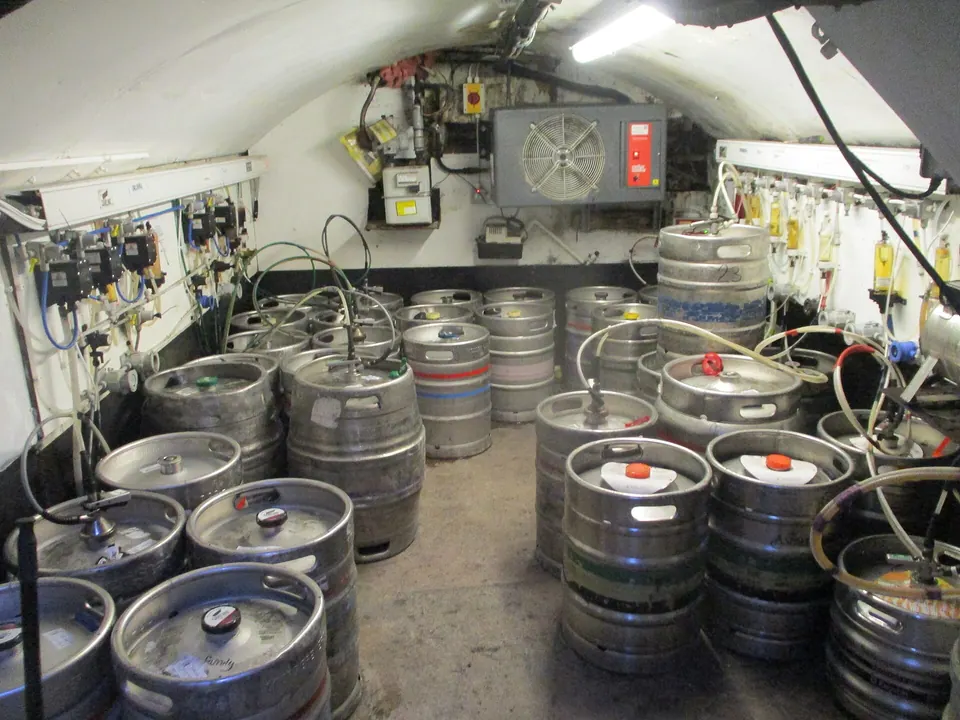
- Draft line cleaning on the Brewers Association schedule: an alkaline (caustic) line cleaner every two weeks and an acid cleaner every quarter.
- Take faucets and couplers apart on the same two-week cycle; that is where yeast and beerstone hide.
- Use the cleaner at the label dilution, temperature and contact time, then rinse until a pH strip shows no cleaner left.
- Foamy pours at correct carbonation usually mean line imbalance, not dirty lines: lengthen the line instead of lowering pressure.
- Wear eye protection and gloves; line cleaners are strong alkalis or acids.
Draft line cleaning is the chore that decides whether your homebrew tastes as good from the tap as it did in the fermenter. Beer lines grow a film of yeast, bacteria and protein, and over months a mineral scale called beerstone. Both make beer taste stale or sour and make it foam.
This guide follows the Brewers Association Draught Beer Quality Manual and BYO’s line-cleaning article, scaled down for a home kegerator, keezer or jockey box. Always follow the dilution and contact time on your cleaner’s label; we compare published guidance and product labels, not our own trials.
How often should you clean beer lines?
The commercial standard in the Brewers Association manual, repeated by BYO, is a caustic (alkaline) line cleaning at least every two weeks, faucets and couplers disassembled and cleaned on the same schedule, and an acid cleaning every quarter to remove beerstone. A home system sees less traffic, but the same microbes grow in a quiet line. Many home brewers clean between every keg, which on most setups lands close to the two-week mark anyway.
Maximum days between cleanings (Brewers Association guidance)
Commercial standard as summarized by BYO; home systems can follow the same intervals
The BA’s draught resource page also recommends a cleaning log; its log guidance looks for the last cleaning within the previous two weeks. The brew-day log has room for a keg and line-cleaning note.
What you need
- A line cleaner made for beer lines (alkaline for routine cleaning; an acid line cleaner for the quarterly step). Use the label dilution.
- A way to push solution through: a hand-pump bottle, a spare keg with a ball lock cleaning cap, or a recirculating pump. BYO notes that a pump with mechanical action removes buildup better than a static canister.
- A faucet wrench and a small brush for teardown.
- pH strips or a pH meter to confirm the rinse water is back to neutral.
- Eye protection and gloves.
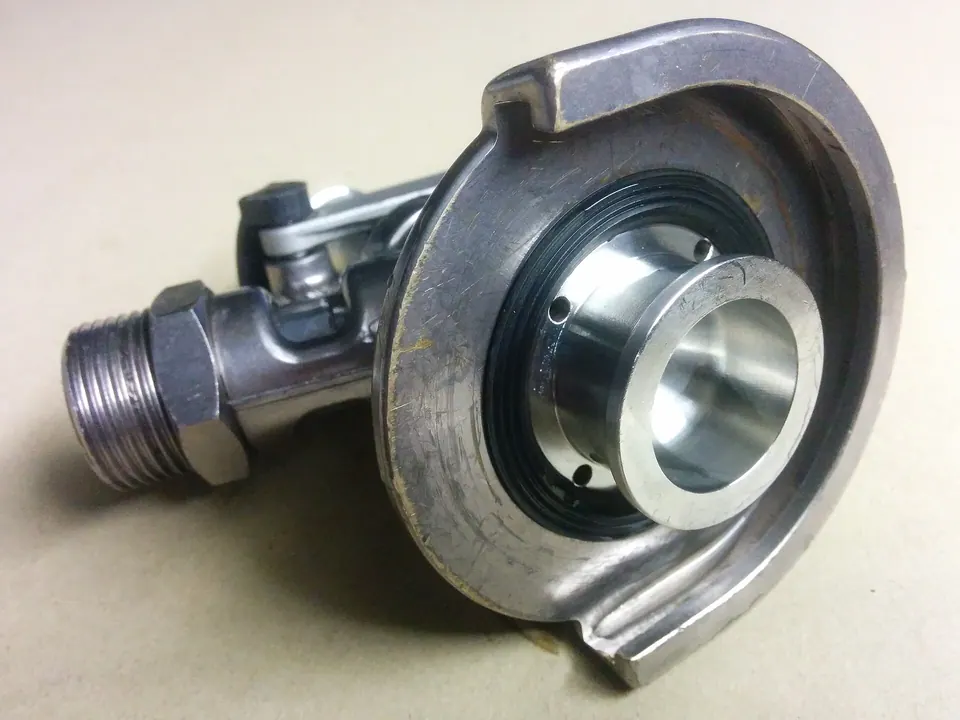
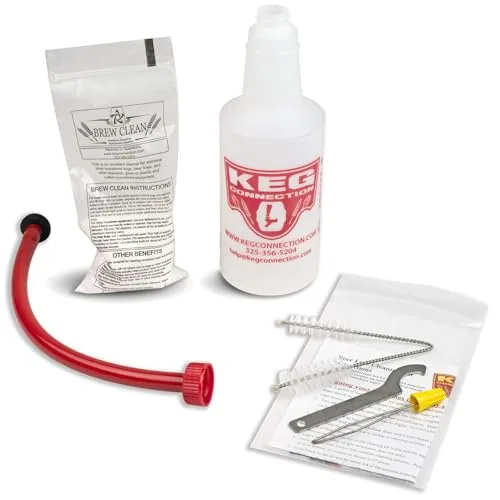
Kegconnection Kegerator Beer Line Cleaning Kit with BrewClean
- Type
- Bottle kit + powder cleaner
- Use
- Cleaning beer lines and faucets
- Size
- 8 oz BrewClean powder
Best for Routine kegerator line cleaning
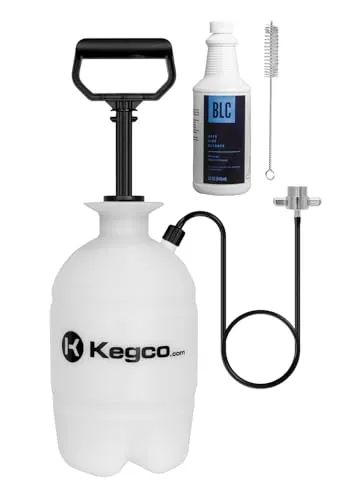
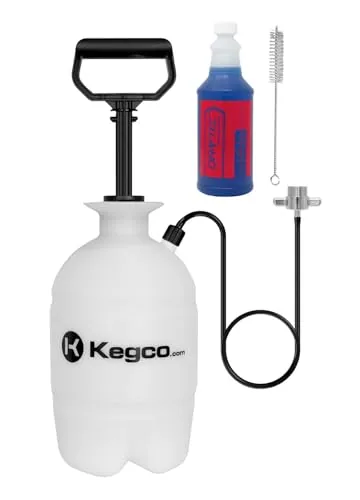
Kegco Deluxe Hand Pump Keg Line Cleaning Kit with 32 oz Cleaner
- Type
- Hand pump bottle + alkaline cleaner
- Use
- Cleaning beer lines and faucet
- Size
- 1/2 gal bottle, 32 oz cleaner
Best for Line cleaning
Draftec DTPCK Deluxe Line Cleaning Kit with 32 oz Cleaner
- Type
- Hand pump tank + cleaner + brush
- Use
- Cleaning draft lines
- Size
- 32 oz
Best for Line cleaning
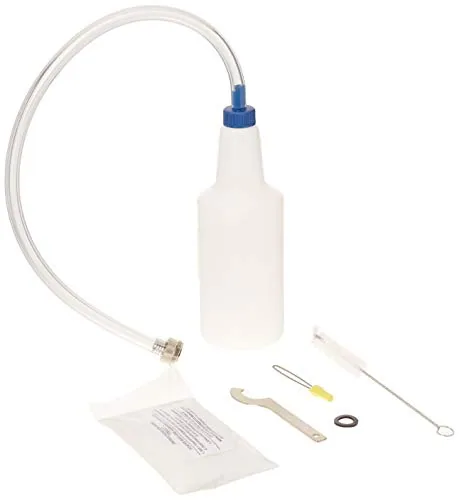
Taprite 1842G Kegerator Cleaning Kit
- Type
- Squeeze bottle kit
- Use
- Cleaning kegerator lines
- Size
- 1 qt
Best for Basic line cleaning
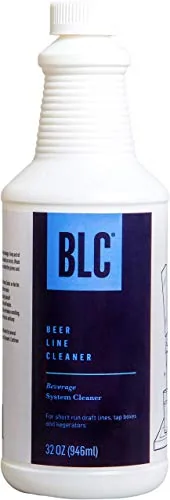
National Chemicals BLC Beverage System Cleaner, 32 oz
- Type
- Liquid
- Use
- Beer-line cleaner
- Size
- 32 oz
Best for Occasional line cleaning
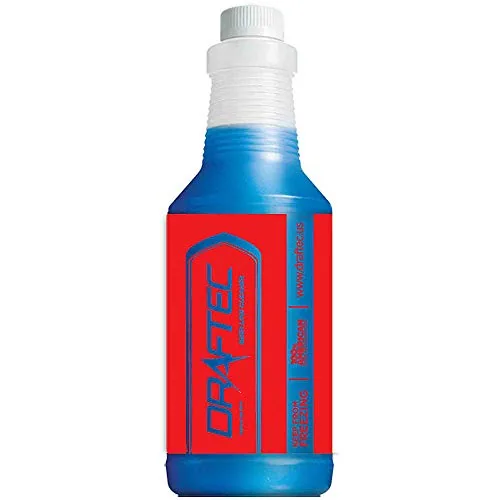
Draftec ACT222B Draft Line Cleaner with Blue Tracer, 32 oz
- Type
- Liquid with blue tracer dye
- Use
- Beer-line cleaner
- Size
- 32 oz
Best for Seeing when lines are full of cleaner
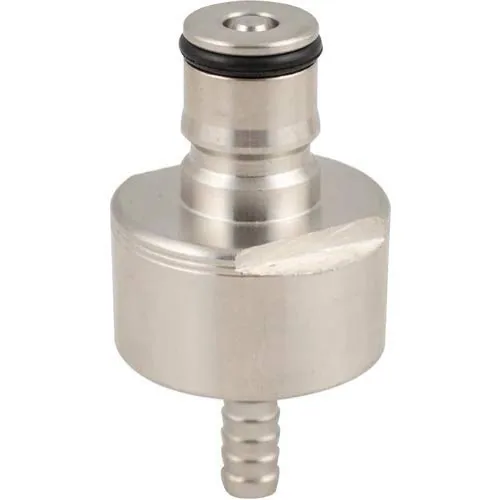
KegLand Stainless Carbonation and Line Cleaning Cap (KL00826)
- Couplers
- Ball lock cap
- Material
- Stainless steel
Best for Carbonating small bottles
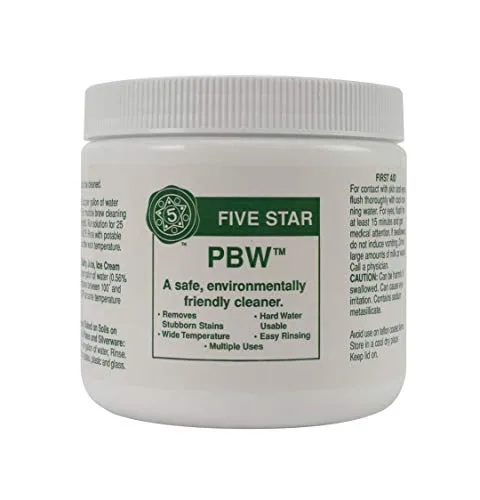
Five Star PBW Alkaline Cleaner, 1 lb
- Type
- Non-caustic alkaline powder
- Use
- Cleaner (not a sanitizer)
- Size
- 1 lb
Best for Soaking dirty fermenters and kettles
Draft line cleaning step by step
- Disconnect the keg and push out the beer
Pull the liquid disconnect, then flush the line with water until it runs clear.
- Mix the cleaner per the label
Dilute exactly as printed. BYO’s commercial example runs about a 2% caustic solution at roughly 80–100°F (27–38°C), within the chemical maker’s recommended range; home products state their own dilution.
- Fill the line and hold contact time
Push solution through until it comes out of the faucet, then let it sit or recirculate for the time on the label (BYO’s example: about 15 minutes of circulation). A colored tracer cleaner shows when the line is full.
- Take the faucet apart
Remove the faucet, soak the parts in cleaner, brush the shaft and seals and replace worn O-rings. Do the same for disconnects.
- Rinse thoroughly
Flush with clean water and check the outflow with a pH strip or meter until it reads the same as your tap water. BYO stresses this so no cleaner reaches the next glass.
- Sanitize and reconnect
Run a no-rinse sanitizer such as Star San at label dilution, push it out with CO2 and reconnect the keg. See cleaning vs sanitizing.
- Log it
Write the date down. Every fourth or fifth cleaning, substitute an acid line cleaner per its label for beerstone.
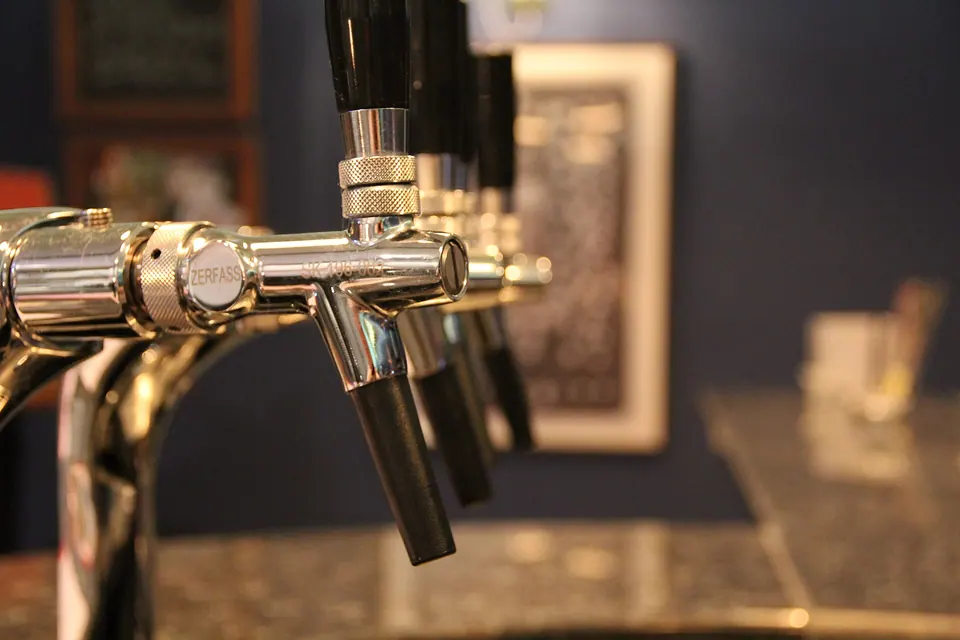
Line balancing: why your beer foams
A draft system is balanced when the pressure that keeps your beer carbonated is used up by the line’s resistance by the time beer reaches the faucet. Too little resistance and the beer rushes out and foams; too much and it pours slowly. Line resistance depends on inside diameter, material, length and how high the faucet sits above the keg.
For a typical home kegerator, BYO’s keezer build uses about 10 ft of 3/16 in. vinyl line per tap at 10–12 psi. If beer at the right carbonation foams, the usual fix is a longer line or a flow-control faucet, not lowering pressure, which slowly flattens the keg. The BA manual has resistance tables if you want to calculate it.
Foam troubleshooting
| Symptom | Likely cause | Fix |
|---|---|---|
| First pour all foam, then fine | Warm faucet or tower | Pour quickly into a tilted glass; a tower fan or insulated tower helps |
| Foamy every pour, carbonation correct | Line too short or too wide | Lengthen 3/16 in. line, or use a flow-control faucet |
| Beer slowly getting flatter | Serving pressure set below carbonation pressure | Set pressure from the carbonation chart |
| Foam and off-flavors (sour, buttery, stale) | Dirty lines or faucet | Clean now; tear down the faucet |
| Bubbles in the line | Loose fitting or warm line | Tighten and leak-check; keep lines cold |
Source: BYO line cleaning and keezer articles; Brewers Association draught manual
Keg carbonation chart and PSI calculatorFind the serving pressure that matches your temperature and target volumes.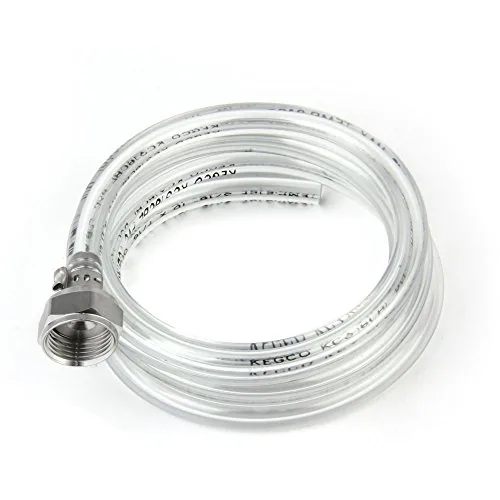
Kegco 5 ft 3/16 in. Beer Line with Hex Nut
- Couplers
- Hex coupling nut
- Type
- Beer line assembly
- Size
- 5 ft × 3/16 in. ID vinyl
Best for Replacing beer line
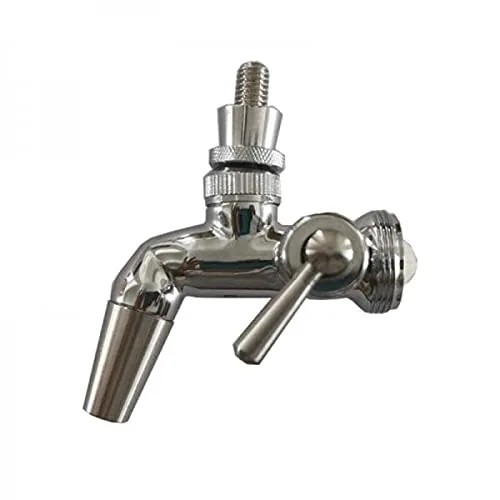
KegLand Nukatap Flow Control Faucet
- Taps
- 1 flow-control faucet
- Type
- Beer faucet
- Material
- Stainless steel
Best for Adjustable pour speed
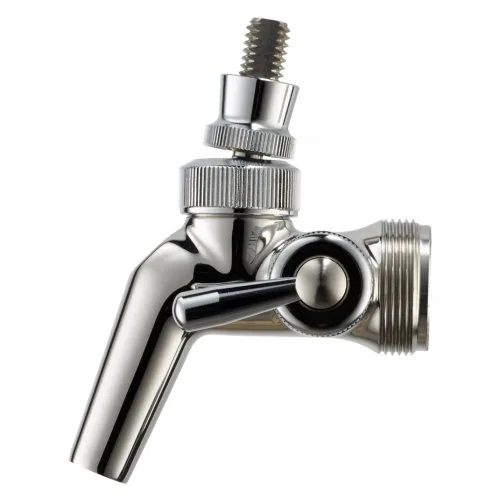
Perlick 650SS Forward Sealing Flow Control Faucet
- Taps
- 1 flow-control faucet
- Type
- Beer faucet
- Material
- Stainless steel
Best for Taming foamy pours
Kegs, jockey boxes and picnic taps
Lines are only part of the draft path. The keg itself, its dip tube, the poppets in the posts and the disconnects all touch beer, and a dirty keg will re-contaminate a clean line on the first pour.
Between batches: the keg
Rinse the keg as soon as it kicks so yeast and hop debris do not dry on. Soak or recirculate an alkaline brewery cleaner such as PBW at its label strength and temperature, pull the posts and dip tubes every few batches to clean the poppets and O-rings, then rinse well. Sanitize just before filling, and push the sanitizer out through the liquid post so the dip tube is sanitized too. Replace cracked or flattened O-rings; a rebuild kit and a little food-grade keg lube make that a five-minute job.
Five Star PBW Alkaline Cleaner, 1 lb
- Type
- Non-caustic alkaline powder
- Use
- Cleaner (not a sanitizer)
- Size
- 1 lb
Best for Soaking dirty fermenters and kettles

Five Star PBW Cleaning Tablets, 30 ct
- Type
- Alkaline cleaning tablet, 2.5 g
- Use
- Cleaner; 1 tablet per 32 oz water
- Size
- 30 tablets
Best for Cleaning growlers and bottles without measuring
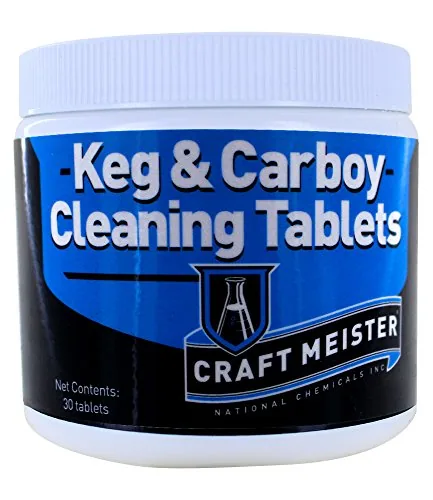
Craft Meister Keg & Carboy Cleaning Tablets, 30 ct
- Type
- Alkaline/oxygen tablets
- Use
- Cleaner
- Size
- 30 tablets
Best for Soaking kegs and carboys
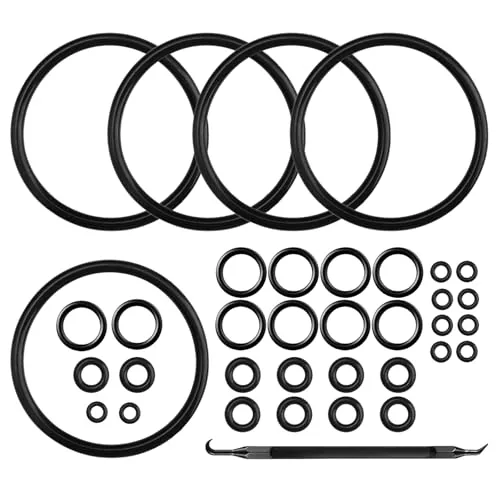
Dbgogo Corny Keg O-Ring Rebuild Kit, 35 Pc with Tool
- Kegs
- Ball lock corny kegs
- Type
- Keg gasket kit
- Size
- 5 lid, 10 post, 10 dip tube, 10 poppet O-rings + tool
Best for Rebuilding used kegs
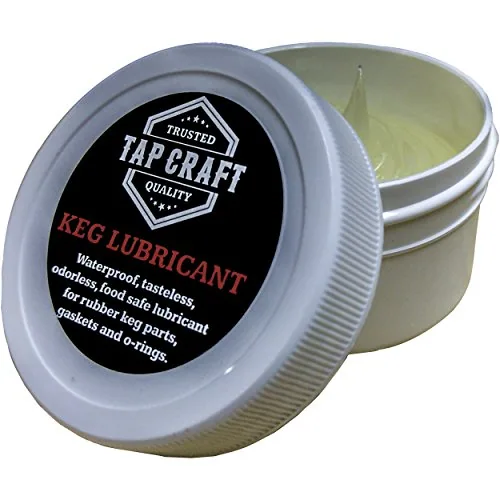
Learn to Brew Keg Lube, 1 oz
- Kegs
- Gaskets and disconnects
- Type
- Keg lubricant
- Size
- 1 oz
Best for Keg maintenance
Jockey boxes
A jockey box pushes beer through stainless coils sitting in ice, so the beer stays in contact with a long length of tubing. Flush the coils with water right after the event, run line cleaner through them at label dilution, rinse, and then blow them dry with CO2 or air before storage. Water left in a coil is where mold starts.
Picnic taps and short party lines
Cheap vinyl picnic-tap lines are hard to clean well and are often cheaper to replace. If you keep one, clean and rinse it like a kegerator line, hang it to drain, and swap it as soon as it looks cloudy or smells.
Whatever the setup, the order stays the same: rinse, clean per the label, rinse until the pH matches tap water, sanitize, and log the date. More on kegging gear in how to keg homebrew.
Common line-cleaning mistakes
- Using sanitizer as a cleaner. Star San sanitizes clean surfaces; it does not remove film. Clean first.
- Guessing the dilution. Stronger is not better and can damage seals; follow the label.
- Never taking the faucet apart. Beer dries inside the faucet body where solution flowing past does not reach.
- Skipping the rinse check. A pH strip costs little and keeps cleaner out of the glass.
- Ignoring the acid step. Beerstone builds slowly and harbors bacteria; an acid cleaner per its label removes it.
- Old, cloudy lines. If a line stays stained or smells after cleaning, replace it.
Who needs what
A one- or two-tap kegerator does fine with a hand-pump kit and a bottle of line cleaner. A keezer with four or more taps benefits from a recirculating pump setup or a cleaning keg. Jockey box coils need cleaning and drying after every event. Browse kits in cleaning and sanitizing, and see the kegerator and keezer guide for the system itself.
Gear picks for this guide: best beer faucets and best brewing sanitizers and cleaners.
Keg carbonation chart and PSI calculatorKeg carbonation chart and calculator: regulator PSI by beer temperature and CO2 volumes, with an altitude…Printable brew-day log and recipe sheetFree brew-day log: record recipe, water and salts, mash, gravities, yeast, fermentation temperatures,…