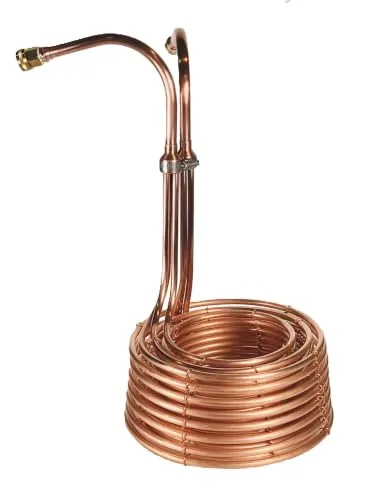
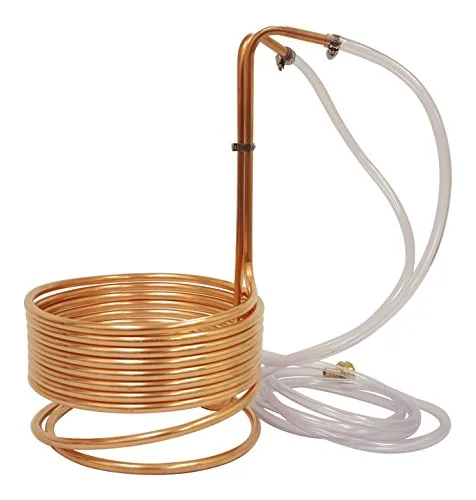
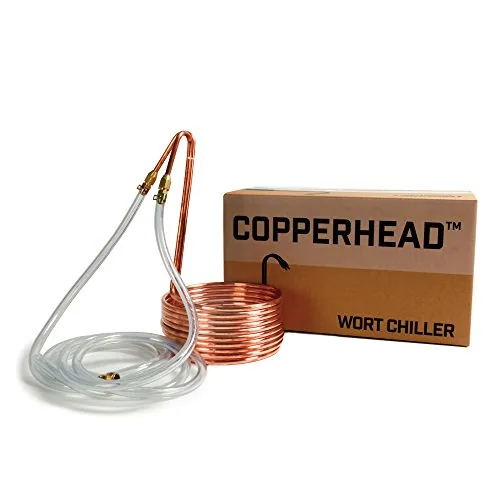
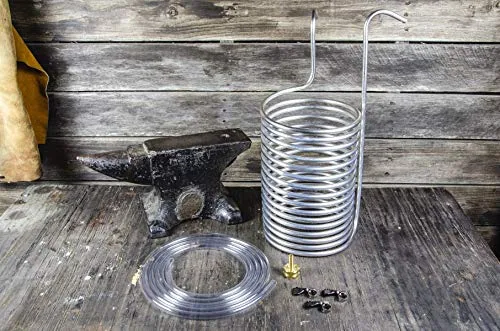
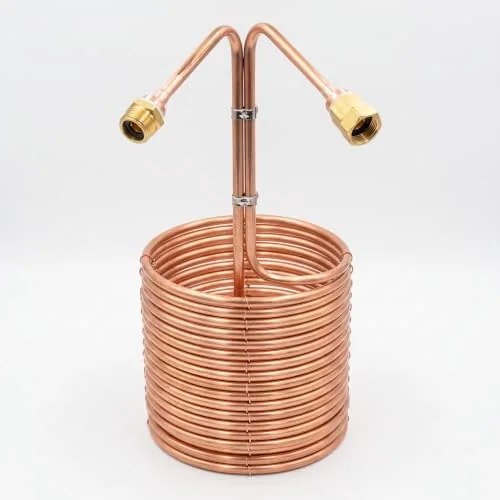
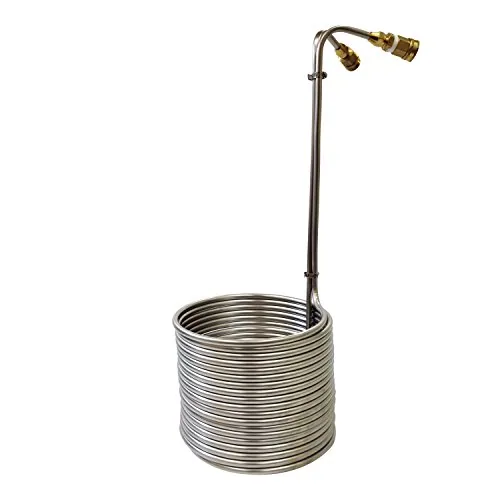
- Immersion: a coil sits in the kettle with tap water running through it. Easiest to sanitize (drop it in the boil) and clean. Works with any kettle and BIAB.
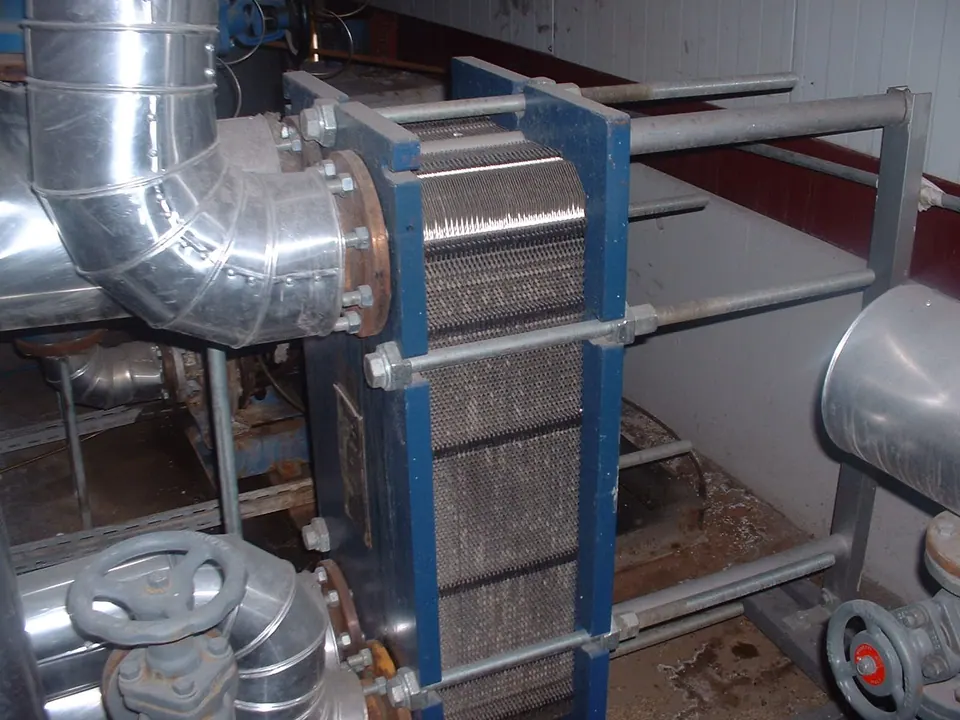
- Plate: brazed stainless plates in a small block; wort and water flow in opposite directions. Fastest per size and uses the least space, but can clog with hop debris and can't be opened.
- Counterflow: a copper or stainless tube inside a water jacket. Fast single-pass chilling with a larger flow path than plates.
- In a hot summer, ground water may be too warm to reach pitching temperature with any chiller; a pre-chiller in ice water helps.
Immersion vs plate chiller is the main wort-chilling choice, with counterflow as the middle option. All three move heat from boiling wort into cold tap water so you can pitch yeast quickly and get a good cold break. An immersion chiller sits in the kettle; plate and counterflow chillers sit outside it, and the wort flows through them on its way to the fermenter, by gravity or a pump.
Below we compare the three types on listed sizes, maker chill-time claims, cleaning, clogging and water use, with picks from JaDeD Brewing, NY Brew Supply, Northern Brewer, Anvil, KegLand, CC-STAR, FERRODAY and Grainfather. All of them live in the brewing systems and chillers hub.
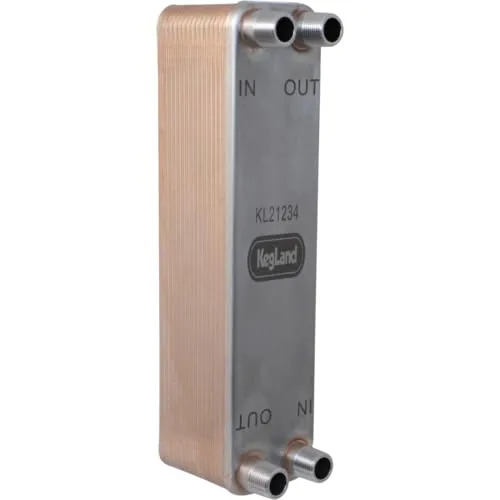
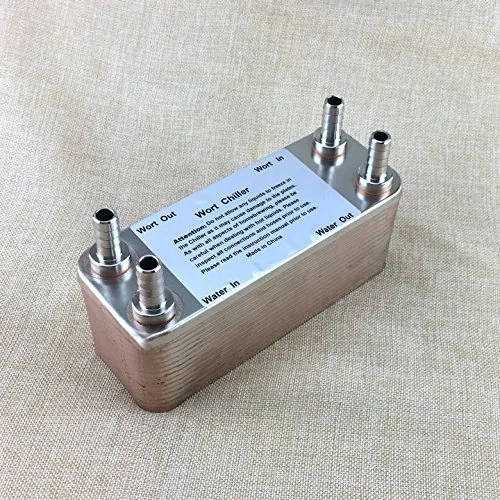
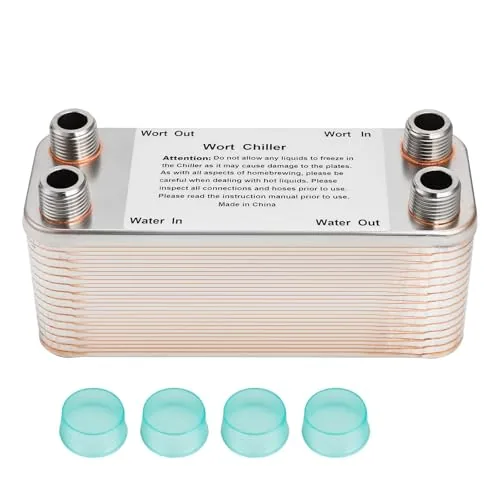
Plate and counterflow chillers
Wort flows through the chiller on its way to the fermenter; fast, but filter the hops
BrowsePicks from each side
Immersion chillers
JaDeD Brewing Hydra Triple-Coil Copper Immersion Chiller
- Volume
- 3 × 25 ft × 3/8 in. OD coils; 12 × 20 in.
- Material
- Copper, made in USA
- Type
- Immersion chiller
Best for Fastest immersion chilling
NY Brew Supply Copper Immersion Wort Chiller, 3/8 in. x 25 ft
- Volume
- 3/8 in. × 25 ft, 9 1/4 in. coil, 16 in. tall
- Material
- Copper
- Type
- Immersion chiller
Best for First chiller for 5-gallon batches
Northern Brewer Copperhead Copper Immersion Chiller, 25 ft
- Volume
- 3/8 in. × 25 ft
- Material
- Copper
- Type
- Immersion chiller
Best for 5-gallon kettle chilling
Anvil Stainless Immersion Chiller with Hose and Fittings
- Volume
- 3/8 in. × 28 ft coil
- Material
- Stainless steel
- Type
- Immersion chiller
Best for Chilling in an Anvil Foundry or kettle
JaDeD Brewing 50 ft x 3/8 in. Copper Immersion Chiller
- Volume
- 50 ft × 3/8 in. OD; 9.75 × 20 in.
- Material
- Copper, lead-free solder
- Type
- Immersion chiller
Best for Faster chilling of 5–10 gal
NY Brew Supply Stainless Immersion Wort Chiller, 3/8 in. x 50 ft
- Volume
- 3/8 in. × 50 ft, 24 in. tall
- Material
- Stainless steel
- Type
- Immersion chiller
Best for Faster chilling of bigger batches
Plate and counterflow chillers
KegLand Chillout MKIV 30-Plate Wort Chiller
- Volume
- 30 plates, 1/2 in. BSP posts, 12.4 × 2.9 × 2 in.
- Material
- Copper and stainless
- Type
- Brazed plate chiller
Best for Plate chilling in a KegLand setup
CC-STAR 30-Plate Stainless Wort Chiller
- Volume
- 30 plates, 4 × 1/2 in. barbs; 100 L in 20 min (maker)
- Material
- 304 stainless steel
- Type
- Brazed plate chiller
Best for Budget plate chiller
FERRODAY 30-Plate Brazed Plate Wort Chiller, 1/2 in.
- Volume
- 30 plates, 7.3 × 2.8 in.
- Material
- 304 stainless plates, copper brazed
- Type
- Brazed plate chiller
Best for Plate chilling with a pump
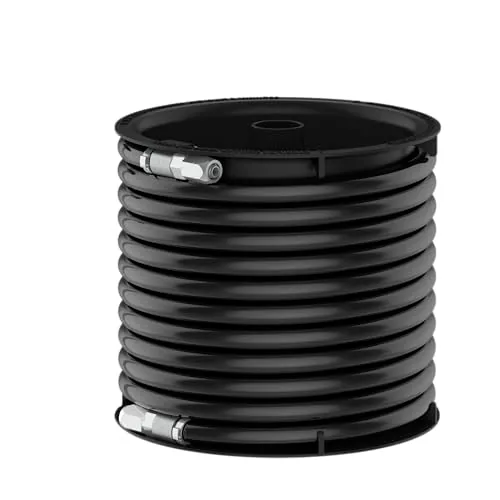
Grainfather Counterflow Copper Wort Chiller
- Volume
- Water 3 L/min; 16 min for 23 L (6 gal) per maker
- Material
- Copper counterflow
- Type
- Counterflow chiller
Best for Grainfather G30 and G40 setups
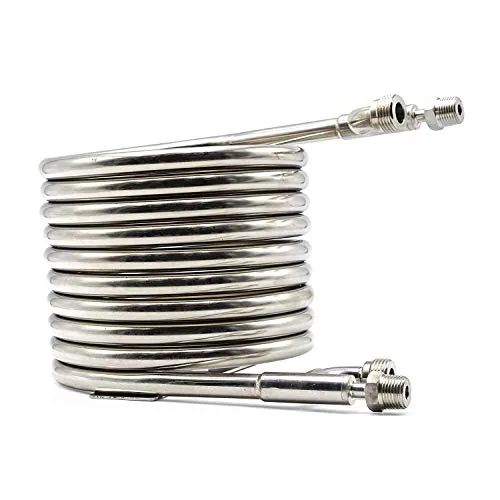
Northern Brewer Stainless Counterflow Wort Chiller, 18 ft
- Volume
- 18 ft contact length
- Material
- 304 stainless steel
- Type
- Counterflow chiller
Best for Counterflow without clamps
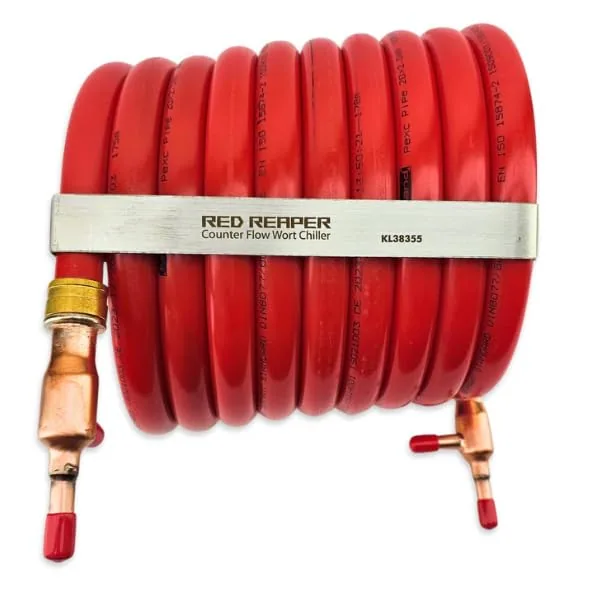
KegLand Red Reaper Counterflow Wort Chiller, 18 ft
- Volume
- 18 ft
- Material
- Copper wort pipe, PEX jacket
- Type
- Counterflow chiller
Best for Counterflow with hoppy worts
Immersion vs plate vs counterflow at a glance
| Immersion | Plate | Counterflow | |
|---|---|---|---|
| Where the wort is | In the kettle | Flows through brazed plates | Flows through the inner tube |
| Needs a pump or gravity drain | ✗ | ✓ | ✓ |
| Sanitizing | ✓ Drop in the boil for the last 10–15 min | ~ Recirculate hot wort or flush with sanitizer | ~ Recirculate hot wort or flush |
| Cleaning | ✓ Wipe the outside | ✗ Can't open; backflush right away | ~ Flush; the inside isn't visible |
| Hop and trub tolerance | ✓ Not affected | ✗ Clogs without a filter | ~ Larger flow area than plates |
| Size and storage | ~ Bulky coil | ✓ Palm-sized block | ~ Coil with jacket |
| Works with BIAB and any kettle | ✓ | ~ Needs a valve | ~ Needs a valve |
| Cold break stays in | Kettle (whirlpool and leave it) | Fermenter, unless you settle it | Fermenter, unless you settle it |
Source: Listing data for the chillers shown; Palmer, How to Brew (cooling the wort)
Copper or stainless, and how long a coil?
Copper conducts heat about 20–25 times better than stainless steel (published thermal conductivity values), so a copper coil of the same length cools faster. Stainless resists corrosion and looks clean for longer, so makers make stainless coils longer to compensate.
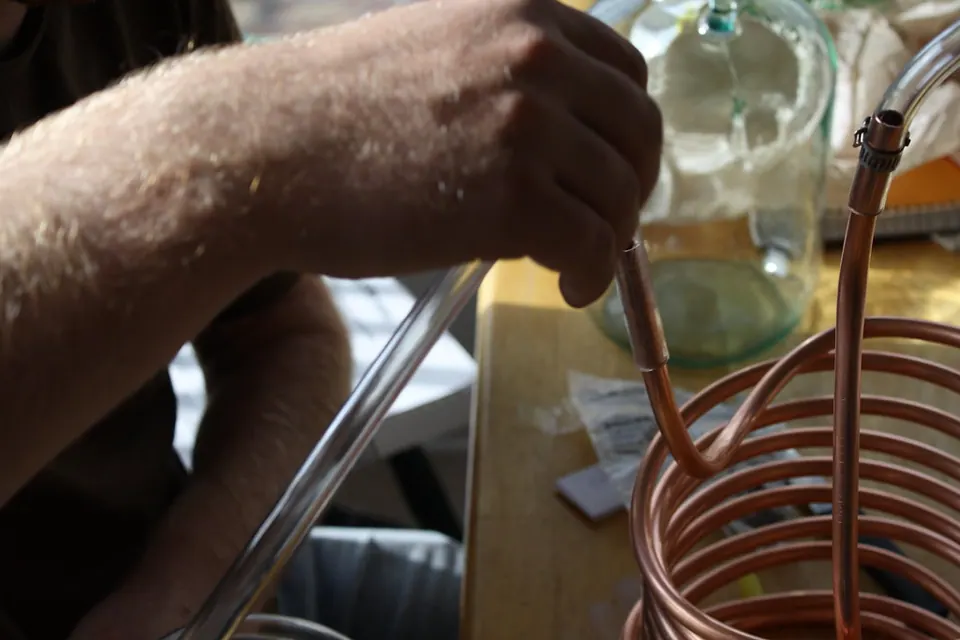
Listed immersion coil length
Feet of tubing in contact with the wort
A 25-foot, 3/8 in. copper coil is the classic 5-gallon size. The JaDeD Hydra runs three 25-foot coils in parallel; JaDeD claims it cools 5 gallons from boiling to 68°F in 3 minutes with 18 gallons of 58°F tap water. That is a maker claim under ideal water temperature, not something we measured.
Plate chillers: fast and compact, but filter the hops
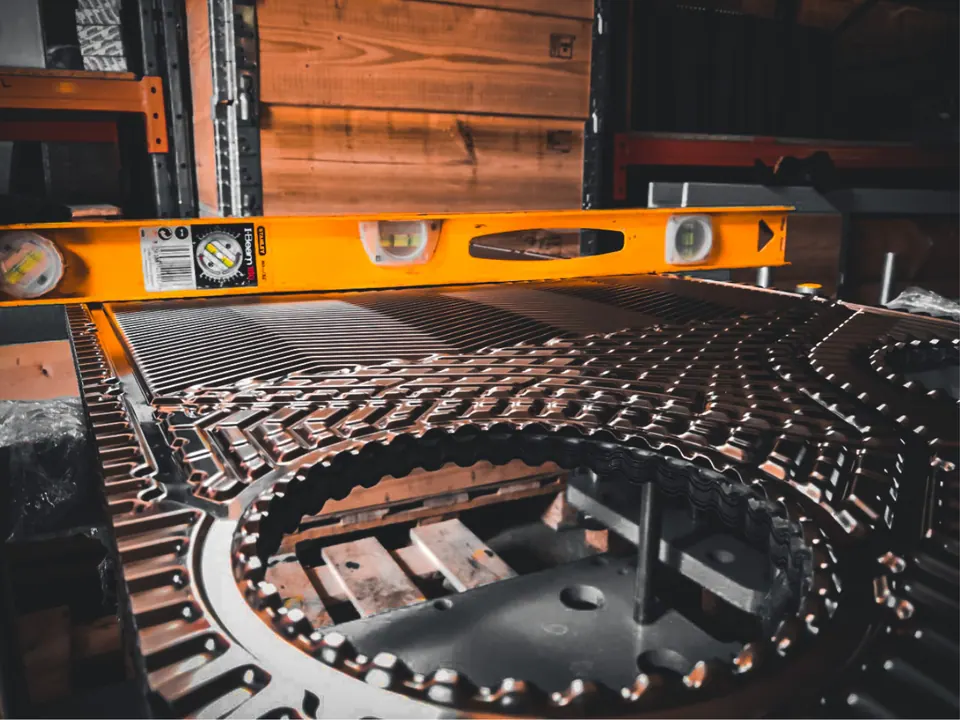
A brazed plate chiller packs a large heat-transfer area into a small block: the CC-STAR 30-plate lists 0.336 m² in a block about 191 × 73 mm, and KegLand's Chillout MKIV 30-plate measures 12.4 × 2.9 × 2 in. The narrow channels are the catch. Hop pellets, whole cones and break material can clog them, and the plates can't be opened for inspection.
- Use a hop spider, hop bags or a kettle hop filter, and whirlpool before you drain.
- Backflush with hot water immediately after use, then with a brewing cleaner used per the label.
- Sanitize by recirculating near-boiling wort through it for the last minutes of the boil, or with sanitizer at label dilution.
- Check the fittings: KegLand uses 1/2 in. BSP posts; many generic chillers use 1/2 in. NPT or barbs.
KegLand Chillout MKIV 30-Plate Wort Chiller
- Volume
- 30 plates, 1/2 in. BSP posts, 12.4 × 2.9 × 2 in.
- Material
- Copper and stainless
- Type
- Brazed plate chiller
Best for Plate chilling in a KegLand setup
CC-STAR 30-Plate Stainless Wort Chiller
- Volume
- 30 plates, 4 × 1/2 in. barbs; 100 L in 20 min (maker)
- Material
- 304 stainless steel
- Type
- Brazed plate chiller
Best for Budget plate chiller
FERRODAY 30-Plate Brazed Plate Wort Chiller, 1/2 in.
- Volume
- 30 plates, 7.3 × 2.8 in.
- Material
- 304 stainless plates, copper brazed
- Type
- Brazed plate chiller
Best for Plate chilling with a pump
Counterflow chillers: the middle ground
A counterflow chiller runs wort through a copper or stainless tube while water flows the other way in an outer jacket. KegLand notes its Red Reaper has a larger flow area than plate chillers, which helps against clogs, and Northern Brewer's stainless model lists 18 ft of contact length with threaded stainless fittings. Grainfather's counterflow chiller is designed to attach to its G30 and G40 systems and lists 3 L/min of water flow.
Grainfather Counterflow Copper Wort Chiller
- Volume
- Water 3 L/min; 16 min for 23 L (6 gal) per maker
- Material
- Copper counterflow
- Type
- Counterflow chiller
Best for Grainfather G30 and G40 setups
Northern Brewer Stainless Counterflow Wort Chiller, 18 ft
- Volume
- 18 ft contact length
- Material
- 304 stainless steel
- Type
- Counterflow chiller
Best for Counterflow without clamps
KegLand Red Reaper Counterflow Wort Chiller, 18 ft
- Volume
- 18 ft
- Material
- Copper wort pipe, PEX jacket
- Type
- Counterflow chiller
Best for Counterflow with hoppy worts
Counterflow and plate chillers both send cold break into the fermenter. That isn't a flaw in normal amounts, but if you want clearer wort, let the fermenter settle for an hour and rack off, or use a kettle fining (see Whirlfloc vs Irish moss).
Summer water and pitching temperature
Any chiller can only bring wort near the temperature of the water you feed it. In a hot summer, ground water can be warmer than the pitching temperature for ales or lagers. Two fixes: run tap water first, then switch to ice water through a pre-chiller or a pump in a bucket of ice; or chill as low as you can and finish in a temperature-controlled fermentation chamber. See the temperature control and summer page.
Once chilled, check the volume and gravity (the dilution and boil-off calculator helps you correct both) and work out how much yeast to pitch with the yeast pitch rate calculator.
Who should choose which
Chiller type by situation
| Situation | Immersion | Plate | Counterflow |
|---|---|---|---|
| First chiller, 5 gal extract or BIAB | ✓ | ~ | ~ |
| Kettle with no valve | ✓ | ✗ | ✗ |
| Pump already in the system | ~ | ✓ | ✓ |
| Very hoppy beers, lots of pellets | ✓ | ✗ Unless filtered | ~ |
| 10+ gal batches | ~ Long or multi-coil | ✓ | ✓ |
| Small storage space | ~ | ✓ | ~ |
| Grainfather G30 owner | ~ | ~ | ✓ Matching fittings |
Choose an immersion chiller for your first chiller, for BIAB and for kettles without a valve; a 25-foot copper coil or a multi-coil Hydra covers 5-gallon batches. Choose a plate chiller if you have a pump, filter your hops and want the fastest, smallest unit. Choose counterflow if you want single-pass speed with fewer clog worries, or if you own a Grainfather.
Mistakes to avoid
- Putting an unsanitized immersion chiller in cooled wort. Add it to the boil for the last 10–15 minutes instead.
- Leaving a plate chiller wet and dirty. Residue inside is invisible; backflush right away.
- Running water before checking fittings. A leaking hose connection can drip cold water into the wort. Check connections first.
- Chilling in the garage next to a propane burner. Burners belong outdoors; electric systems are the indoor option.
- Wasting water. Collect the warm outflow in buckets for cleaning, or recirculate ice water in summer.
Immersion chillers are the simplest and most forgiving: no pump, no clogging, easy to sanitize. Plate chillers are the fastest and smallest if you have a pump and keep hops out of them. Counterflow chillers sit in between, with a larger flow path than plates. For most 5-gallon brewers, a 25–50 ft copper immersion coil is the first chiller to buy.
We compared listed coil lengths, materials, plate counts, dimensions and maker chill-time claims for the chillers shown, plus Palmer's How to Brew chapter on cooling. We did not time or measure these chillers; speed figures are the makers' claims.