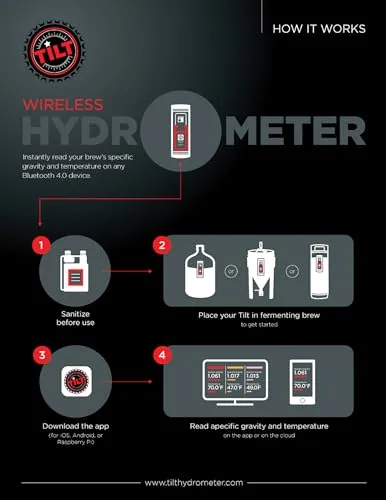
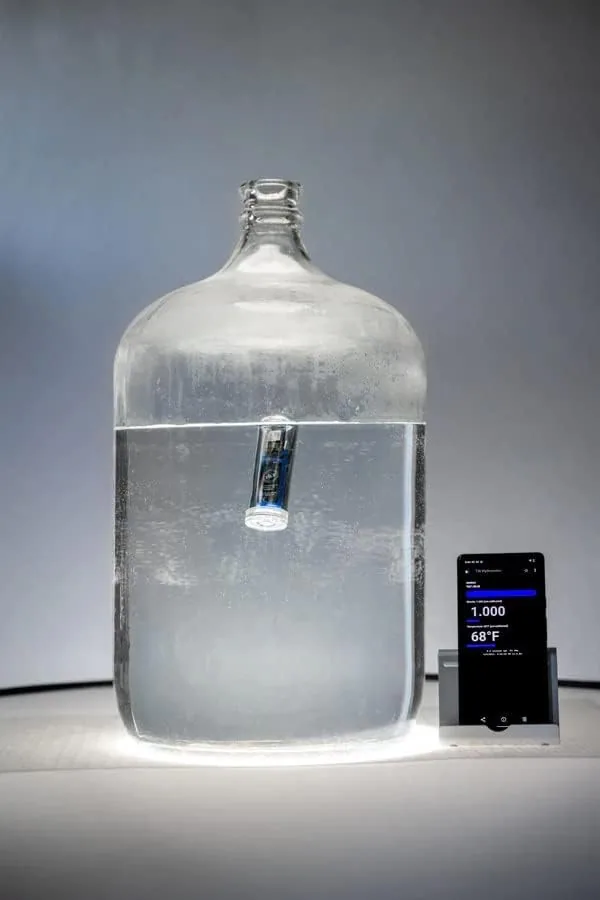
- Reads SG 0.990–1.120 at ±0.002 and temperature at ±1°F (±0.5°C), per Tilt.
- Sends readings over Bluetooth to the Tilt app, a Tilt Pi or the Pico Wi-Fi bridge for cloud logging.
- Battery life 12–24 months per the listing; Tilt's spec sheets list a user-replaceable CR123A cell.
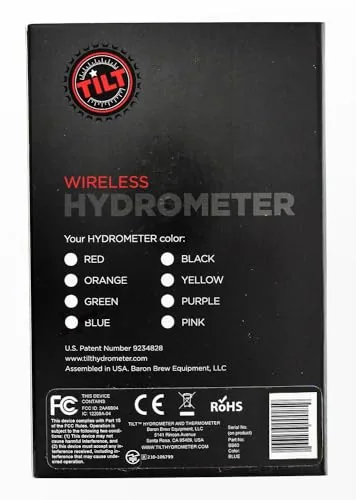
- One color per fermenter: the app won't read two Tilts of the same color.
- Range drops in stainless; Tilt sells a repeater, and the Pro Mini is sized for kegs.
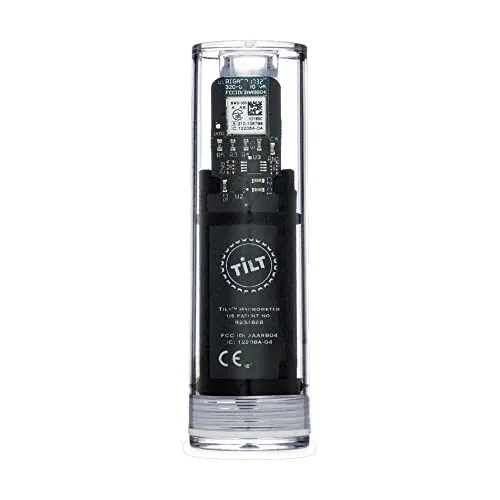
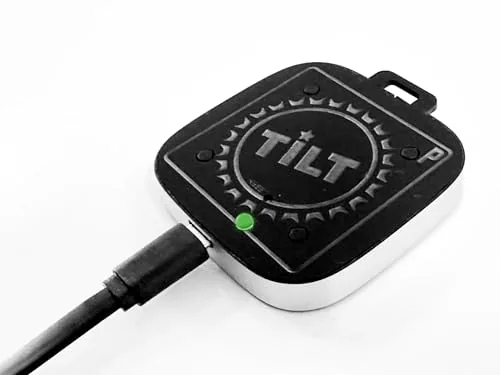
This Tilt hydrometer review covers the standard black Tilt, a sealed float that goes straight into your fermenter. Instead of drawing samples, you watch a gravity curve build over days. That shows when yeast takes off, when it slows, and when the reading stops changing, which is the signal you need before bottling or kegging.
We read Tilt's product pages, FAQ and spec sheets, the listing and published brewing sources. We did not use a Tilt in a fermenter. For other gauges, see the hydrometers and meters hub and the fermenters and temperature control hub.
Who it’s for, and who should skip it
- Want to track fermentation without opening the fermenter or wasting beer on samples
- Ferment in plastic, glass or PET where Bluetooth carries well
- Pair it with a temperature controller and want to see the beer's own temperature
- Run several batches and can give each its own Tilt color
- Like logging data to a spreadsheet or the cloud
- Need final gravity to better than ±0.002 SG
- Ferment in closed stainless and won't add a repeater or bridge nearby
- Want two batches tracked by Tilts of the same color in the app
- Only brew a few batches a year and are happy taking hydrometer samples
Pros and cons
- Continuous gravity and temperature readings without opening the fermenter
- Arrives pre-calibrated, with multi-point calibration in the app
- Works with the app, Tilt Pi and the Pico Wi-Fi bridge
- Battery lasts 12–24 months, per the listing
- Works in beer, wine, cider and mead, per Tilt
- Pro, Pro Mini and Pico models for kegs, big tanks and remote logging
- ±0.002 SG is coarser than a good glass hydrometer for final gravity
- Bluetooth range drops sharply in stainless steel
- One color per batch; same-color Tilts confuse the app
- Needs a phone, Pi or bridge within range to log
- Temperature can take up to 15 minutes to settle after you drop it in, per Tilt
Specs
| Range | SG 0.990–1.120 |
|---|---|
| Accuracy | ±0.002 SG (per Tilt) |
| Connectivity | Bluetooth to app or Tilt Pi |
| Battery | 12–24 months (per maker) |
As stated by the maker or seller; confirm on the listing before you buy.
How accurate is the Tilt hydrometer?
Tilt rates the standard model at ±0.002 specific gravity between 0.990 and 1.120 and the thermometer at ±1°F (±0.5°C). In practice that means a reading of 1.012 could be anywhere from 1.010 to 1.014. For watching a curve flatten out, that is plenty. For an exact final gravity, or for calculating ABV, take a sample with a calibrated glass hydrometer at the end.
The Tilt Pro and Pro Mini list 0.0001 SG resolution, meaning finer steps on the display. Tilt's Pro Mini spec sheet still lists ±0.002 SG accuracy. Resolution and accuracy are not the same thing.
Tilt models at a glance
| Model | Gravity | Built for | Battery |
|---|---|---|---|
| Tilt (standard) | 0.990–1.120, ±0.002 | Homebrew fermenters | CR123A, 12–24 months (listing) |
| Tilt Pro Mini | 0.9900–1.1200 (calibratable to 1.2000), 0.0001 resolution | Kegs and pressure fermenters, up to 5 BBL | CR123A, 1–2 years |
| Tilt Pro | 0.0001 resolution | Tanks up to 20 BBL | 2 × AA lithium, 3–5 years |
| Tilt Pico | Bridge, no sensor | Bluetooth to Wi-Fi, about 2 months of local storage | Plug-in |
Source: Tilt product pages and spec sheets
Tilt ships the hydrometer pre-calibrated. After a battery change, Tilt says to float it in room-temperature tap water and let it reset to 1.000. For tighter readings, its app supports extra calibration points made with sugar solutions, such as 1.061 and 1.120.
Does the Tilt work in a stainless fermenter or keg?
Partly. Tilt's FAQ gives up to about 25 ft of range from a phone or tablet in normal use. Stainless steel blocks a lot of that. Tilt's Pro Mini spec sheet gives about 300 ft line of sight floating in an open glass vessel, but only about 20 ft inside a closed 5-gallon stainless keg. For stainless fermenters Tilt sells a repeater that sits on top of the vessel and adds about 25 ft, and the Pico bridge can mount on or near the fermenter.
If you ferment in a fridge or a stainless conical, keep the receiver close: a spare phone, a Raspberry Pi with Tilt Pi or the Pico just outside the chamber door. PET fermenters such as the FermZilla are easier; our FermZilla review covers those.
Using the Tilt through a fermentation
- Clean and sanitize it
Wash the Tilt, then sanitize it with a no-rinse sanitizer used as the label directs, and drop it into the fermenter after pitching.
- Give each batch its own color
The app reads one Tilt per color. A second batch needs a second color, such as the red Tilt.
- Log original gravity
Let the temperature settle (Tilt says up to 15 minutes), then note the starting reading alongside your hydrometer OG.
- Watch the curve flatten
When gravity holds steady for two or three days, fermentation is likely done.
- Confirm before packaging
Take a final sample with a glass hydrometer, then bottle or keg.
Pair it with a temperature controller and you can see whether the beer, not just the air around it, stays in range; our Inkbird ITC-308 review covers one. Use the ABV calculator with your hydrometer readings and keep each batch in the brew-day log.
ABV calculatorTurn your OG and final hydrometer reading into ABV and standard drinks per serving.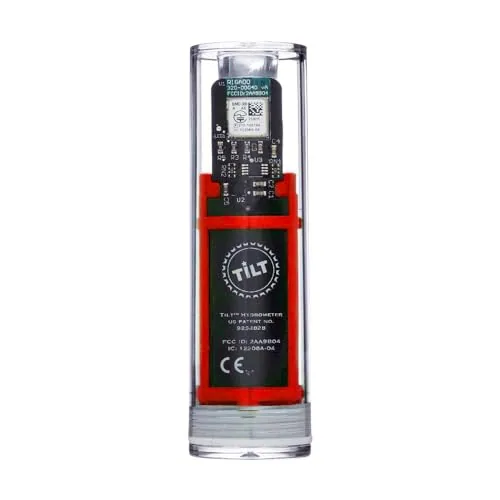
Tilt Wireless Hydrometer & Thermometer (Red)
- Range
- SG 0.990–1.120
- Accuracy
- ±0.002 SG (per Tilt)
- Connectivity
- Bluetooth to app or Tilt Pi
Best for A second fermenter alongside a black Tilt
Tilt Pico Wi-Fi Bridge for Tilt Hydrometers
- Connectivity
- Bluetooth to Wi-Fi bridge, cloud logging
Best for Remote logging for Tilt owners
Tilt vs RAPT Pill and regular hydrometers
KegLand's RAPT Pill is the main floating alternative; it connects over Wi-Fi to the RAPT app and fits naturally with KegLand's FermZilla and BrewZilla. The listing in our catalog gives few specs, so check KegLand's manual for range and battery details. A triple-scale glass hydrometer and test jar is still the reference reading and needs no batteries. A refractometer needs only a few drops, but its readings after fermentation starts need an alcohol correction.
Our best digital hydrometers list compares floating gauges, and the best refractometers for brewing list covers the optical option.
Alternatives worth a look
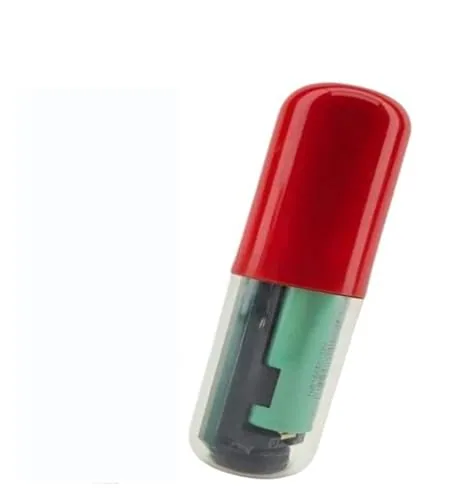
KegLand RAPT Pill Digital Hydrometer & Thermometer (Red)
- Connectivity
- Not listed on this listing (RAPT app per maker)
Best for A Tilt alternative in a KegLand setup
Wi-Fi floating gauge: KegLand's RAPT Pill floats in the fermenter and reports gravity and temperature to the RAPT app; check KegLand's manual for range and battery details.
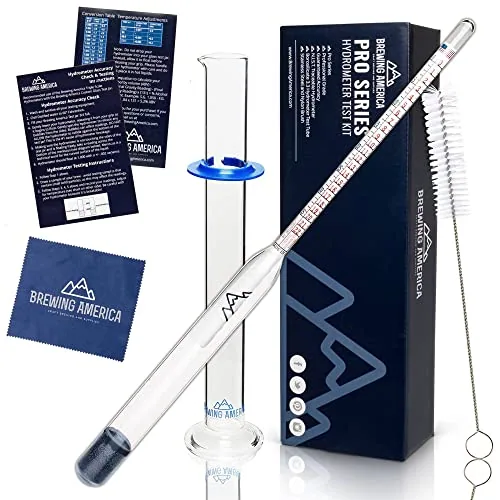
Brewing America Triple Scale Hydrometer & Test Jar (USA-Made)
- Range
- SG 0.990–1.170 (listing)
- Accuracy
- NIST-traceable (per maker)
- Scale
- Triple scale
Best for Brewers who want a US-made glass hydrometer
Reference reading: A US-made triple-scale glass hydrometer with a test jar, which the maker describes as NIST-traceable, for confirming final gravity.
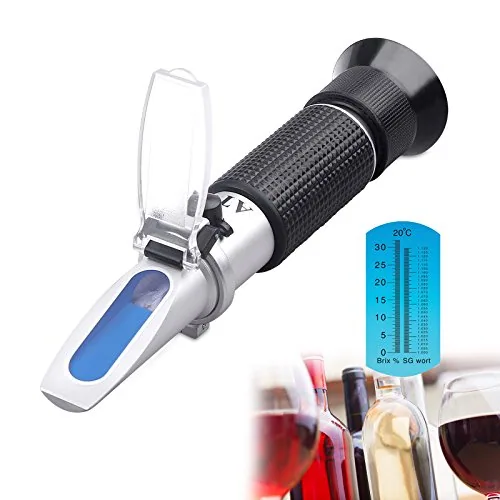
Tiaoyeer Brix/SG Refractometer with ATC
- Range
- Brix 0–32%, SG 1.000–1.130
- Accuracy
- ±0.2% Brix
- Scale
- Dual (Brix, SG)
Best for Quick wort gravity checks on brew day
Few drops, fast: A Brix/SG refractometer with ATC (10–30°C) for quick wort readings; post-fermentation readings need an alcohol correction.
We read the maker’s specs, the manual and the current listing, and checked them against published brewing sources (Palmer, BJCP, AHA, BYO) and safety guidance where it applies. We did not brew with, install or lab-test this product. We never show scores, star ratings or prices.