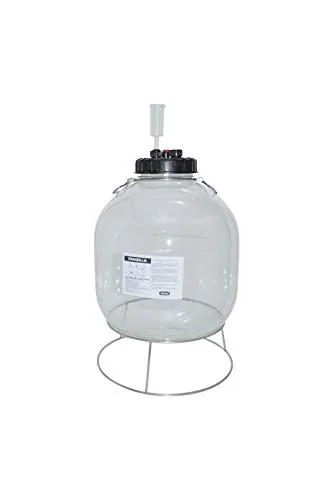
- 30 L (7.9 gal) PET fermenter with a 4.75 in. lid opening, per the pressure kit listing.
- Hard limit: 2.5 bar (35 psi), per KegLand. The lid carries a red 35 psi PRV. Listings round 2.5 bar to 36.2 psi; follow the manual.
- KegLand recommends 10–12 psi for pressure fermenting, with a spunding valve always connected. A PRV alone isn't enough.
- Temperature limits: no liquids above 131°F (55°C), and nothing above 95°F (35°C) under pressure.
- If you ferment under pressure, hydro test it every 24 months, and after any damage, per KegLand.
This FermZilla review covers KegLand's All Rounder 30L, the PET fermenter shaped like a large soda bottle. KegLand sells it bare and in kits. The kits add a stand, a handle, carbonation caps for gas and liquid connections, a floating dip tube and a BlowTie spunding valve. With those parts it becomes a unitank: you ferment, carbonate and serve or transfer from the same vessel.
We read KegLand's user guide and warnings, the listings and published brewing sources. We did not ferment in or pressure-test a FermZilla. For other fermenters, see the fermenters and temperature control hub and the switching to kegs page.
Who it’s for, and who should skip it
- Keg your beer and want closed, low-oxygen transfers from fermenter to keg
- Want to try pressure fermenting to ferment warmer with cleaner results
- Like seeing the beer through a clear fermenter
- Want a lighter alternative to glass or stainless
- Ferment in direct sun or a garage that gets above 95°F in summer
- Want to clean with hot water or leave cleaners soaking for hours
- Don't want to buy and fit a spunding valve and the right connections
- Want a cone and a dump valve for yeast harvesting (look at the Tri-Conical 27L)
Pros and cons
- Rated to 2.5 bar (35 psi) with a pressure-relief valve in the lid
- PET is a better oxygen barrier than HDPE buckets, per KegLand
- Clear body shows krausen and sediment
- Wide 4.75 in. lid opening for cleaning and dry hopping
- Can ferment, carbonate and serve from one vessel with the right kit
- Light and shatter-resistant compared with glass
- Base listing gives almost no detail on what's included
- Needs a spunding valve and gas/liquid connections for pressure work
- No liquids above 131°F, and nothing above 95°F under pressure
- Needs a hydro test every 24 months if used under pressure
- Keep out of sun and UV; cleaners only from KegLand's approved list
Specs
| Type | Pressure fermenter |
|---|---|
| Volume | 30 L (7.9 gal) |
| Material | PET |
As stated by the maker or seller; confirm on the listing before you buy.
What pressure is the FermZilla rated for?
KegLand's warnings page is plain: never apply more than 2.5 bar (35 psi). The lid has a red 35 psi pressure-relief valve, and KegLand says to use only its red or yellow PRV and never tamper with it. Listings often convert 2.5 bar to 36.2 psi, and KegLand's user guide elsewhere says it can ferment at up to 2.4 bar. Follow the manual: 35 psi is the ceiling, and 10–12 psi is the recommended pressure for fermenting.
Never connect an unregulated CO2 source. KegLand says any external gas source needs its own PRV set at or below 35 psi. If krausen or wort reaches the PRV, vent the vessel, then remove and clean the valve before you pressurize again. Always vent all pressure before you loosen the lid ring.
FermZilla All Rounder 30L limits from KegLand
| Limit | Figure | Source |
|---|---|---|
| Maximum pressure | 2.5 bar (35 psi); never exceed | KegLand warnings |
| Pressure fermenting | 10–12 psi recommended | KegLand warnings |
| Lid PRV | Red, 35 psi | KegLand kit contents |
| Spunding valve | Must be connected and set below 35 psi when under pressure | KegLand warnings |
| Liquids, no pressure | Below 131°F (55°C) | KegLand warnings |
| Temperature under pressure | Not above 95°F (35°C) | KegLand warnings |
| Leak test | Empty, 15–35 psi, before each fermentation | KegLand user guide |
| Hydro test | Every 24 months if used under pressure | KegLand warnings |
Source: KegLand: FermZilla All Rounder 30L and 60L user guide
Do you need a spunding valve?
Yes, for any pressure work. Fermentation keeps making CO2, and without a way to vent it the pressure keeps climbing. KegLand says a PRV alone is not enough: a spunding valve set below 35 psi must always be connected when fermenting under pressure, and on the receiving keg during a closed transfer. The spunding valve holds the pressure you choose and releases the rest.
KegLand's kits include its BlowTie spunding valve; the 30L Easy-Grip starter kit lists a BlowTie with a 0–15 psi gauge. The bare fermenter listing doesn't say, so plan to buy one if it isn't in your box.
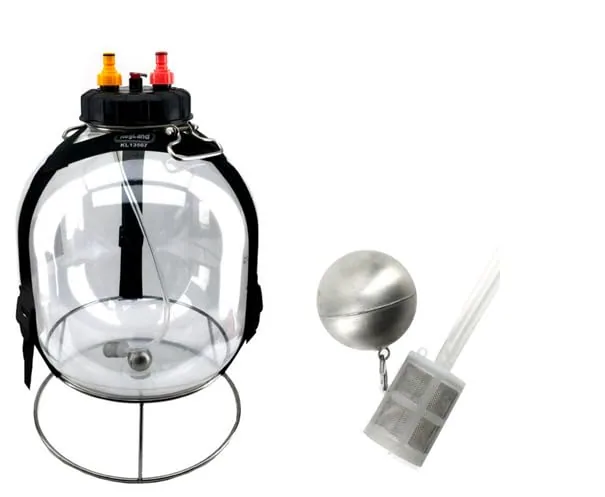
KegLand FermZilla All Rounder 30L Pressure Brewing Kit
- Volume
- 30 L (7.9 gal)
- Material
- PET
- Pressure
- 2.5 bar (36.2 psi)
Best for Pressure fermenting and closed transfers
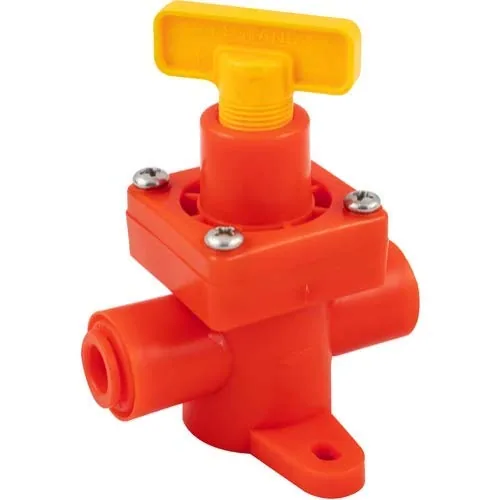
KegLand BlowTie Diaphragm Spunding Valve (KL03643)
- Pressure
- Adjustable (range not listed)
- Outputs
- Diaphragm spunding valve
- Type
- Spunding valve
Best for Pressure fermenting in kegs or FermZilla
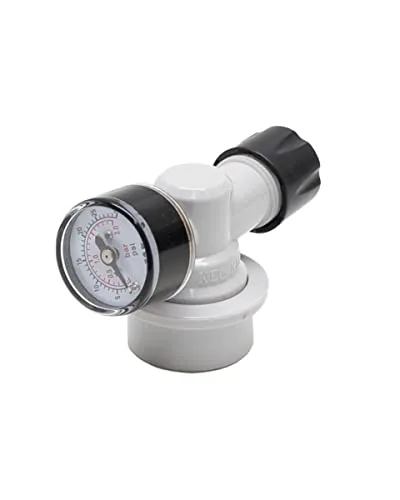
Keg King Spundy Compact Spunding Valve, Ball Lock
- Pressure
- Adjustable, accurate at low pressure (maker)
- Outputs
- Ball lock clip-on spunding valve
- Type
- Spunding valve
Best for Pressure fermenting in a corny keg
What's in the box: bare fermenter vs kits
The base listing (B08WGR79MP) describes a 30 L PET fermenter that can ferment under pressure, and little else. KegLand's own kit list shows how much the contents vary:
- Starter kit with handle: tank, stainless stand and handle, threaded lid ring, pressure lid with red 35 psi PRV, grommet cap, three-piece airlock, strip thermometer, graduation sticker.
- Complete pressure brewing kit: the starter kit plus gas and liquid carbonation caps, a stainless float with silicone dip tube and filter, a BlowTie spunding valve kit and a gas ball lock disconnect.
- Easy-Grip pressure starter kit: tank, Easy-Grip lid, 35 psi PRV, carbonation caps, floating dip tube and a BlowTie with a 0–15 psi gauge.
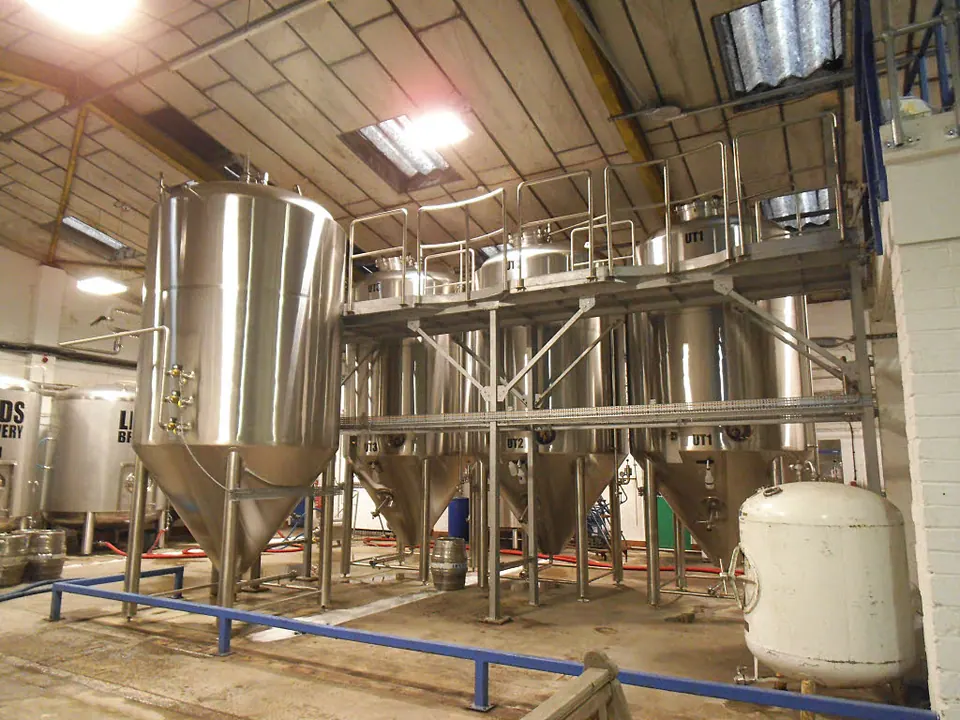
Check which version a listing ships before you buy. If you want a cone and a 3-inch dump valve to collect yeast, the Tri-Conical 27L Gen3 is designed to ferment at up to 2.4 bar and includes a 600 mL collection container, per its listing.
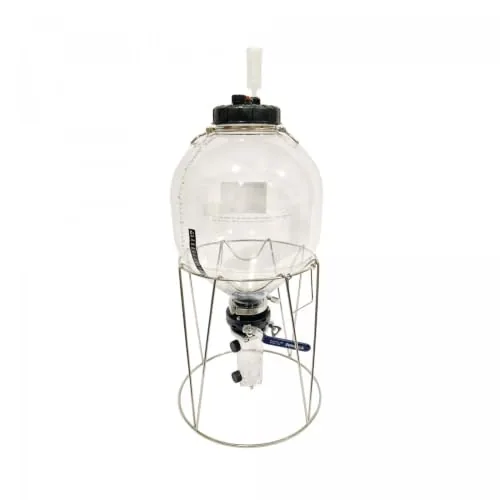
KegLand FermZilla Tri-Conical 27L Gen3
- Volume
- 27 L
- Material
- Clear PET
- Pressure
- Up to 2.4 bar
Best for Harvesting yeast under pressure
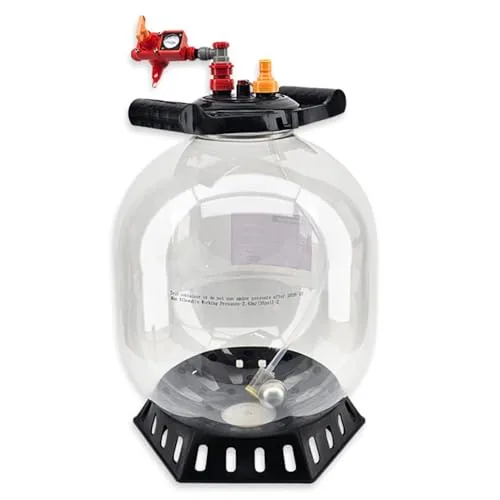
KegLand FermZilla All Rounder Easy-Grip Starter Kit, 30L
- Volume
- 30 L
- Material
- Clear body
- Type
- Pressure fermenter
Best for First pressure fermenter
Temperature, cleaning and care
PET softens with heat. KegLand says never to put liquids above 131°F (55°C) in it, and never to expose it to more than 95°F (35°C) while it's under pressure. That rules out hot-water rinses and sunny garage windows. If you use a heat belt, KegLand says to keep it below the liquid level and run it only through a temperature controller; our Inkbird ITC-308 review covers one.
Clean and sanitize with cold water and only the chemicals KegLand approves, and don't leave PBW-type cleaner in it longer than 30 minutes. Keep it out of direct sun and UV, lubricate the O-rings with food-grade lubricant, don't overtighten caps or handles, and avoid lifting it when full. If it's scratched, dropped or stressed, KegLand says not to use it under pressure until it has been hydro tested.
Carbonating and serving from the FermZilla
Once fermentation ends, you can raise the pressure to carbonate, within the 35 psi limit, then serve straight from the liquid post or push the beer into a keg through a closed transfer. Use the keg carbonation chart to pick a pressure for your temperature and target CO2 volumes, and log readings in the brew-day log. A floating hydrometer such as the Tilt reads well through PET; see our Tilt review.
Keg carbonation chart and PSI calculatorPick a carbonation pressure that stays well inside the FermZilla's 35 psi limit.Our best pressure fermenters and best conical fermenters lists compare the FermZilla with stainless options.
Alternatives worth a look
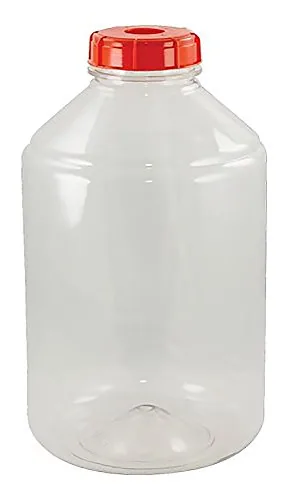
FerMonster 6 Gal Wide Mouth PET Fermenter
- Volume
- 6 gal
- Material
- PET plastic
- Outputs
- Drilled lid
Best for Unbreakable carboy alternative
PET without pressure: A 6-gallon wide-mouth PET carboy with a drilled lid, for brewers who want PET but don't plan to ferment under pressure.
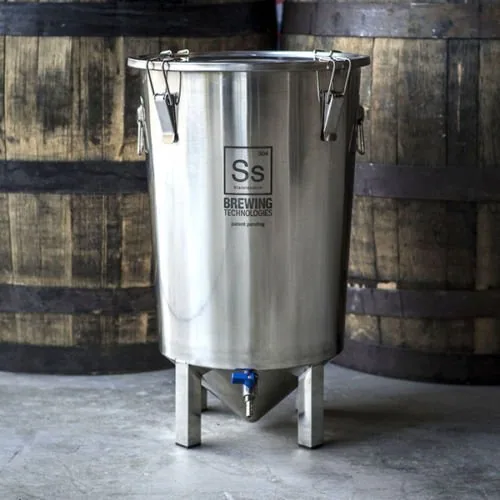
Ss Brewtech Brew Bucket Stainless Fermenter, 7 Gal
- Volume
- 7 gal
- Material
- Stainless steel
- Type
- Fermenting bucket
Best for Moving to stainless fermenting
Stainless bucket: Ss Brewtech's 7-gallon stainless Brew Bucket, which tolerates hot cleaning; check the maker's spec sheet, as the listing gives few details.
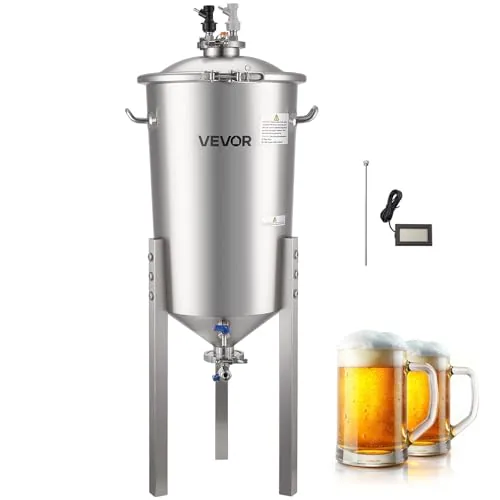
VEVOR 30L Stainless Pressure Fermenter, 15 PSI
- Volume
- 8 gal (30 L)
- Material
- Stainless steel
- Pressure
- 15 PSI
Best for Budget stainless pressure fermenting
Stainless with pressure: VEVOR's 30 L stainless conical with pressure monitoring rated to 15 psi and a built-in thermometer; a yeast collection bottle is not included.
We read the maker’s specs, the manual and the current listing, and checked them against published brewing sources (Palmer, BJCP, AHA, BYO) and safety guidance where it applies. We did not brew with, install or lab-test this product. We never show scores, star ratings or prices.
Questions
What pressure can a FermZilla handle?
Do I need a spunding valve with a FermZilla?
Can you put hot wort in a FermZilla?
What is the difference between the FermZilla All Rounder and Tri-Conical?
How often should a FermZilla be hydro tested?
Is pressure fermenting worth it?
Sources
- KegLand: FermZilla All Rounder 30L and 60L user guide, important information and warnings
- KegLand: FermZilla All Rounder user guide, what's included
- KegLand: FermZilla 30L All Rounder product page
- KegLand: FermZilla All Rounder starter kit instruction manual (PDF)
- Kegco: Everything you need to know about CO2