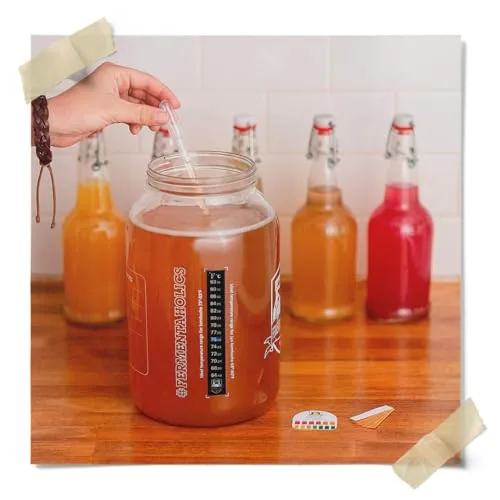
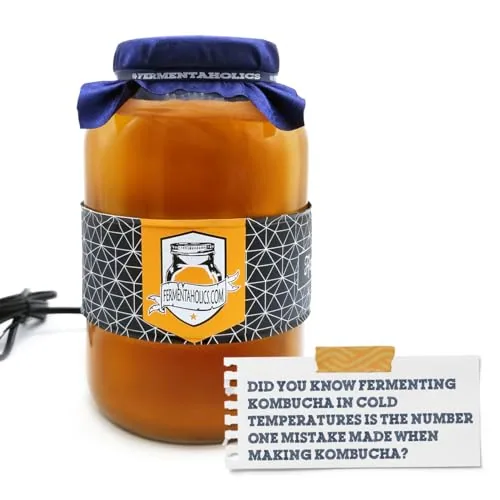
A one-gallon kombucha kit with an organic SCOBY, mature starter tea, a glass brew jar and tea. Follow the safety rules: test with a calibrated pH meter and discard any batch with mold.
Opens the product page with today’s price, variants and delivery. We may earn a commission at no extra cost to you. For adults 21+.
Specifications
Batch size
1 gal
Type
Kombucha starter kit
Includes
SCOBY + 12 fl oz starter tea, 1 gal jar, tea
As stated by the maker or seller. Specs can change between versions and sellers; confirm on the listing. We did not test this product.
From the maker
THE COMPLETE ORGANIC KOMBUCHA KIT INCLUDES – Everything you need to start a 1-gallon batch of kombucha – Kombucha Starter Culture (SCOBY- 12 fl oz of mature starter tea with pellicle), 1-Gallon Brew Jar, Organic Cane Sugar, Tea Blend,…
USDA CERTIFIED ORGANIC & KOSHER – Our kits are certified Organic & OU Kosher including our Classic Kombucha Starter Culture (SCOBY), Organic Cane Sugar, and our Original Kombucha Tea Blend.
GLASS JAR & BREATHABLE COVER –Glass jars make a great vessel for brewing kombucha. You can watch the visual changes that occur during the fermentation, clean up easy, and write notes in the fun “brewing notes” section printed on our…
EASY TO FOLLOW INSTRUCTIONS: Our detailed, step-by-step instructions are designed by kombucha brewers to help address any questions you may have during your first brew.
Sulfites and sensitive guestsCampden tablets and potassium metabisulfite add sulfites. Commercial wine at 10 ppm or more must say “Contains sulfites”; home wine is not labeled, so tell sulfite-sensitive guests (often people with asthma).Source: TTB: sulfite declaration
Kombucha safetyFerment in food-grade glass or plastic, never ceramic, glazed earthenware or lead crystal. Check with a calibrated pH meter that it reaches 4.2 or lower (and not below 2.5); discard moldy SCOBYs. Extension services advise people who are pregnant, immunocompromised or prone to acidosis not to drink it; we don’t recommend homemade kombucha for children.Source: Virginia Tech FST-297; UGA Extension C1312; CDC MMWR 1995